How to Microstep a Stepper Motor for Jukebox Control?
TL;DR
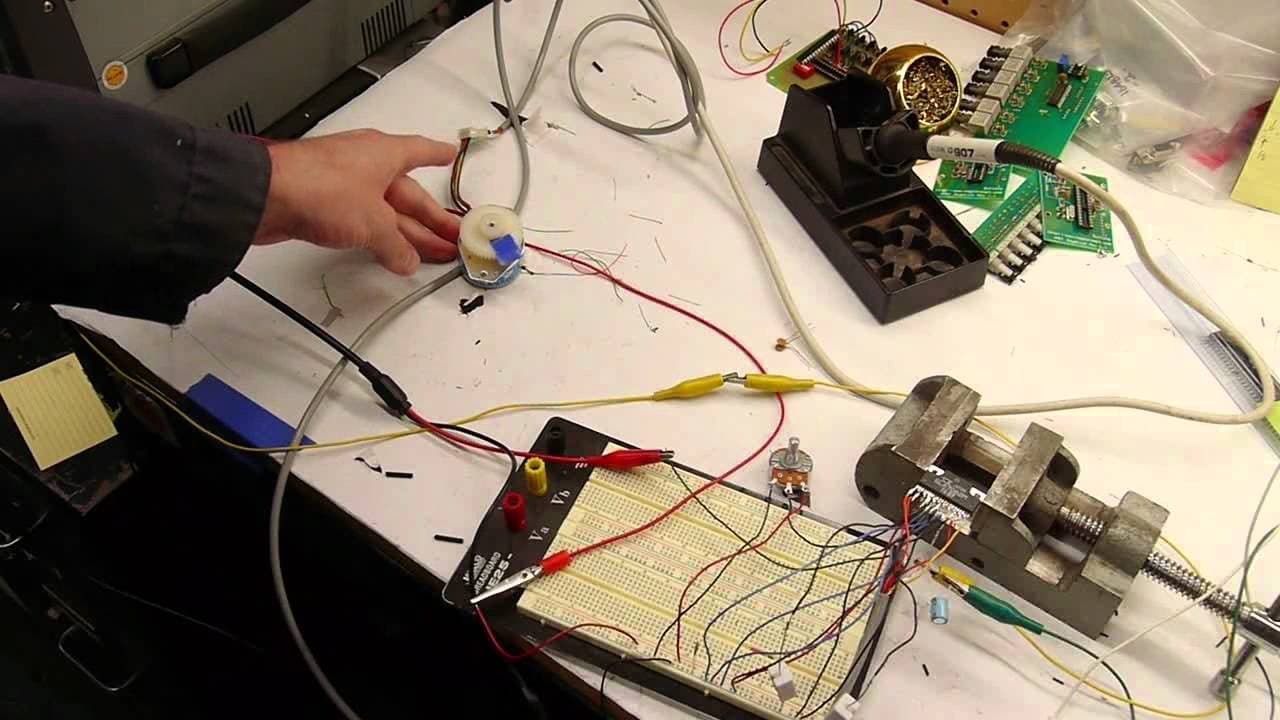
Microstepping a stepper motor can improve the synchronization and quiet operation of jukebox color wheels. By using an SLA7062 chip, you can achieve smoother performance and maintain synchronicity between two motors with minimal hardware modifications. This solution replaces weaker clock motors and optimizes motor control through precise current sensing.
Transcript
hey guys I thought I'd show you my latest project this is a microstepping a driver and motor here so what I've got is an SL a 7:06 to chip this is an entire stepper controller and it's wired up there's no circuitry on the breadboard is just to keep my wires straight and it's controlling this stepper motor over here so as you can see it's going arou... Read More
Key Insights
- 🧑🦼 Replacement of clock motors with stepper motors for better synchronization in jukebox color wheel control.
- 😒 Challenges faced with traditional driver circuits led to the use of the SLA7062 chip for improved motor control.
- ❓ Focus on minimizing hardware modifications and ensuring easy integration into existing systems.
- 🧑🦼 Implementation of microstepping for finer motor control and smoother operation.
- 🧑🦼 Consideration of noise reduction techniques through motor winding modifications.
- 🧑🦼 Exploration of PWM frequency characteristics for optimized motor performance.
- 🧑🦼 Importance of current sensing and reference voltage for precise motor current control.
Install to Summarize YouTube Videos and Get Transcripts
Explore YouTube Video Summarizer or Get YouTube Transcript Extractor
Questions & Answers
Q: What was the main goal of the project with the microstepping motor driver?
The main goal was to achieve synchronized movement of two motors controlling color wheels in an old jukebox, replacing old clock motors with stepper motors for improved performance.
Q: What issues were encountered with traditional transistor driver circuits?
Traditional transistor driver circuits resulted in jerky movements at low speeds with the stepper motor, prompting the need for a smoother and more controlled operation.
Q: How does the SLA7062 chip control the stepper motor?
The SLA7062 chip utilizes H-bridge drivers and current sensing to regulate the current passing through the motor windings, ensuring precise control and smooth movement.
Q: What steps were taken to address the noise issue in the motor operation?
Adding capacitance to the motor windings was considered to reduce sharp transients and ringing, potentially alleviating the squeaking noise generated during operation.
Summary & Key Takeaways
-
Built a microstepping motor driver using an SLA7062 chip.
-
Replacing old clock motors with stepper motors for smoother operation.
-
Focus on synchronicity and minimal hardware modification for jukebox color wheels.
Read in Other Languages (beta)
Share This Summary 📚
Summarize YouTube Videos and Get Video Transcripts with 1-Click
Try YouTube Summary with ChatGPT & Claude or YouTube Transcript Generator
Explore More Summaries from Applied Science 📚

Summarize YouTube Videos and Get Video Transcripts with 1-Click
Try YouTube Summary with ChatGPT & Claude or YouTube Transcript Generator