Why Planes Crash.
TL;DR
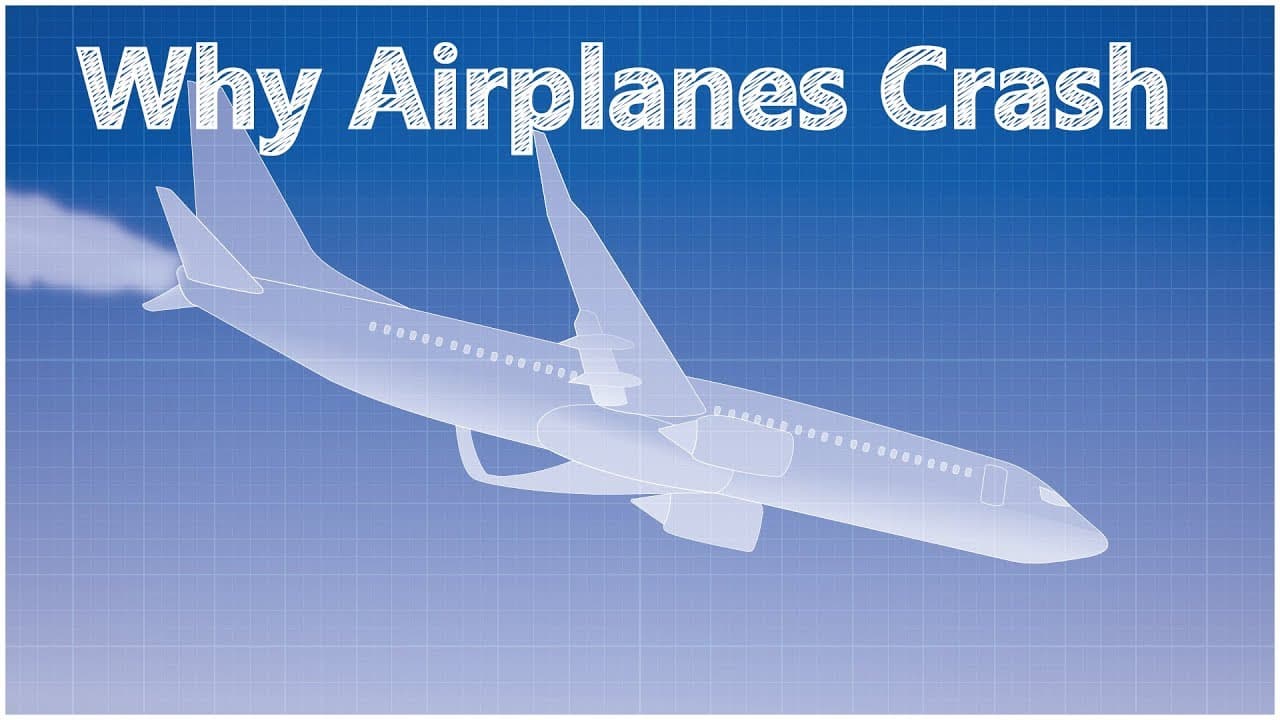
This video explains the evolution of aviation safety over the decades, highlighting key factors such as pilot error, mechanical failure, and severe weather. It delves into historical incidents and technological advancements that have significantly reduced crash rates, emphasizing the importance of reliable instrumentation, improved navigation systems, and learning from past accidents.
Transcript
2017 was the safest year in aviation history with zero deaths from commercial passenger jets, and just 44 onboard fatalities attributed to the aviation industry as a whole when military and cargo flights are factored in. Despite ever increasing demand for flights and the number of passengers flying soaring to 4 billion in 2017, the number of crash... Read More
Key Insights
- 2017 marked the safest year in aviation history with no deaths from commercial passenger jets, despite the increase in air travel demand.
- The primary causes of aviation crashes have remained consistent over the years: pilot error, mechanical failure, severe weather, and sabotage.
- Early aviation was fraught with risk due to primitive technology and a lack of safety regulations, leading to frequent crashes.
- The introduction of reliable instrumentation and navigation systems, such as radio beacons and autopilot, has significantly reduced pilot error.
- The crash of Air France Flight 447 highlighted the dangers of faulty sensors like pitot tubes, leading to improvements in equipment and pilot training.
- The discovery of microburst weather phenomena led to advancements in wind shear radar technology, reducing the risk of weather-related crashes.
- The black box has been a crucial tool in investigating crashes, providing data to improve safety measures and prevent future accidents.
- Economic factors, such as the ability to maintain or purchase new aircraft, significantly impact airline safety, as seen in the case of Iranian airlines.
Install to Summarize YouTube Videos and Get Transcripts
Explore YouTube Video Summarizer or Get YouTube Transcript Extractor
Questions & Answers
Q: What were the main causes of aviation crashes mentioned in the video?
The video identifies the main causes of aviation crashes as pilot error, mechanical failure, severe weather, and sabotage. These factors have remained consistent over the years, despite the overall decline in crash rates. The video delves into each cause, providing historical examples and discussing technological advancements that have mitigated these risks.
Q: How did early aviation differ from today's industry in terms of safety?
Early aviation was significantly riskier due to primitive technology and a lack of safety regulations. The era was characterized by frequent crashes, as planes were cheap and operators prioritized timely delivery over safety. The video describes how technological advancements and the formation of pilots' unions led to improved safety standards and a more reliable aviation industry.
Q: What role did the crash of Air France Flight 447 play in improving aviation safety?
The crash of Air France Flight 447 highlighted the dangers of faulty sensors, specifically pitot tubes, which led to the plane's crash in 2009. The incident prompted Airbus to replace flawed pitot tubes and improve pilot training to handle such situations. This crash underscored the importance of reliable instrumentation and contributed to advancements in aviation safety protocols.
Q: How did the discovery of microbursts impact aviation safety?
The discovery of microbursts, a dangerous weather phenomenon, led to significant safety improvements in aviation. Microbursts create strong, erratic winds that can cause planes to crash. The video explains how NASA and the FAA investigated these events, resulting in the development of on-board wind shear radar technology, which has greatly reduced weather-related crashes.
Q: What is the significance of the black box in aviation safety?
The black box is a crucial tool in aviation safety, providing vital data for crash investigations. Introduced in 1953, it survives fire, water, and impact, helping researchers understand crash causes and improve safety measures. The video emphasizes its role in learning from past accidents and preventing future ones, although it notes the need for real-time data streaming to further enhance safety.
Q: How do economic factors affect airline safety?
Economic factors, such as an airline's ability to maintain or purchase new aircraft, significantly impact safety. The video highlights how sanctions on Iran forced reliance on older, unreliable aircraft, leading to numerous accidents. Airlines with better financial resources can invest in newer technology and maintenance, reducing crash risks and improving overall safety.
Q: What advancements have been made to reduce pilot error in aviation?
Advancements to reduce pilot error include the development of reliable navigation systems, autopilot interfaces, and instrumentation that prevent pilots from exceeding aircraft capabilities. The video discusses how these technologies, like GPS and fly-by-wire systems, have improved safety by minimizing human error, which remains a leading cause of aviation accidents.
Q: What is the role of continuous learning in aviation safety?
Continuous learning is essential for improving aviation safety, as it involves analyzing past accidents to prevent future ones. The video underscores the importance of adapting systems and protocols based on crash investigations and technological advancements. This ongoing process has led to significant reductions in crash rates and improved safety standards across the aviation industry.
Summary & Key Takeaways
-
The video explores aviation safety improvements over the years, focusing on technological advancements and learning from past crashes. It discusses the consistent causes of crashes and how reliable instrumentation and navigation systems have reduced pilot error.
-
Historical incidents, like the crash of Air France Flight 447 and the discovery of microbursts, have driven significant safety improvements. The video emphasizes the role of technology and economic factors in ensuring airline safety.
-
The black box has been instrumental in crash investigations, leading to better safety protocols. The video highlights the importance of continuous learning and updating technology to improve aviation safety.
Read in Other Languages (beta)
Share This Summary 📚
Summarize YouTube Videos and Get Video Transcripts with 1-Click
Try YouTube Summary with ChatGPT & Claude or YouTube Transcript Generator
Explore More Summaries from Real Engineering 📚




Summarize YouTube Videos and Get Video Transcripts with 1-Click
Try YouTube Summary with ChatGPT & Claude or YouTube Transcript Generator