How to Make Money in the Stock Market Like Nicolas Darvas
TL;DR
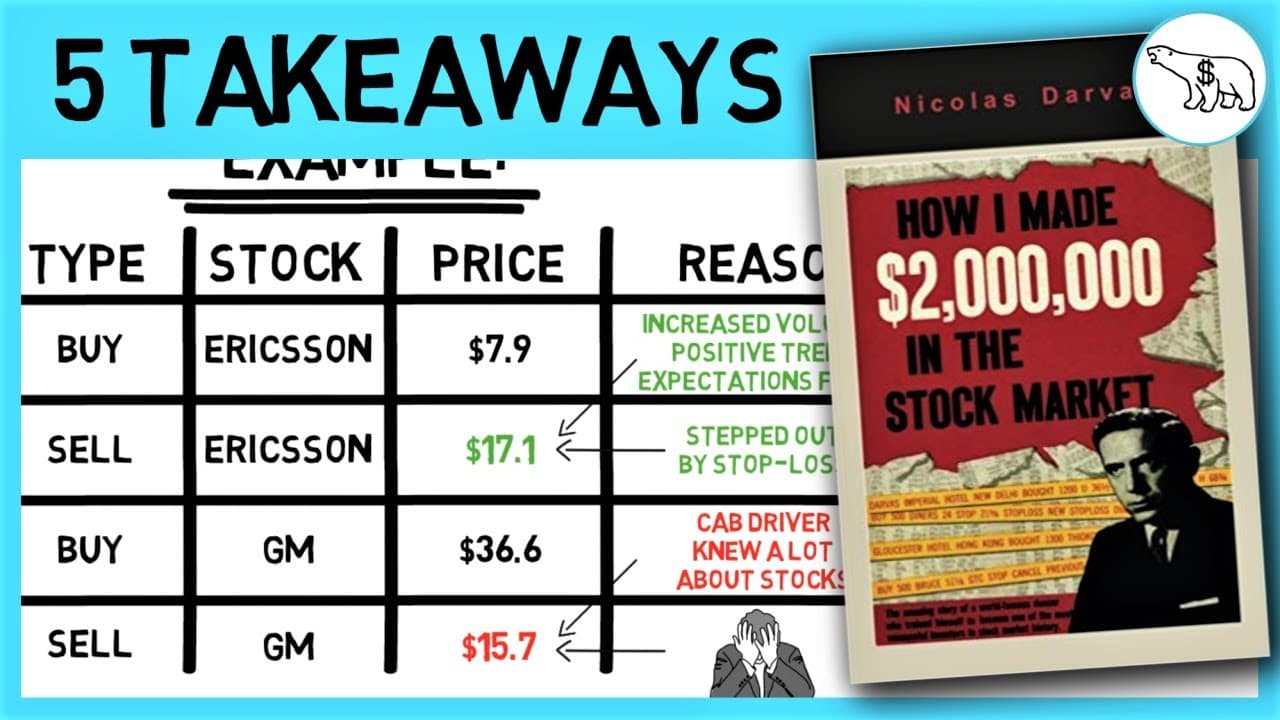
To make money in the stock market like Nicolas Darvas, avoid emotional attachments to stocks and buy on positive trends with rising volumes. Cut losses quickly and let profitable investments grow. Additionally, keep a stock log book to track your decisions and learn from past mistakes.
Transcript
Nicholas Darvas was a dancer, self-taught investor and author. He's most famous for turning $10,000 into 2 millions trading in the stock market over the course of 6.5 years. He did this without any prior experience as a trader and later he wrote "How I made $2,000,000 in the stock market" where he outlined his strategy for success. Today, I will su... Read More
Key Insights
- ❓ Emotional attachment to investments can be dangerous; remain impartial.
- 😮 Buying on positive trends and rising volumes maximizes potential earnings.
- 👟 Cutting losses short and letting winners run is a profitable strategy.
- 🧑💻 Keeping a stock log book helps track decisions and learn from mistakes.
- 💁 Don't rely on rumors or external information; be a lone wolf in investing.
- 💆 Avoid getting caught up in the herd mentality of the market.
- 🍉 Never try to time the top of the market; focus on long-term growth.
Install to Summarize YouTube Videos and Get Transcripts
Explore YouTube Video Summarizer or Get YouTube Transcript Extractor
Questions & Answers
Q: Why is it dangerous to become emotionally attached to your investments?
Developing an emotional attachment can cloud your judgment and prevent you from making objective decisions based on the stock's performance. It can lead to holding onto losing investments for too long or missing out on selling at a profit.
Q: How can positive trends and rising volumes indicate a good investment?
Positive trends and rising volumes suggest that there is underlying information or momentum driving the stock's performance. By buying into these trends, you can benefit from market movements even if you don't have specific knowledge about the company.
Q: What is the benefit of cutting losses short and letting winners run?
Cutting losses short prevents significant losses by selling stocks that are performing poorly. Letting winners run means holding onto profitable investments and allowing them to continue growing. This strategy maximizes profits and minimizes losses.
Q: Why is it important to keep a stock log book?
A stock log book helps you track the reasons for buying and selling stocks, allowing you to learn from your mistakes and improve your investment decisions. It also helps you stay disciplined and consistent in your approach.
Summary & Key Takeaways
-
Don't develop an emotional attachment to your investments and remain impartial when assessing stocks.
-
Buy stocks that show positive trends and rising trading volumes, indicating potential earnings growth.
-
Cut your losses short and let your profitable investments continue to grow.
-
Keep a stock log book to track buying and selling decisions and learn from your mistakes.
Read in Other Languages (beta)
Share This Summary 📚
Summarize YouTube Videos and Get Video Transcripts with 1-Click
Try YouTube Summary with ChatGPT & Claude or YouTube Transcript Generator
Explore More Summaries from The Swedish Investor 📚





Summarize YouTube Videos and Get Video Transcripts with 1-Click
Try YouTube Summary with ChatGPT & Claude or YouTube Transcript Generator