How AI Coworkers Will Transform Product Work
TL;DR
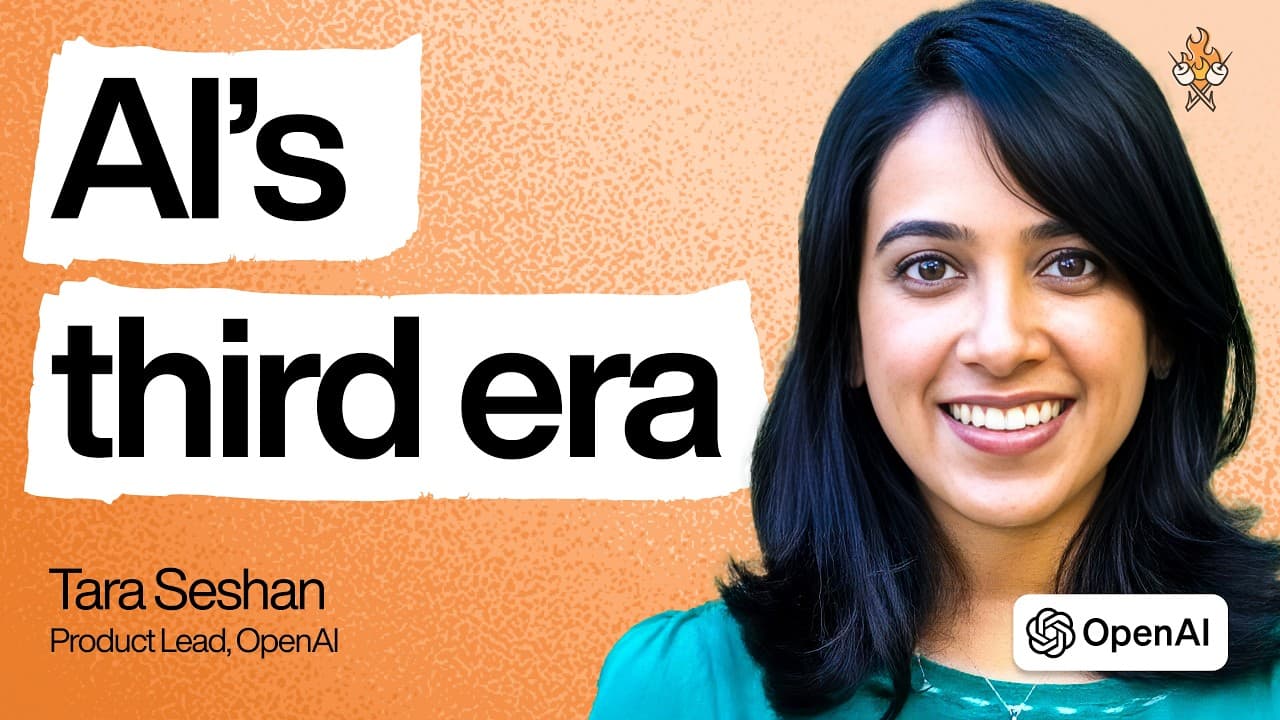
AI products are moving from chat and task-based agents toward persistent coworkers that collaborate continuously and complete meaningful work. Product teams should build for capabilities expected two to three months ahead, define the most important hypothesis, test it quickly with users, and rely on empirical learning rather than long-range theoretical plans in a rapidly changing market.
Transcript
If you think about the first era of AI products as chat, the second era of these products working with [music] agents, that third era that might come soon is how do you work with a persistent co-worker who is able to get things done with you. >> There's this idea of the overhang of what AI is capable of and what we're actually doing with it. >> So ... Read More
Key Insights
- AI products are entering a third era centered on persistent coworkers that can work with people and get things done. Chat defined the first era, while task-oriented agents characterized the second, creating a progression toward deeper and more continuous collaboration.
- The practical planning horizon for frontier AI products is two to three months. Building only for present model capabilities can leave a product behind, while designing for speculative capabilities a year away can make the product equally disconnected from reality.
- Empirical product development is more valuable than elaborate theoretical planning in a fast-changing AI market. Teams need to turn focused hypotheses into testable experiences quickly, observe users, and use the resulting evidence to refine what they build next.
- The core product management job is identifying the essential question that determines whether a product works. Documentation, presentations, and execution processes may support the role, but they do not replace precise problem definition, effective testing, and iterative learning.
- Strong product hypotheses combine an understanding of users, the market, and the underlying technology. Product managers must bring these perspectives together, isolate the most important uncertainty, and design a test that produces useful evidence as quickly as possible.
- OpenAI gives people substantial founder-like ownership within their product areas. Tara Seshan describes limited top-down direction, a thin distance between teams and the market, and direct responsibility for doing what is necessary to find product-market fit.
- OpenAI’s strategy becomes visible through products and public messaging rather than remaining inside a hidden internal playbook. Tara expected a private collection of established strategy but found that ideas move rapidly into experiences that users can directly touch and evaluate.
- Human judgment and ambition become more important as AI assumes more execution work. The product manager’s role increasingly includes steering efforts, encouraging teams to pursue what emerging capabilities make possible, and raising ambitions that may otherwise remain constrained by older assumptions.
Install to Summarize YouTube Videos and Get Transcripts
Explore YouTube Video Summarizer or Get YouTube Transcript Extractor
Questions & Answers
Q: What is a persistent AI coworker?
A persistent AI coworker is an AI product that works alongside a person over time and helps get meaningful work done, rather than limiting interaction to a single conversation or isolated task. Tara Seshan frames it as the third era of AI products, following chat and task-performing agents. The concept points toward continuous collaboration between people and AI within everyday work.
Q: What are the three eras of AI products?
The first era of AI products is chat, where users primarily interact through conversation. The second era involves agents that perform tasks. The emerging third era is centered on persistent AI coworkers that work with people and complete work alongside them. This sequence represents increasing continuity and responsibility, moving from answering users toward participating more deeply in their ongoing workflows.
Q: How far ahead should AI product teams build?
AI product teams should generally build for model capabilities expected two to three months ahead. Tara Seshan argues that building only for current capabilities causes teams to fall behind, while designing for what models might do in a year is too speculative. A short forward-looking window gives teams enough anticipation to create relevant products while staying connected to observable research progress.
Q: How should product managers test AI product ideas?
Product managers should identify the single most important uncertainty, express it as a sharp hypothesis, and create something users can try as quickly as possible. They should examine the results, refine the hypothesis, and repeat the loop. The test should combine an understanding of users, the market, and the technology while avoiding unnecessary strategy work that does not improve the central experiment.
Q: Why is empirical product development important in AI?
Empirical product development matters because the AI market is highly dynamic, emergent, and closely tied to rapidly changing research. Long theoretical plans can become irrelevant before teams execute them. Building testable experiences provides direct evidence about what users need and what the technology can support. That evidence enables teams to update their hypotheses faster than prediction alone would allow.
Q: What remains unchanged about the product manager role?
The enduring responsibility of a product manager is to determine the essential question that decides whether a product will work. The manager must understand users, the market, and the technology, then translate that understanding into a focused hypothesis and an effective test. Documents, presentations, and delivery processes are supporting practices, while problem definition and learning remain the role’s core.
Q: How does product ownership work at OpenAI?
Product ownership at OpenAI is described as founder-like, with limited top-down direction compared with Tara Seshan’s previous companies. People are expected to take responsibility for their areas, remain close to users and market demands, and do what is necessary to find product-market fit. This autonomy can be energizing, but it also means teams cannot depend on a hidden strategy document for answers.
Q: Why will ambition matter more as AI handles execution?
Ambition becomes more important because AI allows teams to attempt work that previously appeared impractical, while human judgment still determines which goals deserve pursuit. The description characterizes the shift as moving from rowing toward steering. In this environment, product managers must help others recognize what is possible, elevate the scale of their goals, and guide execution toward the most valuable problems.
Summary & Key Takeaways
-
AI products can be understood in three eras: conversational chat, agents that perform tasks, and persistent coworkers that work alongside people over time. This progression shifts the product opportunity from isolated interactions toward sustained collaboration, where AI helps complete work and requires people to reconsider their own judgment, ambition, and operating methods.
-
Product development at OpenAI emphasizes short planning horizons because model capabilities and user behavior change rapidly. Building only for current models can produce outdated products, while designing around capabilities imagined a year away can miss reality. Tara Seshan describes two to three months as the practical window for anticipating capabilities and testing ideas.
-
The product manager’s central responsibility remains identifying the question that determines whether a product succeeds. Effective teams combine knowledge of users, markets, and technology into a sharp hypothesis, create the fastest meaningful test, study the result, and repeat. As AI handles more execution, steering, judgment, and raising organizational ambition become increasingly important.
Read in Other Languages (beta)
Share This Summary 📚
Summarize YouTube Videos and Get Video Transcripts with 1-Click
Try YouTube Summary with ChatGPT & Claude or YouTube Transcript Generator
Explore More Summaries from Lenny's Podcast 📚



Summarize YouTube Videos and Get Video Transcripts with 1-Click
Try YouTube Summary with ChatGPT & Claude or YouTube Transcript Generator