Recent updates for the miniature tensile testing machine
TL;DR
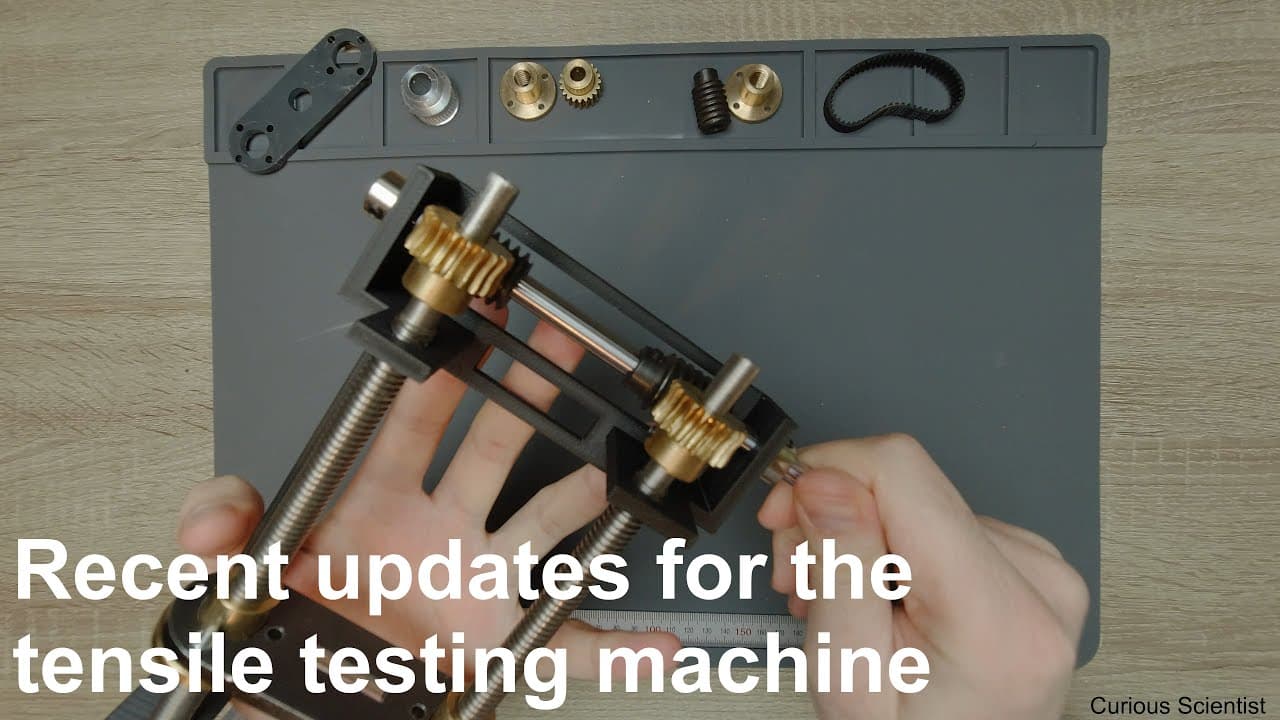
The video discusses design updates and improvements for a tensile testing machine prototype.
Transcript
welcome everyone in this video I'm going to share a few updates regarding my tensile testing machine so as you can see I put a lot of parts on this table here and I will show you what is what but first let's get rid of most of these things so I just put aside this stepper motor so we have a few parts here which is the same as in the old or recent p... Read More
Key Insights
- 🤘 The transition from prototype to metal components is significant for durability and functionality in the design of testing machines.
- 🎨 A well-designed prototype, such as the one discussed, helps identify potential issues before final production, saving costs and materials.
- 🥳 Various motor configurations can affect the machine's performance, highlighting the importance of selecting the right gear ratios for desired outcomes.
- 🦾 The presenter emphasizes the importance of precise dimensional fitting in mechanical assemblies to ensure smooth operation.
- 😒 The use of bearings is crucial for reducing friction and ensuring stability during operation, indicating a need for careful material selection.
- 🤩 Compact size without sacrificing performance is a key design goal, reflecting trends towards miniaturization in engineering.
- 🛀 Future designs will incorporate feedback gained through testing the prototype, showing a commitment to iterative improvement in engineering practices.
Install to Summarize YouTube Videos and Get Transcripts
Explore YouTube Video Summarizer or Get YouTube Transcript Extractor
Questions & Answers
Q: What are the main components of the tensile testing machine being discussed?
The main components include a cross head for testing, a plastic 3D printed structure for fitting, a lead screw, worm gears, and a stepper motor. The presenter emphasizes the importance of ensuring precise dimensions in these components to enable effective assembly and operation.
Q: Why did the presenter choose to use 3D printing for the prototype?
The use of 3D printing allows for rapid prototyping and testing of dimensions without wasting material. This method lets the presenter adjust designs quickly based on fit and functionality, ensuring that the final components, which will be made of metal, meet specific requirements.
Q: What challenges did the presenter face while assembling the machine?
One challenge was the length of the threaded rod, which initially prevented proper assembly of the cross head. The presenter noted the need to shorten the rod for better fitment. Additionally, aligning the motor and ensuring adequate torque and speed from the motor were design considerations.
Q: How does the presenter plan to enhance the machine's performance?
The presenter is considering different motor and gear configurations, including worm gears and planetary gears, to increase efficiency and torque. Adjusting the design for better alignment and fitting compact components will also play a crucial role in enhancing overall performance.
Summary & Key Takeaways
-
The presenter shares progress on a tensile testing machine, highlighting the transition from a prototype to a more refined design using 3D-printed parts.
-
Dimensions and fitment tests were conducted to ensure mechanical assembly works effectively before moving to metal components for durability.
-
Various motor and gear configurations are explored to optimize performance, promising a compact and efficient final product.
Read in Other Languages (beta)
Share This Summary 📚
Summarize YouTube Videos and Get Video Transcripts with 1-Click
Try YouTube Summary with ChatGPT & Claude or YouTube Transcript Generator
Explore More Summaries from Curious Scientist 📚
![Building a Peltier cooler-based cooling box - First iteration, improvements [Part 2/6] thumbnail](/_next/image?url=https%3A%2F%2Fi.ytimg.com%2Fvi%2F0YlNw0EGnzI%2Fhqdefault.jpg&w=750&q=75)
![Building a coil winder [Part 6] - A few improvements thumbnail](/_next/image?url=https%3A%2F%2Fi.ytimg.com%2Fvi%2F3eyxG_g2iUA%2Fhqdefault.jpg&w=750&q=75)
Summarize YouTube Videos and Get Video Transcripts with 1-Click
Try YouTube Summary with ChatGPT & Claude or YouTube Transcript Generator