How to stay focused on goals and build unshakable momentum
TL;DR
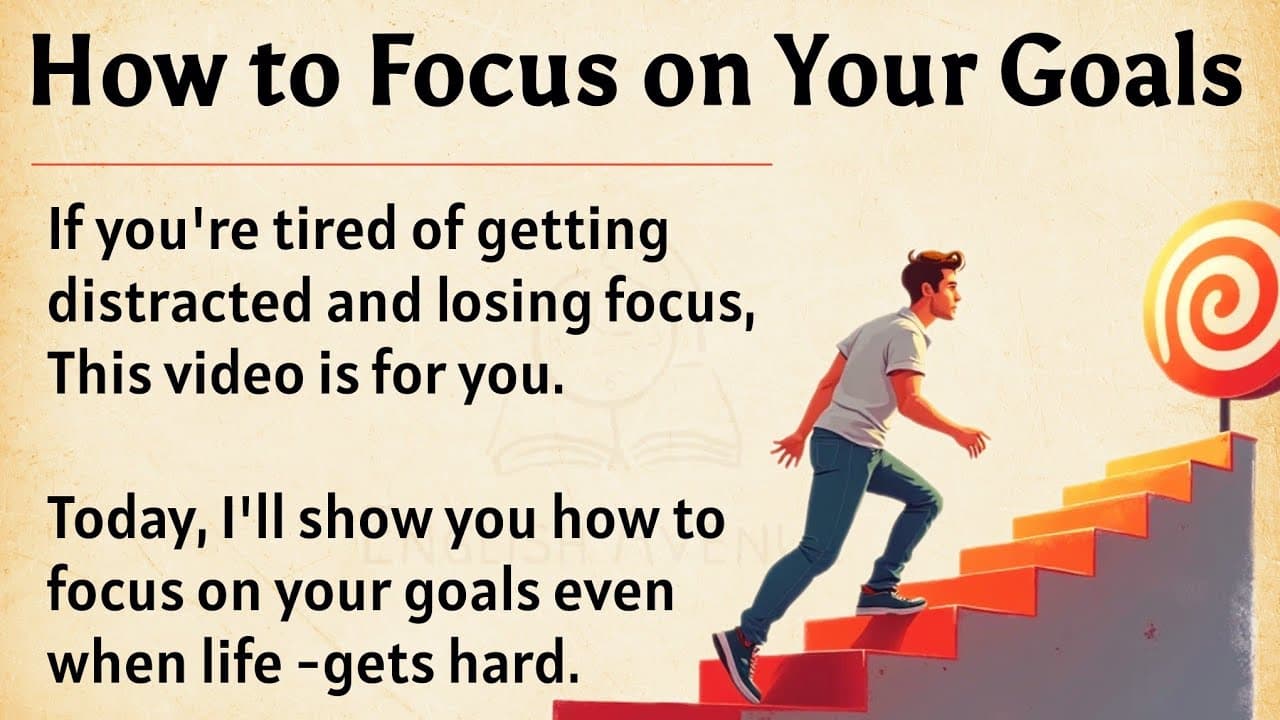
The key to focus is a clear why, plus structured daily work. Start by identifying a real reason that fuels you, then tackle the single most important task each day during power hours. Track time, cut distractions, and protect your peak effort periods to move steadily toward your goal.
Transcript
Welcome. This is not just a video. This is your wakeup call. This is a mirror. And today you will see yourself clearly, maybe for the first time in years, because deep down you know the truth. You're not living at your full power. You're distracted. You're scattered. You're tired. You keep trying, but something always pulls you away. Another notifi... Read More
Key Insights
- The focus starts with a real reason that fuels every decision and makes quitting more painful than pushing forward.
- Deep work is the discipline of doing one important task with full attention, avoiding distractions and multitasking.
- Priorities require saying no to many things so you can say yes to the few actions that matter for your goals.
- Time is a finite resource, and tracking it reveals where energy is wasted and where it should be invested.
- Power hours are the best periods for high quality work, and protecting them boosts productivity far more than long hours of scattered effort.
- Procrastination is framed as a thief of the future, requiring immediate action and structured routines to overcome.
- The practice of time budgeting and calendar blocking makes progress predictable and measurable over days and weeks.
- Environmental control, like a distraction-free space and phone-free windows, is essential to sustain focus over time.
- More videos from this channel:
- More from this channel: English Avenue
Install to Summarize YouTube Videos and Get Transcripts
Explore YouTube Video Summarizer or Get YouTube Transcript Extractor
Questions & Answers
Q: What is the most important first step to improve focus according to the video
The most important first step is finding a real reason that drives you, not a superficial motive. This deep why should be something that keeps you going when challenges arise and is personally meaningful enough to push you through fatigue and doubt. Write it down, speak it, and feel it, so quitting becomes more painful than pushing forward.
Q: How does the video describe deep work and its impact
Deep work is described as the practice of dedicating one hour to the most important task without distractions, which yields far greater progress than several hours of scattered effort. The idea is to devote peak cognitive time to a single objective, thereby achieving outsized results and building momentum toward your goal.
Q: What is recommended about priorities and saying no
The guidance emphasizes that you should stop treating everything as important and protect the things that truly matter. This means identifying your top three priorities, removing non essential tasks, and saying no to options that do not align with those priorities. This focused approach prevents burnout and preserves energy for critical work.
Q: How is time ownership explained in the video
Time ownership is explained by treating each day as a bank account of 24 hours with only forwards, non renewables. By tracking where time goes and identifying wastage, you can reclaim unused minutes. The video provides a practical example of how small time losses add up and how structured use of time can change outcomes dramatically.
Q: What are power hours and how should they be used
Power hours are the times when a person’s mental clarity is at its peak. The video advises discovering these hours through self observation, then using them for the most important tasks with distractions minimized. Protecting these blocks of time makes one hour of focused work far more productive than several hours of dispersed effort.
Q: What role does tracking time play in achieving goals
Tracking time acts as a diagnostic tool, revealing where energy is being spent and where it is wasted. By recording hourly activities for a few days, you can identify patterns such as excessive social media use, and then reallocate time toward learning, planning, or building toward the goal. This creates accountability and measurable progress.
Q: How does the video suggest handling distractions and notifications
The video recommends blocking notifications, closing the door, and placing the phone away during power hours. It emphasizes creating a distraction free environment that supports deep work, making it easier to sustain intense focus on the task that matters most.
Q: What is the overall message about focus and outcomes
The overall message is that focus is a deliberate practice, not just a mood. By identifying a genuine reason, prioritizing one key task, protecting power hours, and cutting distractions, you can transform daily routines into consistent progress. This approach leads to meaningful improvements in skills, momentum, and eventual success.
Summary & Key Takeaways
-
A strong focus strategy begins with a compelling personal reason that drives action even when motivation fades, turning effort into consistent progress.
-
The video advocates choosing one crucial daily task and performing it with full attention during power hours, rather than multitasking or busywork.
-
Time management is framed as a finite resource: track daily minutes, identify time wasters, and protect blocks of deep work to accelerate results.
Read in Other Languages (beta)
Share This Summary 📚
Summarize YouTube Videos and Get Video Transcripts with 1-Click
Try YouTube Summary with ChatGPT & Claude or YouTube Transcript Generator
Explore More Summaries from English Avenue 📚




Summarize YouTube Videos and Get Video Transcripts with 1-Click
Try YouTube Summary with ChatGPT & Claude or YouTube Transcript Generator