English Google Webmaster Central office-hours from June 26, 2020
TL;DR
In this video, you will learn about various aspects of managing a website's presence on Google. The office-hours session covers topics like handling duplicate content, optimizing site speed with ads, and the implications of changing URL structures. John Mueller from Google provides insights into how Google processes these elements, offering guidance on best practices for SEO and addressing common webmaster concerns.
Transcript
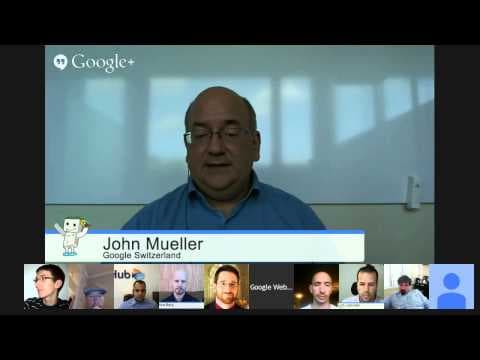
JOHN MUELLER: All right welcome, everyone, to today's Webmaster Central office-hours Hangout. My name is John Mueller. I am a Webmaster Trends Analyst at Google IN Switzerland. And part of what we do are this office-hour Hangouts, where people can join in and ask their questions all around their websites and web search. Tons of stuff was submitted... Read More
Key Insights
- John Mueller explains the impact of duplicate content and emphasizes that it is a common issue that doesn't necessarily harm a website's ranking unless it is excessive or manipulative.
- The session discusses the challenges of maintaining high page speed scores when using ads. John suggests focusing on core web vitals and deferred loading as potential solutions.
- There's a clarification on the use of singular and plural keywords, highlighting that Google treats them as different queries and may show different results based on user intent.
- Discussion on handling 404 errors and redirects, emphasizing that removing content is normal and won't negatively impact a site's ranking unless it results in a poor user experience.
- John addresses the use of dynamic URLs and JavaScript navigation, clarifying that parameter-based URLs are fine and can even be beneficial for Google's crawling efficiency.
- The session touches on the importance of legal measures like DMCA for dealing with content theft, alongside Google's web spam reports.
- There's advice on structuring multilingual and multi-regional websites, with flexibility in URL structures as long as language-specific content is on unique URLs.
- John mentions that site links are influenced by internal linking and anchor texts, and any issues with gibberish in site links could be due to encoding or JavaScript errors.
Install to Summarize YouTube Videos and Get Transcripts
Explore YouTube Video Summarizer or Get YouTube Transcript Extractor
Questions & Answers
Q: How does Google treat duplicate content across multiple domains?
Google treats duplicate content across domains by trying to identify the original source and prioritize it in search results. However, if a site is copied across multiple domains, Google may filter out the duplicates. It's crucial to address content theft through legal measures like DMCA and use Google's web spam reports.
Q: What impact do ads have on page speed and SEO?
Ads can significantly impact page speed, which in turn affects SEO. Google considers page speed as a ranking factor, especially for mobile. To mitigate this, webmasters should focus on core web vitals and consider deferred loading of ads to improve user experience and maintain competitive rankings.
Q: Why might singular and plural keyword queries yield different results?
Google treats singular and plural keyword queries as distinct, recognizing that user intent may differ. For instance, plural queries might suggest a need for lists or comparisons, influencing which pages rank higher. SEO strategies should consider these nuances to optimize content for both query types.
Q: What should be done about 404 errors and external links to non-existent pages?
404 errors are normal and won't harm your site's ranking. If pages have been removed and are linked externally, consider using 301 redirects to relevant content. This helps retain link value and improves user experience. Avoid redirecting all 404s to the homepage, as it might be seen as a soft 404.
Q: Are parameter-based URLs problematic for SEO?
Parameter-based URLs are not inherently problematic for SEO. Google can efficiently crawl and index them, understanding their structure. Such URLs can even be beneficial as they allow Google to identify unique elements for better crawling efficiency. The key is ensuring they don't create duplicate content issues.
Q: How should multilingual websites be structured for SEO?
Multilingual websites can use any URL structure, such as subdomains, subdirectories, or parameters, as long as each language has unique URLs. For multi-regional targeting, subdomains or subdirectories are recommended. Implementing hreflang tags can help Google understand language targeting and improve search visibility.
Q: What should be done if site links show gibberish?
If site links display gibberish, check for potential issues with internal linking, JavaScript, or character encoding. Ensure anchor texts are clear and properly encoded. If the problem persists, it might be beneficial to report it to Google's team for further investigation.
Q: Can blocking certain resources with robots.txt affect SEO?
Blocking resources like JavaScript or CSS in robots.txt is fine as long as Google can still render and evaluate the page for mobile-friendliness. However, blocking critical resources might prevent Google from understanding the page layout, potentially affecting mobile usability assessments and rankings.
Summary & Key Takeaways
-
The Google Webmaster Central office-hours session from June 26, 2020, features John Mueller addressing various webmaster-related queries. Topics include handling duplicate content, optimizing site speed with ads, and managing URL structures. John provides insights into Google's processing of these elements, offering guidance on best SEO practices.
-
John Mueller discusses the implications of duplicate content, emphasizing that it's common and not inherently harmful unless excessive. He also addresses site speed challenges with ads, suggesting deferred loading and focusing on core web vitals as potential solutions.
-
The session covers the use of singular vs. plural keywords, explaining that Google treats them as different queries. John also advises on handling 404 errors and redirects, stating that removing content won't harm rankings unless it leads to a poor user experience.
Read in Other Languages (beta)
Share This Summary 📚
Summarize YouTube Videos and Get Video Transcripts with 1-Click
Try YouTube Summary with ChatGPT & Claude or YouTube Transcript Generator
Explore More Summaries from Google Search Central 📚

Summarize YouTube Videos and Get Video Transcripts with 1-Click
Try YouTube Summary with ChatGPT & Claude or YouTube Transcript Generator