What YouTube Gear Under $100 Is Worth Buying?
TL;DR
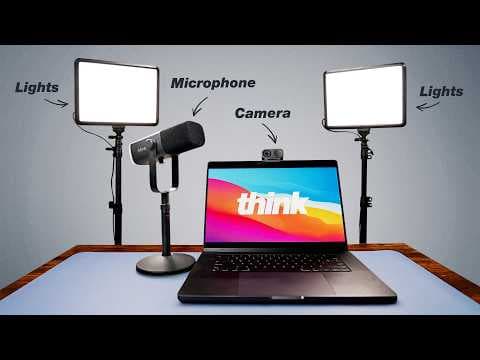
Prioritize better audio, soft lighting, stable support, and adequate storage before buying expensive camera equipment. Budget options include the $40 BOYA Mini for smartphone recording, the roughly $48 FIFINE AM8 for podcasts, two softbox lights for $50, and phone or camera tripods starting around $23, while V30 SD cards support 4K recording.
Transcript
You don't need to spend thousands to upgrade your YouTube set. In fact, some of the best Prime Day deals are under $100. From lights, microphones, tripods, SSDs, we've actually rounded up the best budget friendly gear that will actually make a difference. Craig, let's first talk about deals under 25. So, the first couple deals we have are some ligh... Read More
Key Insights
- Lighting is one of the fastest ways to improve video quality, and affordable options range from magnetic phone lights to two-light softbox kits. Compact RGB lights can add background color or product accents, while diffused softboxes create softer, more flattering illumination for people.
- The Amaran Go is a $23 magnetic light that can attach to a phone or other surfaces. It can face the creator as a selfie light, and its reverse side includes a mirror and small light for checking makeup, teeth, or appearance before recording.
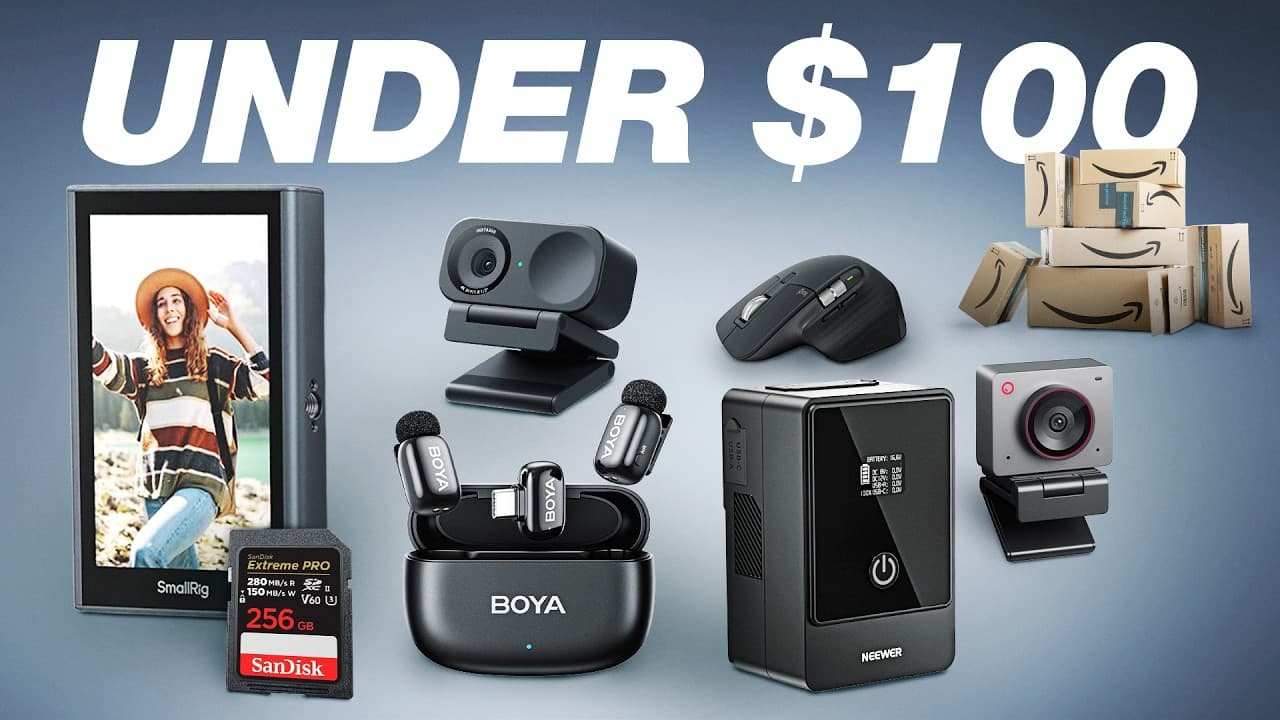
- The SmallRig Vibe P108 is an RGB light designed to add colored accents to backgrounds, product shots, and B-roll. Its role is not limited to lighting a person, since it can also introduce visual separation and color within a scene.
- A dummy battery supplies continuous wall power to a compatible camera instead of relying on its internal battery. The featured NP-FW50 option is intended for smaller Sony cameras such as the ZV-E10, making long recording sessions less stressful when battery depletion would interrupt production.
- V30 SD cards are suitable for cameras recording 4K video, according to the recommendation. Cameras using higher resolutions or higher frame rates may require faster V60 or V90 cards, so creators should check the required speed rating before purchasing storage.
- The BOYA Mini is a $40 wireless microphone system that includes two microphones and a receiver for improved smartphone audio. The featured USB-C version suits many users, while a Lightning option is available for compatible iPhones, and the larger combo kit costs more than $50.
- The FIFINE AM8 is a podcast microphone priced at about $48 in the featured deal, with a boom arm included in the highlighted setup. Its audio was described as comparable to the $500 Shure SM7DB used for the recording, making it suitable for beginner podcasters and livestreamers.
- The SmallRig phone selfie monitor makes rear-facing smartphone cameras easier to use for self-recording. It mirrors the phone display, attaches behind the phone, has little noticeable lag, and was offered for $58 with a small vlogging kit that includes a tabletop support.
Install to Summarize YouTube Videos and Get Transcripts
Explore YouTube Video Summarizer or Get YouTube Transcript Extractor
Questions & Answers
Q: What affordable YouTube gear should a beginner buy first?
A beginner should first address lighting, audio, and camera stability with equipment that matches the device already being used. The recommendations include a basic phone tripod for about $23, the $40 BOYA Mini for wireless smartphone audio, and a two-light softbox kit for $50. Creators using cameras should also confirm that they have compatible SD cards and enough power for the intended recording length.
Q: How can creators improve smartphone video quality for under $100?
Creators can combine a phone tripod, compact light, wireless microphone, and selfie monitor while keeping each individual purchase under $100. The Amaran Go provides a magnetic selfie light for $23, the BOYA Mini adds two wireless microphones for $40, and the $58 SmallRig monitor allows creators to see themselves while recording with the phone's rear-facing cameras. Each accessory solves a different production problem.
Q: What is the best budget microphone for smartphone videos?
The BOYA Mini is presented as a strong budget choice for smartphone recording because the $40 USB-C package includes two wireless microphones and a receiver. A Lightning version is available for compatible iPhones, while the broader combo kit costs more than $50. The system was reviewed separately and described as performing well for its price, making it a practical step up from relying solely on phone audio.
Q: What is a good microphone for beginner podcasting or livestreaming?
The FIFINE AM8 is recommended for beginner podcasters and livestreamers because the featured setup costs about $48 and includes a boom arm. Its audio quality was compared with the $500 Shure SM7DB used in the recording and described as surprisingly comparable. A tabletop stand configuration is another option, allowing buyers to choose a mounting arrangement that suits their desk and recording environment.
Q: Why should a creator use a dummy battery for filming?
A dummy battery lets a compatible camera operate from wall power instead of depending on an internal battery. This is useful during long recording sessions because the creator does not need to worry about the camera battery dying partway through production. The featured NP-FW50 model is designed for smaller Sony cameras such as the ZV-E10, although buyers must choose the correct version for their specific camera.
Q: What SD card speed is needed for recording 4K video?
The featured V30 SD cards are described as suitable for any camera that can shoot 4K video. However, certain recording modes with higher resolutions or higher frame rates may require a V60 or V90 card, which will cost more. Buyers should check their camera's requirements before choosing a card, rather than selecting storage based only on capacity or a discounted price.
Q: How can inexpensive lights improve a YouTube setup?
Inexpensive lights can improve both subject lighting and scene design. A magnetic light such as the Amaran Go can illuminate a creator using a phone, while the SmallRig Vibe P108 adds RGB color to backgrounds, B-roll, or product shots. For talking-head videos, the featured two-light softbox kit uses diffusion for softer, more flattering illumination and allows color temperature adjustments between warmer and cooler light.
Q: How does a phone selfie monitor help with recording videos?
A phone selfie monitor mirrors the smartphone display so a creator can frame and watch themselves while using the rear-facing cameras. The featured SmallRig model attaches to the phone or included vlog kit, delivers good image quality with little lag, and was offered for $58. This makes rear-camera recording easier because the creator no longer has to guess whether positioning and framing remain correct.
Summary & Key Takeaways
-
Creators can improve production quality without spending thousands by focusing on practical weaknesses in their current setup. Entry-level options under $25 include compact lights, a magic arm, a phone tripod, a dummy battery, and memory cards, providing inexpensive ways to improve lighting, mounting, stability, recording duration, and storage.
-
The under-$50 recommendations emphasize audio and lighting. The BOYA Mini provides two wireless microphones and a receiver for compatible smartphones, while the FIFINE AM8 offers a podcast microphone with a boom arm. A two-light softbox kit adds diffused, color-temperature-adjustable illumination, and a 64-inch tripod supports phones or cameras.
-
The under-$100 category includes a phone selfie monitor, a 71-inch convertible tripod, wireless microphone systems, and portable RGB lights. The SmallRig monitor helps creators frame themselves while using superior rear-facing phone cameras, while the DJI Mic Mini and Hollyland Lark M2 provide flexible audio options for cameras, smartphones, and other compatible devices.
Read in Other Languages (beta)
Share This Summary 📚
Summarize YouTube Videos and Get Video Transcripts with 1-Click
Try YouTube Summary with ChatGPT & Claude or YouTube Transcript Generator
Explore More Summaries from Think Media 📚

Summarize YouTube Videos and Get Video Transcripts with 1-Click
Try YouTube Summary with ChatGPT & Claude or YouTube Transcript Generator