Can We Throw Satellites to Space? - SpinLaunch
TL;DR
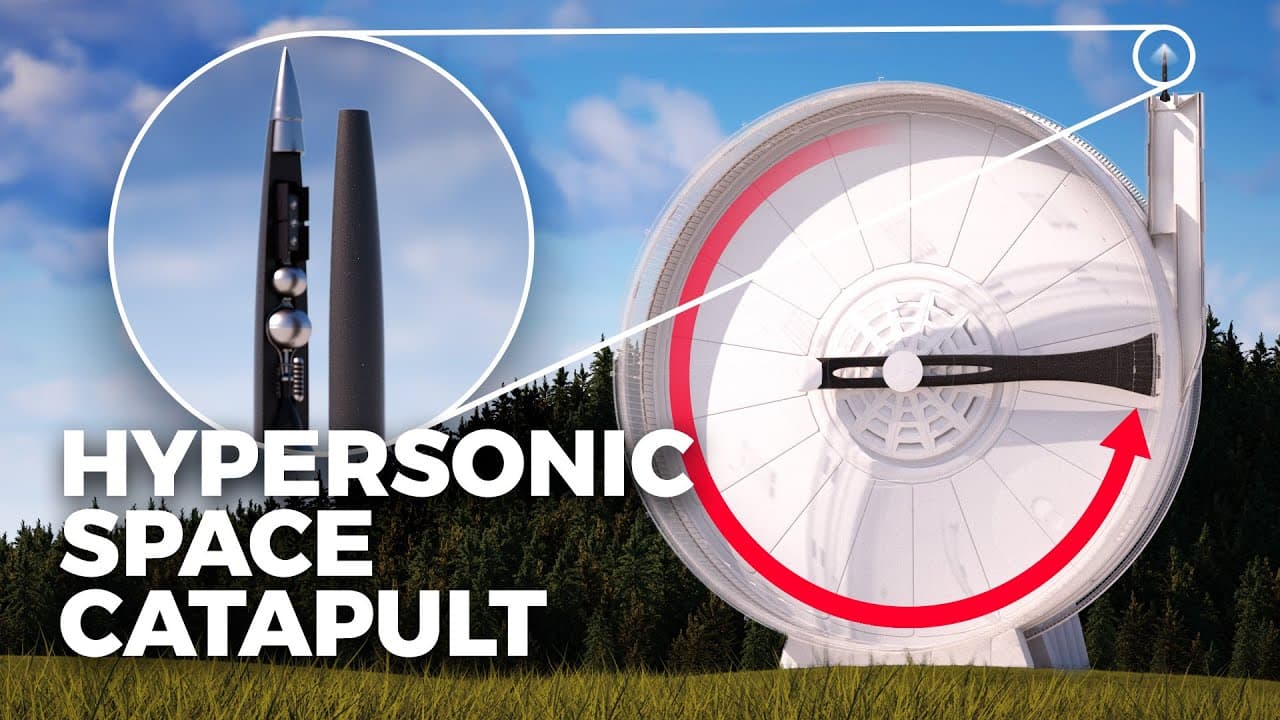
SpinLaunch aims to revolutionize space launches with a kinetic energy-based system.
Transcript
In the middle of a global pandemic, a ragtag group of welders, heavy machine operators and builders were brought together. They were given plans for a mysterious structure. With little information on what exactly they were building, their only clue was scrawled across the top of their plans. Spinlaunch. A space catapult. In this exclusive, behind t... Read More
Key Insights
- SpinLaunch aims to challenge the traditional rocket equation by using a centrifugal mass accelerator to launch payloads, significantly reducing the need for rocket fuel.
- The technology involves spinning a small rocket to hypersonic speeds in a vacuum chamber before release, allowing it to reach 72 kilometers of altitude using kinetic energy.
- Carbon fiber plays a crucial role due to its unmatched strength-to-weight ratio, essential for the tether supporting the payload during the spin-up process.
- SpinLaunch's vacuum chamber is innovative, built at a fraction of the cost of traditional aerospace vacuum chambers, and operates at a higher pressure than space simulation chambers.
- The system's design includes a rapid double-door airlock to prevent atmospheric air from entering the vacuum chamber during launch.
- SpinLaunch's energy requirements are modest compared to traditional rockets, with regenerative braking potentially recapturing some energy, making launches cost-effective.
- The company's system allows for multiple launches per day, with potential costs significantly lower than current small satellite launch providers.
- SpinLaunch faces challenges in scaling its technology and ensuring the durability of satellites under high g-forces, but initial tests show promise.
Install to Summarize YouTube Videos and Get Transcripts
Explore YouTube Video Summarizer or Get YouTube Transcript Extractor
Questions & Answers
Q: What problem is SpinLaunch attempting to solve?
SpinLaunch is addressing the rocket equation, which dictates that rockets must carry large amounts of fuel to deliver payloads into space. By using a kinetic energy-based system, SpinLaunch aims to significantly reduce the fuel needed, thus lowering costs and increasing launch frequency.
Q: How does SpinLaunch's system work?
SpinLaunch uses a centrifugal mass accelerator to spin a small rocket in a vacuum chamber at hypersonic speeds. Once released, the rocket gains altitude using kinetic energy, reducing the need for fuel. This system also involves innovative use of materials like carbon fiber for structural components.
Q: What role does carbon fiber play in SpinLaunch's technology?
Carbon fiber is crucial due to its strength-to-weight ratio, which is unmatched by other materials. It is used in the tether that supports the payload during spin-up, ensuring the system can handle the immense forces involved without adding excessive weight.
Q: What are the economic advantages of SpinLaunch's system?
SpinLaunch's system potentially offers lower costs per launch compared to traditional rockets. By minimizing fuel needs and using reusable components, the company aims to offer competitive pricing, targeting $2500 per kilogram, which is lower than many current providers.
Q: What challenges does SpinLaunch face in scaling its technology?
SpinLaunch must overcome challenges related to scaling its technology, such as ensuring the durability of satellites under high g-forces and developing a reliable release mechanism. Additionally, the company needs significant investment to build full-scale systems and secure necessary patents.
Q: How does SpinLaunch's vacuum chamber differ from traditional ones?
SpinLaunch's vacuum chamber is designed to minimize aerodynamic drag and heating without needing to simulate the vacuum of space. It operates at a higher pressure than traditional aerospace vacuum chambers, allowing for cost savings by using cheaper materials and simpler construction.
Q: What is the significance of the airlock system in SpinLaunch's design?
The airlock system prevents atmospheric air from entering the vacuum chamber during launch. It consists of a double-door mechanism that rapidly closes after the payload is released, ensuring the vacuum is maintained and the tether is protected from air resistance.
Q: What is the potential environmental impact of SpinLaunch's technology?
SpinLaunch's technology may have a positive environmental impact by reducing the amount of rocket fuel burned during launches. The system's reliance on kinetic energy and potential for energy recapture through regenerative braking offers a more sustainable approach to space launches.
Summary & Key Takeaways
-
SpinLaunch is developing a revolutionary space launch system that uses kinetic energy to reduce the reliance on traditional rocket fuel. By spinning a rocket in a vacuum chamber to hypersonic speeds, they aim to launch payloads more efficiently.
-
Key to SpinLaunch's innovation is the use of carbon fiber for its strength-to-weight ratio, and a cost-effective vacuum chamber design that minimizes aerodynamic drag and heating during launch.
-
The company's approach allows for multiple daily launches with reduced costs, but challenges remain in scaling the technology and ensuring satellite durability under extreme conditions.
Read in Other Languages (beta)
Share This Summary 📚
Summarize YouTube Videos and Get Video Transcripts with 1-Click
Try YouTube Summary with ChatGPT & Claude or YouTube Transcript Generator
Explore More Summaries from Real Engineering 📚




Summarize YouTube Videos and Get Video Transcripts with 1-Click
Try YouTube Summary with ChatGPT & Claude or YouTube Transcript Generator