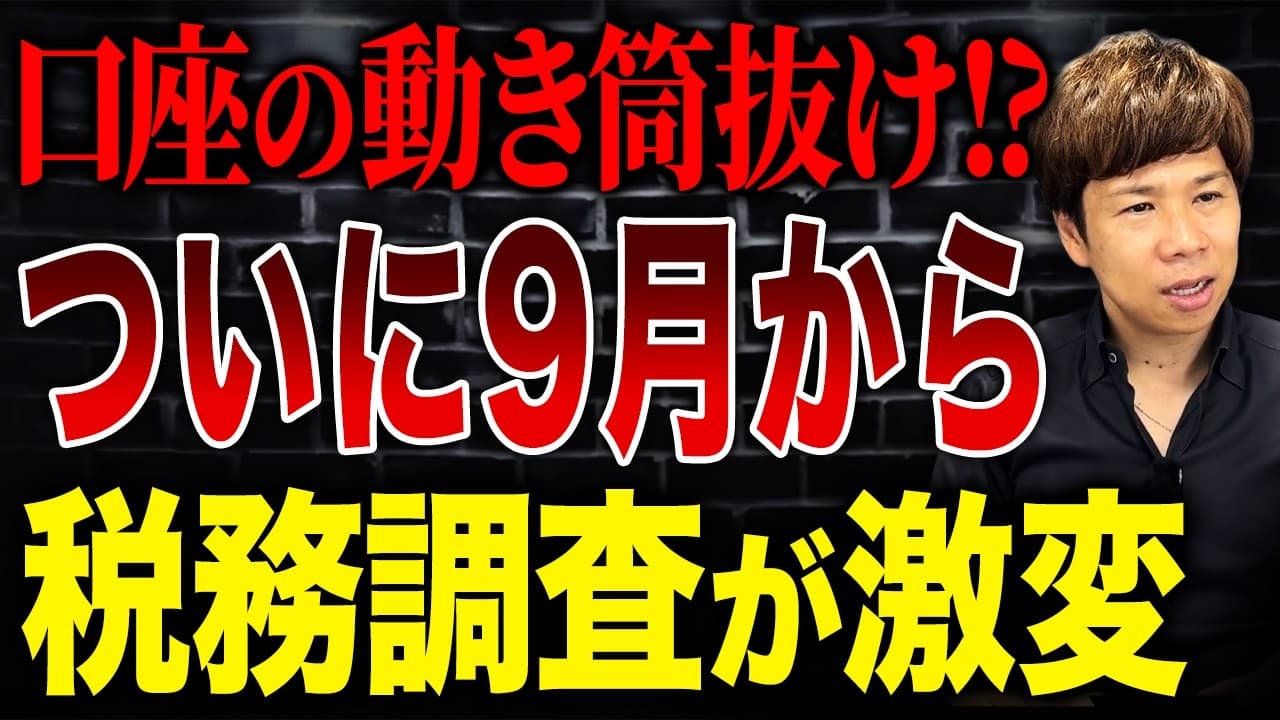
How Does KSK2 Change Japanese Tax Audits?
TL;DR
KSK2 integrates previously separate taxpayer records across corporate, income, inheritance, gift, and other taxes, making inconsistencies easier for the National Tax Agency to identify. It may improve audit targeting and raise the likelihood that non-filing or underreporting is discovered, although human officials still decide which flagged cases to investigate and its practical effects remain uncertain.
Transcript
It's said that many tax failures, like non-filing or under-reporting, will be caught, leading to more tax audits. It would be easiest if KSK2 just identified the bad spots clearly. Hello . I'm Sugawara from Tatsu Tax Accounting. Mr. Sugawara. KSK2. This new National Tax Agency system. With it starting in full scale. Yes. I heard that it w... Read More
Key Insights
- KSK2 is an updated National Tax Agency database designed to manage taxpayer information comprehensively. It replaces an aging system and links records that had previously been separated by tax category, improving officials’ ability to compare related filings and financial outcomes.
- KSK2 and the tax authority’s AI are separate tools. The transcript states that AI was already being used, while KSK2 is fundamentally a database and system overhaul, although the two could potentially be connected as part of the authority’s broader analytical work.
- Tax audit candidates have long been selected through the KSK system according to rules, indicators, or risk logic. The system can produce several candidates, but human officials ultimately determine which companies or individuals will actually receive an audit.
- Audit selection is influenced by human judgment and institutional priorities. Officials may prioritize one person whose apparent risk is much higher than other listed candidates, while an auditor’s experience level can also affect which case is considered appropriate to investigate.
- Cross-tax integration is the central change introduced by KSK2. Corporate tax, personal income tax, inheritance tax, gift tax, and other information can be examined together, making discrepancies between a person’s business activity, compensation, transfers, accumulated assets, and reported inheritance more visible.
- Gift tax enforcement may become more targeted when family transfers are integrated with other records. Examples discussed include bank transfers between relatives, a parent purchasing real estate or a car for a child, and a parent paying the child’s life insurance premiums.
- Gift tax audits conducted entirely on their own have historically been described as extremely rare in the discussion. Undeclared gifts are generally examined during inheritance tax audits, but KSK2 may make a suspicious gift identifiable before an inheritance investigation occurs.
- KSK2 detects suspicious outcomes and inconsistencies rather than perfectly tracing every use of money. If assets suddenly rise or fall, or accumulated income does not reasonably correspond with remaining assets, officials may investigate further to determine whether income, gifts, or inheritance were reported correctly.
Install to Summarize YouTube Videos and Get Transcripts
Explore YouTube Video Summarizer or Get YouTube Transcript Extractor
Questions & Answers
Q: What is KSK2 and what information does it manage?
KSK2 is the updated version of the National Tax Agency’s comprehensive taxpayer management system. It serves as a large database containing information such as filing status and income. Its important new feature is the integration of records across corporate tax, personal income tax, inheritance tax, gift tax, and other categories that were previously managed separately.
Q: How will KSK2 change the selection of tax audits?
KSK2 is expected to improve the precision with which the National Tax Agency identifies potentially valuable audit targets. It can compare integrated tax records and highlight inconsistencies, but it does not mean every flagged taxpayer will be audited. The system produces candidates, and human officials decide which cases to pursue based on risk, priorities, and auditor experience.
Q: Does KSK2 use AI to find tax evasion?
KSK2 itself is described as a database and system update, not as an AI system. The National Tax Agency had already introduced AI separately before KSK2. The discussion allows that these tools might eventually be linked, but it rejects the claim that AI is simply built into KSK2 or that both technologies are the same thing.
Q: Will KSK2 make undeclared gifts easier to detect?
KSK2 may increase the likelihood that undeclared gifts are identified because it combines information that can reveal transfers between family members. The examples include bank transfers, parents buying real estate or cars for their children, and parents paying life insurance premiums. Whether officials will investigate every suspicious transfer remains unknown until the system’s operation becomes clearer.
Q: Why can personal and corporate tax integration trigger scrutiny?
A business owner may receive compensation from a corporation, creating corporate records and personal income tax records connected to the same economic activity. By integrating those records, KSK2 can make discrepancies between corporate payments, personal income, accumulated assets, gifts, and eventual inheritance easier to see. An unexplained mismatch may prompt officials to investigate possible underreporting.
Q: How can income and inheritance records reveal inconsistencies?
Officials can compare a person’s reported income over many years with the assets remaining at death. If the final inheritance appears unexpectedly small, they may suspect that assets were transferred during the person’s lifetime or that inheritance information is incomplete. KSK2 supports this comparison by bringing personal income, gift tax, and inheritance tax information together.
Q: Does a KSK2 risk flag automatically result in a tax audit?
A KSK2 flag does not automatically produce a tax audit. The system can extract several companies or individuals that match certain indicators, but the tax authority cannot investigate everyone. Officials review the candidates and select cases, sometimes prioritizing the one considered most likely to involve tax evasion or assigning a case according to an auditor’s experience.
Q: What should taxpayers do in response to the KSK2 rollout?
Taxpayers should file accurately and avoid hiding income, gifts, or other taxable activity. The discussion’s central message is that correctly filed returns provide no reason for alarm. Because integrated records can expose inconsistencies across different taxes, taxpayers should ensure that corporate payments, personal income, family transfers, asset changes, and inheritance-related filings are mutually consistent and properly reported.
Summary & Key Takeaways
-
KSK2 is a comprehensive overhaul of the National Tax Agency’s aging taxpayer database. Its principal change is the integration of records that were previously managed separately by tax category, allowing officials to compare corporate, personal income, inheritance, gift, and other tax information within a more unified system.
-
The system can highlight inconsistencies such as unexplained changes in assets, mismatches between long-term income and an eventual inheritance, or potentially undeclared transfers between relatives. Family bank transfers, property purchases, car purchases, and life insurance premium payments may provide clues suggesting that a taxable gift occurred.
-
KSK2 does not automatically order an audit, and the transcript distinguishes the database upgrade from AI already used by the tax authority. The system produces risk-based candidates, while officials choose which cases to examine based on available information, organizational priorities, auditor experience, and the apparent likelihood of underreporting.
Read in Other Languages (beta)
Share This Summary 📚
Summarize YouTube Videos and Get Video Transcripts with 1-Click
Try YouTube Summary with ChatGPT & Claude or YouTube Transcript Generator
Explore More Summaries from 脱・税理士スガワラくん 📚
Summarize YouTube Videos and Get Video Transcripts with 1-Click
Try YouTube Summary with ChatGPT & Claude or YouTube Transcript Generator