How to Use Macro Cycles for Profitable Trading
TL;DR
Understanding market cycles is crucial for aligning trades with institutional money flows. Markets move in predictable phases influenced by macroeconomic factors like interest rates and inflation. By identifying these phases, traders can optimize their strategies to coincide with institutional investment trends, increasing profitability and reducing risk.
Transcript
Have you ever had a trade that looked perfect, but somehow the market moved the opposite way? Well, it's not bad luck. It's not stop hunting. It's because you still don't understand how the game is being played at the highest level. Most traders lose not because of their strategy, but because they are entering the right threads at the wrong timing.... Read More
Key Insights
- Market cycles are predictable phases driven by macroeconomic factors.
- Smart Money uses macro cycles to time trades and avoid retail traps.
- Fundamental analysis explains why prices move, complementing technical analysis.
- Central banks regulate economic growth by adjusting interest rates.
- Interest rate changes influence borrowing, spending, and economic growth.
- Institutional money flows into assets that perform well in current cycles.
- Retail traders often ignore macro factors, leading to losses.
- Understanding cycles helps traders choose the right assets and strategies.
Install to Summarize YouTube Videos and Get Transcripts
Explore YouTube Video Summarizer or Get YouTube Transcript Extractor
Questions & Answers
Q: How do macro cycles affect trading strategies?
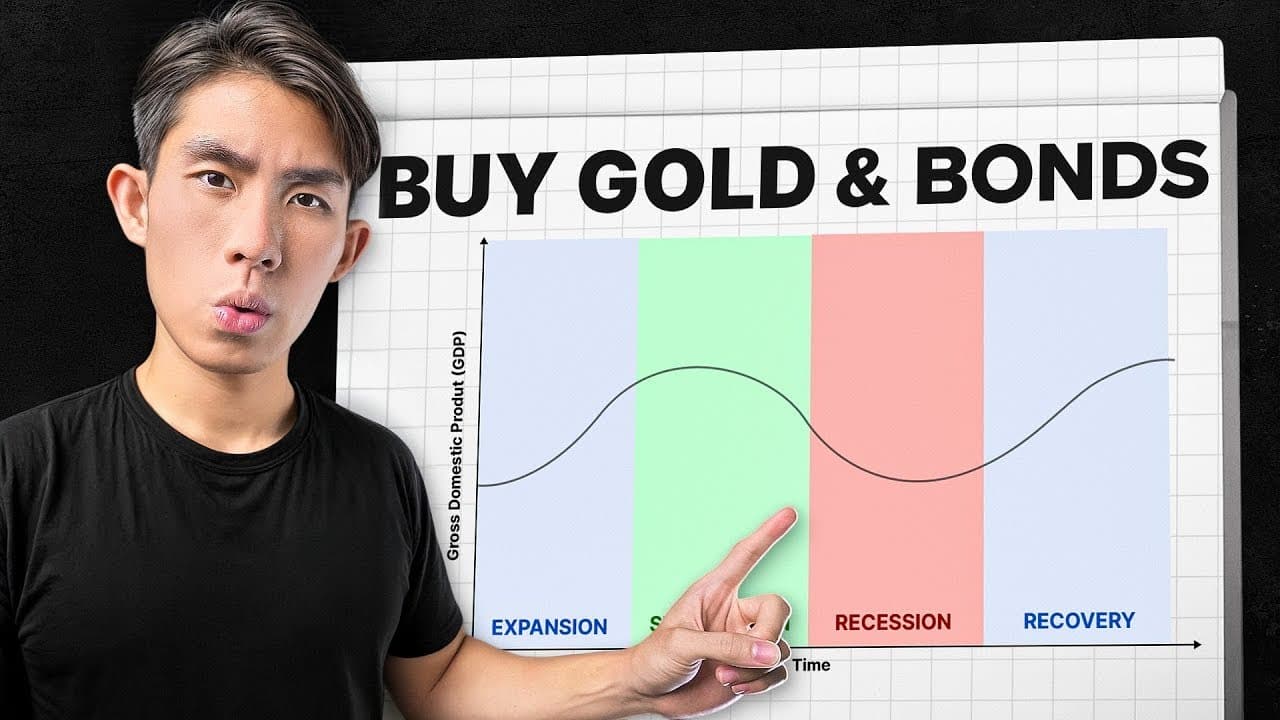
Macro cycles affect trading strategies by dictating the flow of institutional money, which influences asset performance. By understanding these cycles, traders can align their strategies with the phases of economic expansion, stagflation, recession, and recovery, optimizing their entry and exit points to coincide with institutional trends and reduce risk.
Q: What role do central banks play in market cycles?
Central banks regulate market cycles by adjusting interest rates to control economic growth and inflation. By increasing or decreasing rates, they influence borrowing and spending, which affects the strength of currencies and overall economic conditions. These actions guide institutional investments and can signal different phases of market cycles.
Q: Why is fundamental analysis important for traders?
Fundamental analysis is important because it explains the underlying reasons for price movements, complementing technical analysis. By understanding macroeconomic factors such as interest rates, inflation, and economic growth, traders can anticipate market trends and align their strategies with institutional money flows, leading to more informed and profitable trading decisions.
Q: How do interest rate changes impact the economy?
Interest rate changes impact the economy by influencing borrowing costs and consumer spending. Lower rates encourage borrowing and spending, stimulating economic growth, while higher rates discourage borrowing, reduce spending, and aim to control inflation. These changes affect the flow of money into different asset classes and the overall economic environment.
Q: What are the four phases of market cycles?
The four phases of market cycles are expansion, stagflation, recession, and recovery. During expansion, the economy grows, and risk-on assets perform well. Stagflation involves high inflation and unemployment, leading to uncertainty. Recession sees economic contraction and a shift to risk-off assets. Recovery marks economic improvement and renewed growth opportunities.
Q: How can traders identify the current phase of a market cycle?
Traders can identify the current phase of a market cycle by analyzing macroeconomic indicators such as interest rates, inflation, unemployment rates, and central bank policies. Observing institutional money flows and asset performance trends also provides insights into the prevailing cycle phase, helping traders adjust their strategies accordingly.
Q: Why do retail traders often lose in the market?
Retail traders often lose because they focus solely on technical analysis and ignore macroeconomic factors that drive market cycles. Without understanding the broader economic context, they fail to align their trades with institutional money flows and market trends, leading to poor timing and increased risk of losses.
Q: What strategies work best in different market cycle phases?
In expansion, trend-following and breakout strategies work well with risk-on assets. During stagflation, defensive plays and safe-haven assets are preferred. In recession, shorting risk-on assets and focusing on risk-off assets is effective. Recovery favors reversal strategies and buying dips in growth-oriented assets as the economy improves.
Summary & Key Takeaways
-
Understanding market cycles helps traders align with institutional money flows. These cycles are influenced by macroeconomic factors like interest rates and inflation, and they dictate the movement of money into different asset classes. By identifying these phases, traders can optimize their strategies and increase profitability.
-
Central banks play a crucial role in regulating economic growth through interest rate adjustments. These changes affect borrowing and spending, which in turn influence the strength of currencies and economic conditions. Traders who understand these dynamics can better anticipate market movements.
-
Retail traders often lose because they ignore macroeconomic factors and focus solely on technical analysis. By integrating fundamental analysis, traders can gain insights into why prices move and align their strategies with larger market trends, enhancing their overall trading success.
Read in Other Languages (beta)
Share This Summary 📚
Summarize YouTube Videos and Get Video Transcripts with 1-Click
Try YouTube Summary with ChatGPT & Claude or YouTube Transcript Generator
Explore More Summaries from The Trading Geek 📚





Summarize YouTube Videos and Get Video Transcripts with 1-Click
Try YouTube Summary with ChatGPT & Claude or YouTube Transcript Generator