How Smart Money Uses Liquidity Sweeps to Move Price
TL;DR
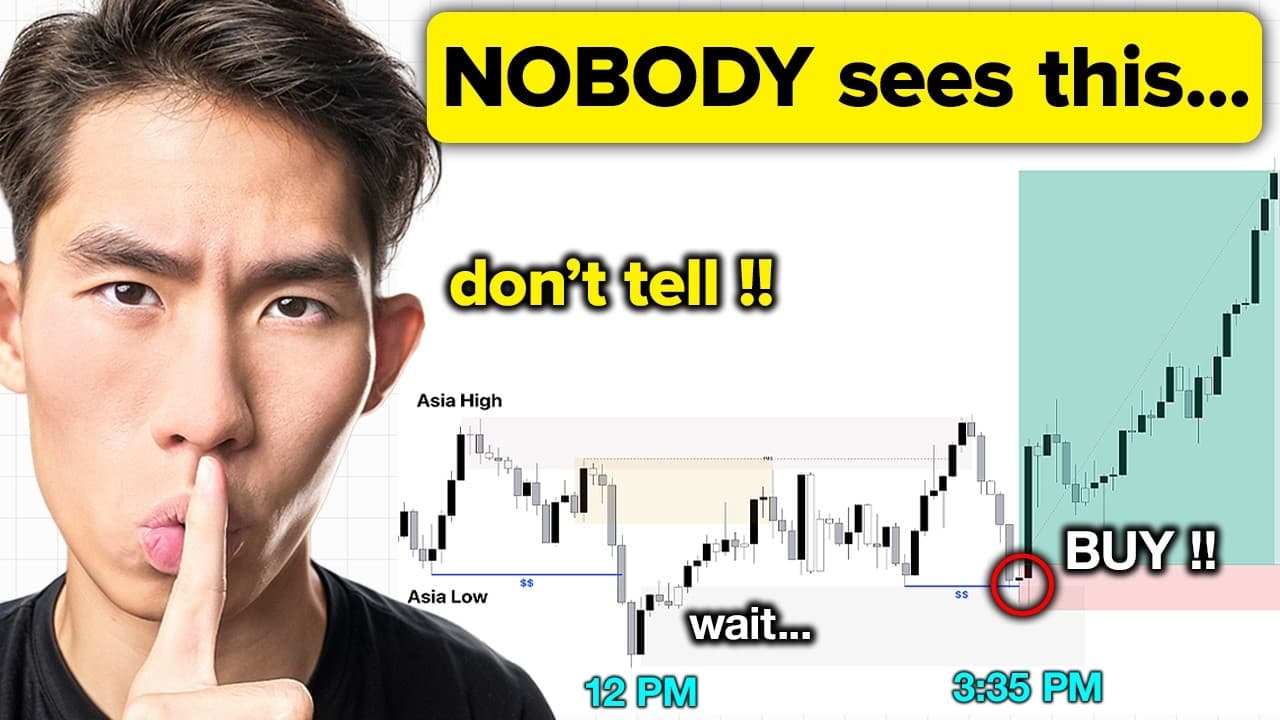
Smart money uses liquidity sweeps by pushing price into stop-loss pools, such as those above equal highs, before moving price in the intended direction. Brad Go says price moves for two reasons: to take liquidity and rebalance price. His example traces the move from a sweep to an origin candle, supply-zone mitigation, and a structural break, making the full explanation worth reading.
Transcript
If you keep trading the way that you do right now, you will never be consistent, not because you're stupid, but because the market punishes the exact behavior that you repeat every single day. So, today I'm breaking down the 5day trading secrets that most traders never figure out and most trading gurus won't tell you because they don't even know it... Read More
Key Insights
- The market moves for only two reasons: to take liquidity and to rebalance price. Indicators, news, and emotion do not drive price. Recognizing these two forces is the foundation for reading institutional order flow correctly.
- The real move does not start at the aggressive-looking candle. It starts earlier at a liquidity sweep and a structural shift that most traders ignore, meaning the origin point precedes the visible sell-off by hours.
- Equal highs create pooled liquidity because retail traders enter sells there and place stop losses above the highs. Smart money pushes price up to sweep those stops before driving price down in the intended direction.
- The origin candle is the one that leads to the liquidity sweep and marks the first time institutions step in to enter large sell positions, fueling the subsequent downside move with sufficient sell orders.
- Breaking market structure requires a large amount of money. When price takes out the last internal low after mitigating a supply zone, it confirms heavy sell orders and genuine institutional participation.
- Price always gravitates toward liquidity, moving from one liquidity point to the next. It must sweep available liquidity before the real move happens, grabbing more when there is insufficient liquidity to continue.
- Imbalance is a strong one-directional move without significant pullback, and it never lasts forever. The market consolidates to seek fair value and fill the imbalance before entering the next imbalance phase.
- The market oscillates between imbalance and balance repeatedly. Chart patterns are not the driver; this is programmed market behavior of clearing orders and rebalancing inefficiency, so traders should follow the flow rather than fight it.
Install to Summarize YouTube Videos and Get Transcripts
Explore YouTube Video Summarizer or Get YouTube Transcript Extractor
Questions & Answers
Q: How does smart money use liquidity sweeps to move price?
Smart money pushes price toward areas where stop losses have created available liquidity, such as above equal highs. After sweeping that liquidity and stopping out retail sellers, institutions can use the resulting sell orders to help move price downward.
Q: Why does price move in the market?
Brad Go says price moves for only two reasons: to take liquidity and to rebalance price. He argues that indicators, news, and emotion are not what drive the movement described in his framework.
Q: What is a liquidity sweep?
A liquidity sweep occurs when price moves through an area containing accumulated orders, such as stop losses above equal highs. In the example, price takes those highs, stops out retail traders, and then begins moving downward.
Q: Why do equal highs create liquidity?
Retail traders may interpret equal highs as a double top and enter sell positions. When they place stop losses above those highs, the orders form a pool of liquidity that price can sweep.
Q: Where does the real price move begin?
The real move begins at the earlier liquidity sweep and structural shift, not at the later candle that looks aggressive. In Brad Go's example, the origin appeared about two hours before the visible sell-off.
Q: What is an origin candle?
Brad Go calls the candle that leads to the liquidity sweep the origin candle. He describes it as the point where institutions first enter large sell positions and use available liquidity to fuel the downward move.
Q: What does a structural break confirm?
A structural break occurs in the example when price moves below the last internal low after mitigating the earlier supply zone. Brad Go says breaking structure requires a large amount of money, so the break indicates substantial sell orders.
Q: Why does price move from one liquidity point to another?
Brad Go says price always gravitates toward liquidity and must sweep available liquidity before the real move occurs. If there is not enough liquidity for price to continue falling, price moves to collect more, such as above another swing high.
Summary & Key Takeaways
-
Brad Goh argues traders stay inconsistent because the market punishes repeated behavior. He teaches that price moves only to take liquidity and rebalance, so the real move begins at a liquidity sweep and structural shift, not at the aggressive candle most traders react to.
-
Equal highs build stop-loss liquidity from retail sellers. Institutions sweep those highs, creating an origin candle where they enter large sells, mitigate the supply zone, then break structure downward. Price then returns to fill imbalance before the next dump, cycling between imbalance and balance.
-
He introduces multi-time frame or top-down analysis, comparing it to a military chain of command where you never skip ranks. The sequence flows from higher to lower time frames in order, and he promises a sniper entry checklist he uses daily as a multi-millionaire trader.
Read in Other Languages (beta)
Share This Summary 📚
Summarize YouTube Videos and Get Video Transcripts with 1-Click
Try YouTube Summary with ChatGPT & Claude or YouTube Transcript Generator
Explore More Summaries from The Trading Geek 📚



Summarize YouTube Videos and Get Video Transcripts with 1-Click
Try YouTube Summary with ChatGPT & Claude or YouTube Transcript Generator