How to Convert JSON-LD Knowledge Graphs for Gephi
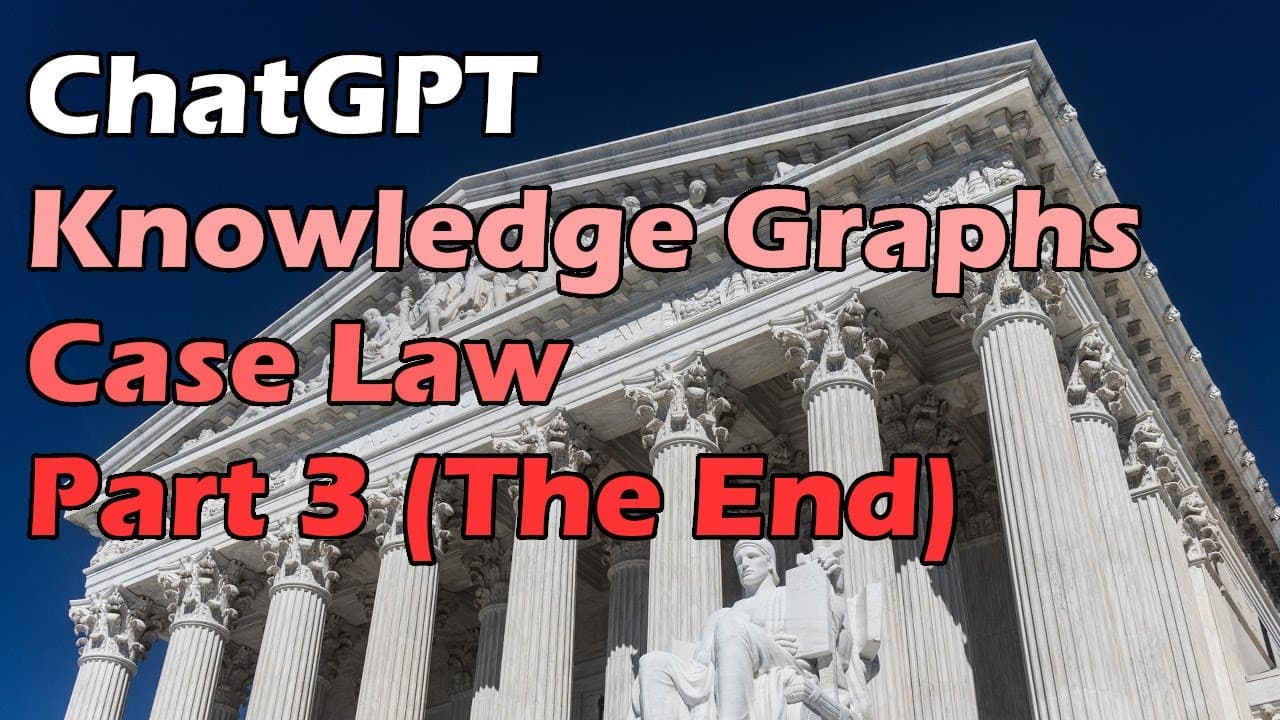
TL;DR
Convert a folder of JSON-LD knowledge graphs into a Gephi-compatible GEXF file by first loading each JSON file with error handling, skipping malformed or incomplete entries, and then normalizing inconsistent structures. ChatGPT can draft the Python workflow, but its suggested functions must be tested because it invented a nonexistent JSON-LD validation function during the demonstration.
Transcript
all right gang David Shapiro here uh we are going to wrap up this uh tutorial series on uh using chat GPT to code um so first though I need to do a couple of plugs so one um I just recorded a really great podcast episode with Bax tea future um that'll be coming out on his channel uh probably later this week it was a three and a half hour lo... Read More
Key Insights
- JSON-LD source files can be incomplete or malformed when generated during rapid prototyping, and the transcript associates some truncated outputs with token limits. A conversion workflow should therefore treat failed files as expected input conditions rather than assuming every generated knowledge graph is usable.
- The knowledge graph files do not follow one consistent structure, because some include a graph element or graph properties while others do not. Converting them into one graph requires a homogenization step that resolves these structural differences before producing the final exchange file.
- Gephi requires a supported graph format such as GEXF, GraphML, or CSV in the workflow shown. Because the existing Supreme Court opinion graphs are stored as JSON-LD, they must be converted before the presenter can visualize them in Gephi.
- The first validation layer is ordinary JSON parsing with Python's JSON module. A try-except clause allows the script to attempt loading each file into a dictionary and then skip the file safely if parsing fails instead of stopping the entire batch process.
- The proposed processing pipeline uses pyld for JSON-LD handling and NetworkX for constructing a graph object. The intended result is a single GEXF file, although the transcript ends while the presenter is still testing and correcting the generated validation approach.
- ChatGPT-generated code can contain invented functions, as demonstrated when pyld lacked the suggested is-valid-JSON-LD function. Running the code immediately exposed the error and prompted a revised approach, showing that generated implementation details require direct verification.
- UTF-8 encoding should be specified whenever the script opens files because the presenter stores the project data in UTF-8. This detail must be carried into each relevant open statement to keep file handling aligned with the existing corpus.
- AI-assisted coding can reduce the time needed to discover libraries and draft unfamiliar workflows, but it does not remove the need to understand errors. The presenter treats ChatGPT as a way to experiment faster while learning concepts such as pyld, NetworkX, and graph exchange formats.
Install to Summarize YouTube Videos and Get Transcripts
Explore YouTube Video Summarizer or Get YouTube Transcript Extractor
Questions & Answers
Q: How do you convert JSON-LD files into GEXF for Gephi?
Start by writing a Python script that opens every JSON-LD file in the source folder and attempts to parse it with the JSON module. Use try-except handling to skip malformed or incomplete files. Normalize the differing graph structures, build a graph object with NetworkX, and then target one GEXF output that Gephi can load. The transcript does not show the conversion being completed.
Q: How should malformed JSON files be handled during batch conversion?
Each file should be opened and parsed inside a try-except clause. If the JSON cannot be loaded, the script should report or recognize the failure, ignore that file, and move to the next one. This approach is important because several generated Supreme Court opinion files were truncated or otherwise unusable, so one bad file should not terminate the whole conversion process.
Q: Why must JSON-LD knowledge graphs be normalized before merging?
The generated files do not all share the same structure. The presenter observes that some contain graph elements or graph properties while others omit them or organize their content differently. A normalization step is therefore needed to transform usable inputs into a consistent representation before NetworkX can combine them and before the script can produce a single GEXF file for Gephi.
Q: What formats can Gephi use in the demonstrated workflow?
The presenter identifies GEXF, GraphML, and CSV as formats available for importing graph data into Gephi. The project data is currently stored in JSON-LD, so it cannot be used directly in the workflow being demonstrated. The chosen target is GEXF, described in the transcript as a graph exchange file and a type of XML suitable for visualization in Gephi.
Q: Why did the first JSON-LD validation script fail?
The first script failed because ChatGPT suggested an is-valid-JSON-LD function that was not actually available in the pyld module. The presenter discovered this only after saving and running the code. The failure demonstrates that a plausible library name and function call are not sufficient evidence that generated code is correct, so proposed functions must be executed and checked.
Q: What roles do pyld and NetworkX have in the proposed pipeline?
Pyld is proposed for working with the JSON-LD data, while NetworkX is proposed for creating a graph object from that data. The broader workflow is to parse each JSON file, reject unusable inputs, normalize inconsistent structures, construct a combined graph, and export it as GEXF. The transcript shows these libraries being installed, but the complete pipeline is not finished.
Q: Why should UTF-8 encoding be specified when opening the files?
The presenter says every open statement should include UTF-8 encoding because all project files are encoded in UTF-8. Adding the encoding parameter keeps the validation and conversion scripts consistent with how the source material was saved. This requirement is introduced while correcting the generated script, making it part of the practical file-handling setup for the JSON-LD corpus.
Q: Does using ChatGPT for coding eliminate the need to learn or verify code?
No. The presenter argues that ChatGPT can accelerate experimentation, reveal unfamiliar tools, and reduce time spent searching through documentation, much as other computing tools offload labor. However, the invented pyld validation function shows that users still need to run the code, inspect errors, question unsupported suggestions, and learn enough about the underlying workflow to revise unsuccessful approaches.
Summary & Key Takeaways
-
The project begins with Supreme Court opinions already transformed into separate JSON-LD knowledge graph files. Several outputs are incomplete or malformed, probably because of token limits, while others use inconsistent structures. The prototype therefore needs a Python preprocessing stage that can identify usable files, skip failures, and normalize the surviving data.
-
Gephi cannot directly use the existing JSON files in the demonstrated workflow, so the target is GEXF, a graph exchange format based on XML. The proposed process loads JSON into Python dictionaries, interprets JSON-LD content, constructs a graph with NetworkX, and aims to combine the processed material into one visualization-ready output file.
-
ChatGPT rapidly proposes libraries, reasoning, and Python code, helping the presenter discover unfamiliar tools while solving a concrete problem. However, execution reveals that the suggested pyld validation function does not exist. The result illustrates both the productivity benefit of AI-assisted coding and the continuing need to test generated code and correct its assumptions.
Read in Other Languages (beta)
Share This Summary 📚
Summarize YouTube Videos and Get Video Transcripts with 1-Click
Try YouTube Summary with ChatGPT & Claude or YouTube Transcript Generator
Explore More Summaries from David Shapiro 📚

Summarize YouTube Videos and Get Video Transcripts with 1-Click
Try YouTube Summary with ChatGPT & Claude or YouTube Transcript Generator