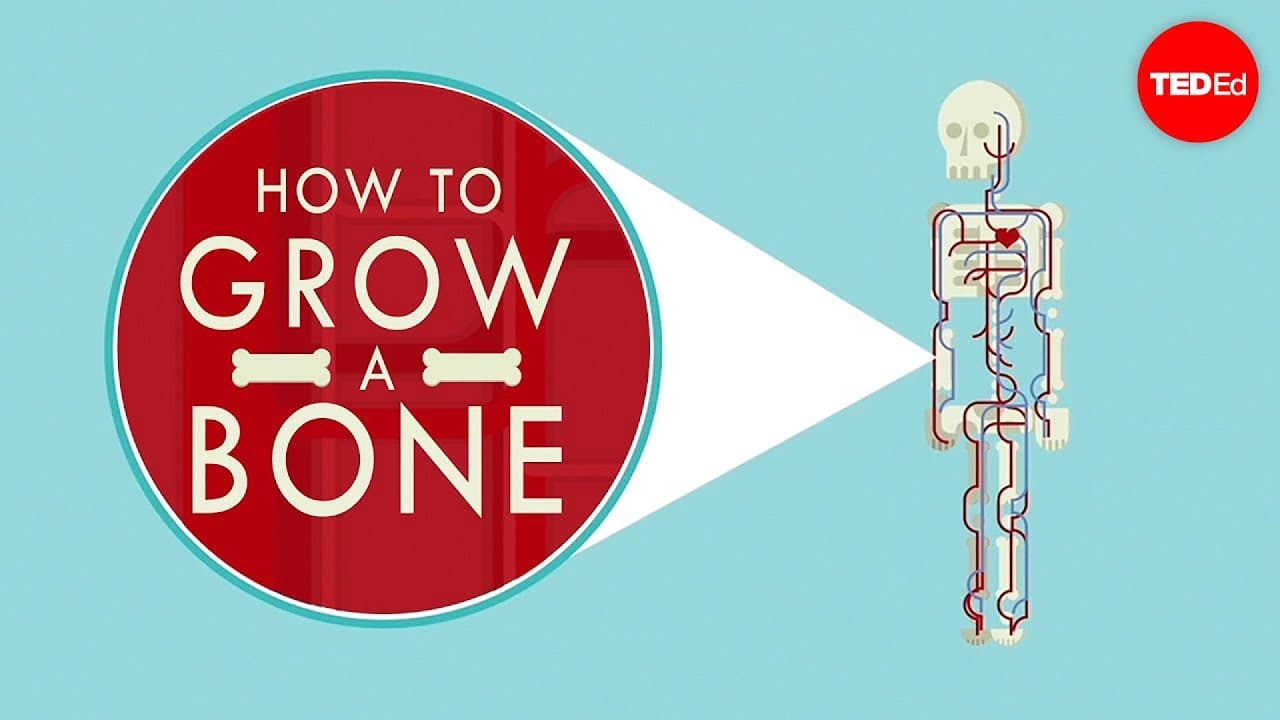
How to grow a bone - Nina Tandon
TL;DR
Scientists are working on growing personalized human bones outside the body using stem cells and bioreactors.
Transcript
Can you grow a human bone outside the human body? The answer may soon be yes, but before we can understand how that's possible, we need to look at how bones grow naturally inside the body. Most bones start in a growing fetus as a soft, flexible cartilage. Bone-forming cells replace the cartilage with a spongy mineral lattice made of elements like ... Read More
Key Insights
- ☠️ The process of bone growth involves replacement of cartilage with a mineral lattice by osteoblasts.
- ☠️ Osteoclasts break down old bone to allow osteoblasts to add new material and maintain bone health.
- ☠️ Growing personalized human bones using stem cells outside the body is a potential solution for bone defects.
- ☠️ The bioreactor plays a crucial role in simulating conditions necessary for stem cells to differentiate into bone-forming cells.
- ☠️ Real stress is required for artificial bones to become strong and durable, following Wolff's Law.
- ☠️ Lab-grown bones have been successfully implanted in animals, with human trials potentially starting soon.
- ☠️ Personalized bones could provide better solutions than traditional methods for bone defects.
Install to Summarize YouTube Videos and Get Transcripts
Explore YouTube Video Summarizer or Get YouTube Transcript Extractor
Questions & Answers
Q: How do bones naturally grow inside the body?
Bones start as soft cartilage in fetuses which are replaced with a mineral lattice made of calcium and phosphate by bone-forming cells called osteoblasts.
Q: How do osteoblasts and osteoclasts work together to maintain bone health?
Osteoblasts reinforce and build bone while osteoclasts break down old bone, allowing for new material to replace it and maintain bone strength.
Q: Why is it important for artificial bones to experience stress?
Artificial bones need to experience stress to become stronger and less brittle, mimicking the environment inside the body and following Wolff's Law for bone development.
Q: How are scientists creating personalized human bones outside the body?
Scientists extract stem cells from a patient's fat tissue, grow them on decellularized cow bone scaffolds in a bioreactor, and then implant the living bone back into the patient.
Summary & Key Takeaways
-
Bones in the body grow from soft cartilage into a mineral lattice composed of calcium and phosphate, with osteoblasts reinforcing bone strength.
-
Osteoclasts break down old bone for osteoblasts to add new material, maintaining bone health.
-
Scientists are developing methods to grow personalized human bones using stem cells, creating living bone ready for implantation.
Read in Other Languages (beta)
Share This Summary 📚
Summarize YouTube Videos and Get Video Transcripts with 1-Click
Try YouTube Summary with ChatGPT & Claude or YouTube Transcript Generator
Explore More Summaries from TED-Ed 📚




Summarize YouTube Videos and Get Video Transcripts with 1-Click
Try YouTube Summary with ChatGPT & Claude or YouTube Transcript Generator