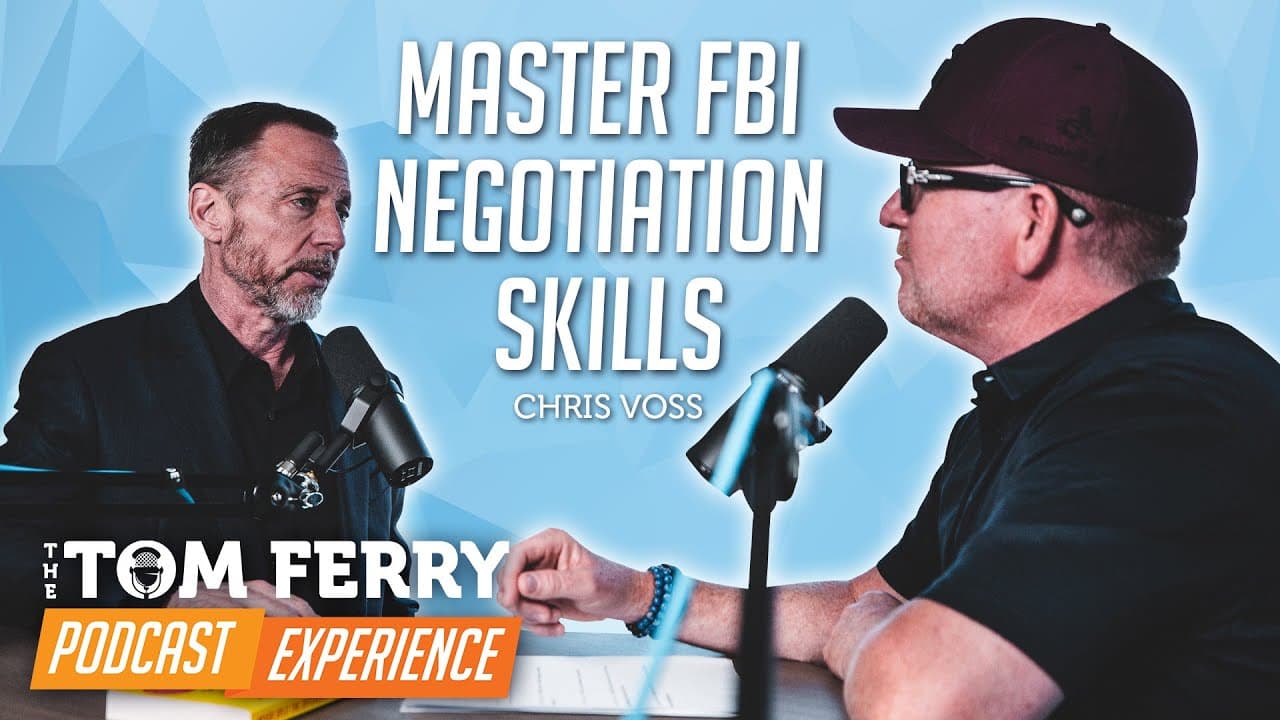
How to Negotiate ANYTHING Like a Pro - The REAL Art of Negotiation with Chris Voss
TL;DR
Chris Voss shares negotiation strategies applicable to real estate.
Transcript
hey welcome to podcast super excited to have Chris Voss here author of the book never split the difference today we're going through real-life scenarios questions tactics hacks ways to get time back and most importantly I hate to say it get to the s because I know yes isn't always the answer so enjoy the show so here's the thing entrepreneurs leade... Read More
Key Insights
- Chris Voss emphasizes the importance of empathy in negotiations, suggesting that understanding the other party's perspective can lead to more effective outcomes.
- He highlights the significance of recognizing patterns in behavior, noting that everyone has predictable patterns that can be leveraged in negotiations.
- Voss advises against making assumptions and instead recommends forming hypotheses to remain open to new information and adjustments.
- He underscores the necessity of small stakes practice to prepare for high stakes negotiations, suggesting that everyday interactions are opportunities to refine negotiation skills.
- The concept of fear of loss is identified as a powerful motivator in decision-making, but Voss warns against wielding it carelessly to avoid adversarial relationships.
- Effective communication in negotiations involves concise and clear messaging, particularly in emails, where less is more to maintain engagement.
- Voss introduces the idea of 'inception' in negotiations, where planting ideas subtly can guide the other party to desired conclusions without direct confrontation.
- He stresses the role of consistent and predictable communication with clients to build trust and ease the negotiation process, particularly in high-stress situations like real estate transactions.
Install to Summarize YouTube Videos and Get Transcripts
Explore YouTube Video Summarizer or Get YouTube Transcript Extractor
Questions & Answers
Q: How can empathy improve negotiation outcomes?
Empathy can significantly enhance negotiation outcomes by allowing you to understand and acknowledge the other party's perspective. This builds trust and rapport, making it more likely for them to collaborate and share valuable information. By demonstrating empathy, you can create a more cooperative environment, leading to mutually beneficial solutions.
Q: What is the role of fear of loss in negotiations?
Fear of loss is a powerful motivator in negotiations, as it taps into the human instinct to avoid losing something valuable. By highlighting potential losses, you can encourage decision-making. However, it must be used responsibly to avoid creating adversarial relationships. Empathy should precede its use to ensure understanding and maintain a positive negotiation atmosphere.
Q: Why is small stakes practice important for negotiations?
Small stakes practice is crucial because it allows you to refine your negotiation skills in low-pressure situations. By practicing regularly in everyday interactions, you become more adept at recognizing patterns, managing emotions, and employing effective strategies. This preparation ensures you are ready to handle high stakes negotiations with confidence and competence.
Q: How can you effectively communicate in email negotiations?
Effective email communication in negotiations involves being concise and clear. Avoid long emails with multiple points; instead, focus on one move at a time to maintain engagement. Start with a warning if delivering bad news and end on a positive note to leave a lasting impression. This approach ensures your message is read and understood, facilitating a smoother negotiation process.
Q: What is the 'inception' tactic in negotiations?
The 'inception' tactic involves subtly planting ideas in the other party's mind to guide them towards desired conclusions. By modeling the language and tone you want them to use, you can influence their thoughts and actions without direct confrontation. This technique requires careful consideration of wording and delivery to ensure the message is received as intended.
Q: How can you determine when to walk away from a negotiation?
Deciding when to walk away from a negotiation involves assessing the potential deal's value and the relationship with the other party. If the deal is not favorable or the other party is unreliable, it may be time to walk away. Understanding what is possible and comparing it to what is desired helps in making this decision. Trust your instincts and prioritize long-term benefits over short-term gains.
Q: What strategies can help with clients who go silent during negotiations?
When clients go silent, it's often due to feeling unheard or experiencing difficulties on their end. To re-engage them, send a simple message like 'Have you given up on working with me?' to prompt a response. Once reconnected, focus on summarizing their perspective to show understanding, which can rebuild trust and encourage open communication.
Q: How do you handle irrational behavior in negotiations?
Handling irrational behavior requires recognizing that what seems irrational is often a predictable pattern based on the other party's perspective. Use empathy to acknowledge their feelings without agreeing or disagreeing. By labeling their emotions and showing understanding, you can de-escalate tensions and guide the conversation back to a productive path.
Summary & Key Takeaways
-
Chris Voss, a former FBI negotiator, discusses the art of negotiation and its application in real estate. He emphasizes empathy, listening, and understanding the other party's perspective as key elements for successful negotiations.
-
Voss highlights the importance of recognizing patterns in behavior and using small stakes practice to prepare for high stakes negotiations. He advises against making assumptions and recommends forming hypotheses to remain adaptable.
-
Fear of loss is identified as a powerful motivator, but Voss warns against using it carelessly. He advocates for concise communication in emails and introduces the concept of 'inception' to subtly guide negotiations.
Read in Other Languages (beta)
Share This Summary 📚
Summarize YouTube Videos and Get Video Transcripts with 1-Click
Try YouTube Summary with ChatGPT & Claude or YouTube Transcript Generator
Explore More Summaries from Tom Ferry 📚


Summarize YouTube Videos and Get Video Transcripts with 1-Click
Try YouTube Summary with ChatGPT & Claude or YouTube Transcript Generator