How Is Forward Health Transforming Healthcare into a Product?
TL;DR
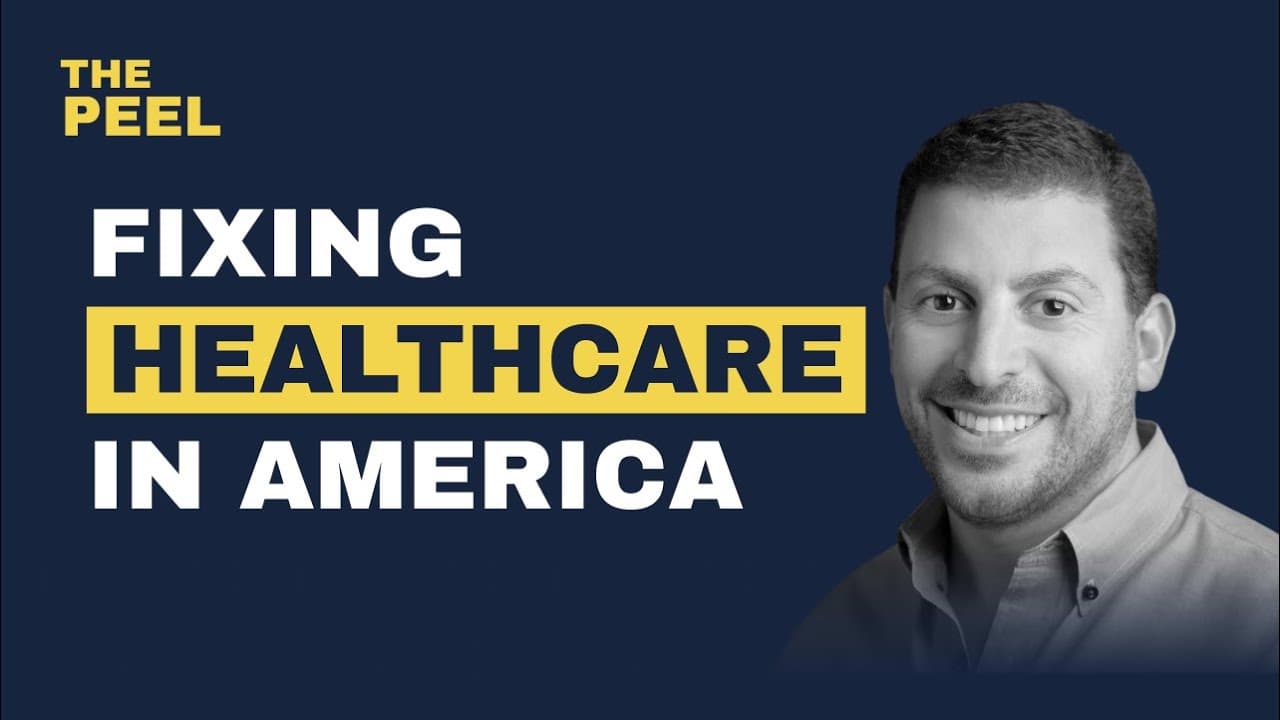
Forward Health is transforming healthcare from a service into a product by creating a consumer-focused model where members pay directly for care. This shift emphasizes long-term health outcomes and prevention rather than short-term treatments, aiming to reduce costs and improve overall health. By leveraging modern technology and aligning incentives with saving lives, Forward Health seeks to revolutionize the healthcare industry.
Transcript
well so what we've done is we've created an entire Healthcare System that's focused on keeping you at work not keeping you alive it's just too short-term oriented and you kind of know this right because just ask yourself like the last I don't know three four five times you went to the doctor like what'd you go for usually it's like well I went for ... Read More
Key Insights
- 🍉 The traditional healthcare system in America focuses on short-term treatments and neglects long-term prevention.
- 😮 Healthcare costs are rising due to misaligned incentives and a lack of innovation in the industry.
- 😒 Forward Health is reimagining healthcare by creating a product-based system that prioritizes prevention and uses modern technology to improve health outcomes.
- 📁 Shifting to a direct-to-consumer model and utilizing hardware and software platforms can make healthcare more accessible and affordable for everyone.
- 🧑⚕️ Incentives should be aligned with saving lives and improving health outcomes, rather than profiting from providing services.
- 🧑⚕️ The development of a product-centric healthcare system has the potential to drastically improve health outcomes and decrease healthcare costs.
Install to Summarize YouTube Videos and Get Transcripts
Explore YouTube Video Summarizer or Get YouTube Transcript Extractor
Questions & Answers
Q: Why does Adrian Aoun say the US healthcare system is broken?
Aoun argues the system is built to keep you at work, not to keep you alive, because it is too short-term oriented. Doctors focus on immediate complaints like a rash or a cold instead of what will actually kill you. The core problem is misaligned incentives: care only kicks in once you get sick enough to matter within the roughly two-year window an employer pays for.
Q: How did US healthcare become tied to employers?
During World War II the country lost many people, so employers competed for scarce talent by hiking wages. The government responded with a nationwide salary freeze that capped pay at existing levels. To keep competing, companies started offering benefits and perks instead, including paying for employees' healthcare, which side-loaded compensation and tied coverage to jobs.
Q: What did healthcare look like before insurance?
Before insurance, entrepreneurs like Kaiser created local healthcare systems that people simply paid into monthly. Earlier still, people paid directly for services on a fee-for-service basis. Aoun uses this history to show that employer-based insurance is a relatively recent development, not the original way healthcare was delivered or paid for.
Q: What is Forward Health building?
Forward is rebuilding healthcare from the ground up by creating an operating system for healthcare that uses modern technology like the internet, AI, and sensors. The goal is to turn healthcare from a labor-intensive service into a scalable product, shifting the focus from short-term treatment toward long-term prevention.
Q: Why does Adrian Aoun think doctor's offices won't exist in the future?
Aoun believes the traditional doctor's office model does not scale and does not serve prevention. By moving to a hardware and software platform rather than labor-intensive visits, he expects care to be delivered in fundamentally different ways, which is why he doesn't think doctor's offices will exist in the future.
Q: What is Adrian Aoun's background before Forward?
Before founding Forward, Adrian Aoun was Larry Page's right-hand man at Google. That background informs his approach of applying modern technology, like AI and sensors, to an industry he believes has resisted innovation.
Q: Why does Aoun say innovation in healthcare has a negative ROI?
In the current system, incentives reward treating illness rather than preventing it, so investing in long-term prevention doesn't pay off within the short window employers and payers care about. Aoun frames this as why innovation in healthcare has a negative ROI, and it's a central reason he built Forward around a product model with different incentives.
Q: How does Forward try to fix the incentive problem?
Forward aims to align its business model with keeping people healthy rather than profiting from services rendered. By turning healthcare into a product and focusing on prevention and long-term outcomes, it moves away from the fee-for-service and employer-driven structure that Aoun blames for the industry's misalignment.
Summary & Key Takeaways
-
Forward Health is building an operating system for healthcare that uses modern technology to transform the industry from a service into a product.
-
They are reimagining healthcare by aligning incentives with the actual consumer, creating a direct-to-consumer model where members pay for healthcare.
-
By shifting the focus from short-term treatments to long-term prevention, Forward Health aims to improve health outcomes and reduce the cost of healthcare.
Read in Other Languages (beta)
Share This Summary 📚
Summarize YouTube Videos and Get Video Transcripts with 1-Click
Try YouTube Summary with ChatGPT & Claude or YouTube Transcript Generator
Explore More Summaries from The Peel with Turner Novak 📚





Summarize YouTube Videos and Get Video Transcripts with 1-Click
Try YouTube Summary with ChatGPT & Claude or YouTube Transcript Generator