How Does Software Supply Chain Security Work?
TL;DR
Software supply chain security protects every step used to move code from a developer’s keyboard into production. Attackers exploit weak links in build and delivery systems, vulnerable dependencies, and trusted software updates, so organizations must secure not only their own code but also the tools and open source components used to build, operate, and distribute it.
Transcript
but Europe has this version called the Cyber resiliency act the CRA and I joked before that you can't just mandate that all software is secure it doesn't work but Europe is trying this bill is basically like effectively Banning open- Source software and telling people that if there's vulnerabilities you're liable no ... Read More
Key Insights
- A software supply chain is the complete sequence that takes code from a developer’s keyboard to the production environment where users receive value, including the tools and systems used to build, operate, package, and distribute the software.
- Software supply chain attacks target delivery processes rather than only the application itself, allowing attackers to tamper with releases, introduce malware, or exploit vulnerabilities as software moves from its creators to users.
- Software dependencies create several layers of indirect risk because vendors use other software, which may rely on still more components, leaving organizations exposed to vulnerabilities in technology they neither created nor directly control.
- Software supply chain risk has been recognized for decades, as illustrated by the discussion of Ken Thompson’s 1984 paper about trusting the tools used to create software, even though widespread attention arrived much later.
- Attackers generally pursue the easiest available weakness, so stronger adoption of protections such as two-factor authentication, security keys, and HTTPS has encouraged them to explore less-defended software build and delivery systems.
- The SolarWinds breach demonstrated how compromising a software delivery system can extend an attack beyond one company, because malicious changes can be included in a published product release and distributed to customers through trusted channels.
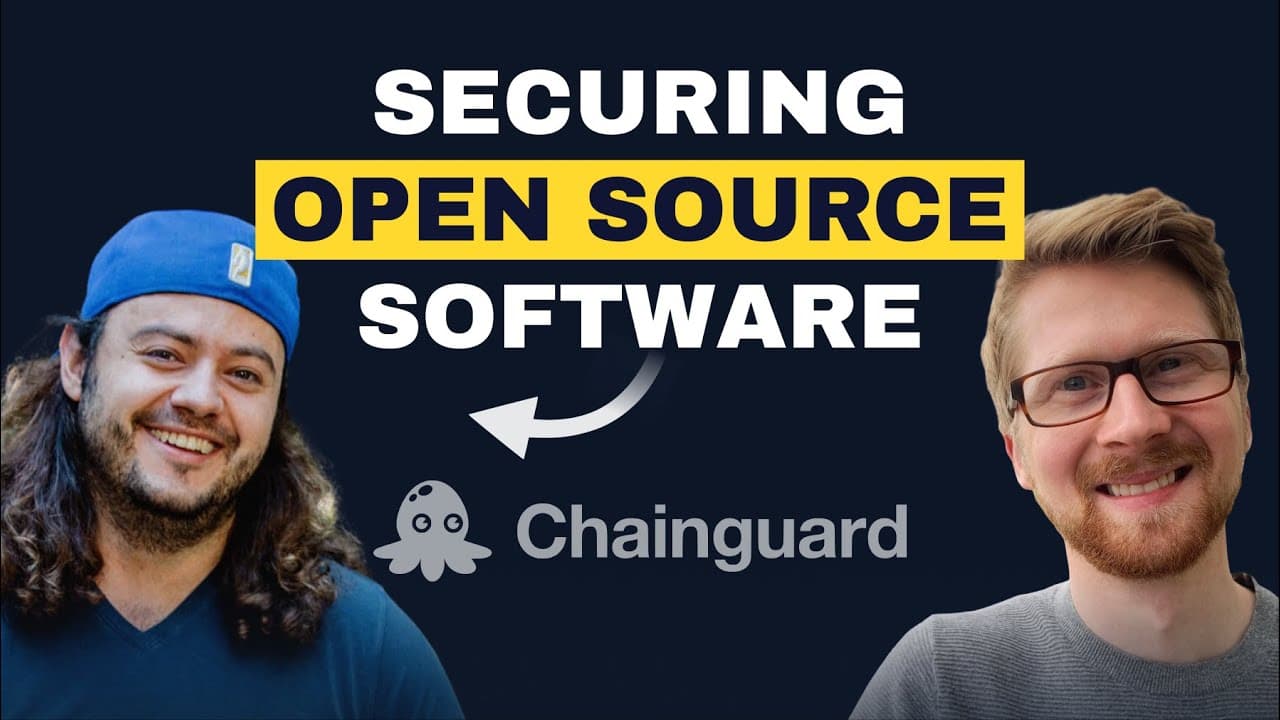
- Chainguard was founded in 2021 by Dan Lorenc, Kim, Matt, and Ville after they had spent a decade working together at Google on open source technology and software security.
- Chainguard tested both top-down and bottom-up sales strategies, and the bottom-up approach that initially failed later became its primary sales channel, showing that early product response may change as a company and market develop.
Install to Summarize YouTube Videos and Get Transcripts
Explore YouTube Video Summarizer or Get YouTube Transcript Extractor
Questions & Answers
Q: What is a software supply chain?
A software supply chain is the full set of steps that moves code from a developer’s keyboard into production, where it delivers value to users. Its form depends on the product: browser-based software, an iPhone app, and software installed at a customer’s site follow different delivery paths. Each path relies on tools and systems for building, operating, packaging, and distributing code.
Q: How do software supply chain attacks work?
Software supply chain attacks exploit weaknesses in the process used to build or deliver software rather than limiting the attack to the application’s own code. An attacker may tamper with a release, insert malware, or exploit an existing vulnerability before the product reaches users. Because customers trust normal distribution channels, a compromised release can carry the attack into their environments.
Q: Why do software dependencies create security risks?
Software dependencies create risk because organizations use software to build and operate other software. A vendor’s product may depend on another component, which may itself depend on additional components. Vulnerabilities can therefore exist several levels below the product a company knowingly selected. Those indirect layers may be outside the company’s control, but attackers can still use them as paths into its systems.
Q: Why are attackers focusing on software supply chains?
Attackers tend to pursue the easiest available weakness. As widely used defenses improved, conventional paths became harder to exploit. The transcript points to broader adoption of two-factor authentication, security keys, and HTTPS as evidence of that progress. Supply chain systems, which are often assembled with fragile or neglected processes, consequently became attractive targets for criminals and well-funded nation states seeking weaker links.
Q: How did the SolarWinds breach affect supply chain security?
The SolarWinds breach pushed software supply chain security into public discussion because the attackers targeted the company’s software delivery system. Instead of merely stealing information directly from SolarWinds, they placed a back door into a product release. Customers then downloaded the affected release through the expected delivery process, showing how one compromised supplier could expose organizations that trusted its software.
Q: How is software supply chain security different from general software security?
General software security focuses on vulnerabilities or attacks within the software itself. Software supply chain security focuses on the route that software takes from development to users, including build tools, operational systems, dependencies, packaging, and release mechanisms. An application may be secure in isolation while its delivery process remains vulnerable to tampering, malware insertion, or exploitation of an indirect dependency.
Q: How did Chainguard begin building its business?
Chainguard was started in 2021 by Dan Lorenc and co-founders Kim, Matt, and Ville after they had worked together at Google for a decade on open source and software security. The company began by selling consulting services before it had built a product. It later tested products and sales motions aimed at both top-down buyers and bottom-up adoption, with the initially weaker approach becoming its main channel.
Q: What concerns were raised about regulating open source software?
Dan Lorenc argues that poorly designed regulation could make original open source authors liable when companies use freely published code without paying them, notifying them, or establishing a contractual relationship. He specifically expresses concern about Europe’s Cyber Resilience Act and says such rules could change software development substantially. His central concern is assigning liability without payment, negotiated indemnity, or direct control over how the code is used.
Summary & Key Takeaways
-
A software supply chain includes every step that moves software from a developer’s keyboard into production, whether the product is delivered through a browser, an app store, or directly to a customer. These delivery systems are often neglected, creating gaps where attackers can tamper with releases, insert malware, or exploit vulnerabilities.
-
Software depends on other software for development, deployment, and operation, creating several layers that may contain vulnerabilities outside a company’s direct control. The underlying risk has been recognized for decades, but attackers have recently focused more heavily on supply chains as protections for passwords, websites, and other conventional attack vectors have improved.
-
Chainguard emerged from its founders’ experience working together at Google on open source and software security. The company initially sold consulting services, tested both top-down and bottom-up product strategies, and later found success with the approach that had struggled first. Its broader story also covers fundraising, sales hiring, media outreach, and meme-based marketing.
Read in Other Languages (beta)
Share This Summary 📚
Summarize YouTube Videos and Get Video Transcripts with 1-Click
Try YouTube Summary with ChatGPT & Claude or YouTube Transcript Generator
Explore More Summaries from The Peel with Turner Novak 📚






Summarize YouTube Videos and Get Video Transcripts with 1-Click
Try YouTube Summary with ChatGPT & Claude or YouTube Transcript Generator