How to Make Short Videos Go Viral and Get Shared
TL;DR
Viral short videos need an immediate emotional hook, a clear curiosity gap, and enough unresolved tension to sustain watch time. Plan each video backward from the desired comments and shares, keep the opening visually simple, reveal information in small segments, and test variations so audience behavior can guide revisions before wider distribution.
Transcript
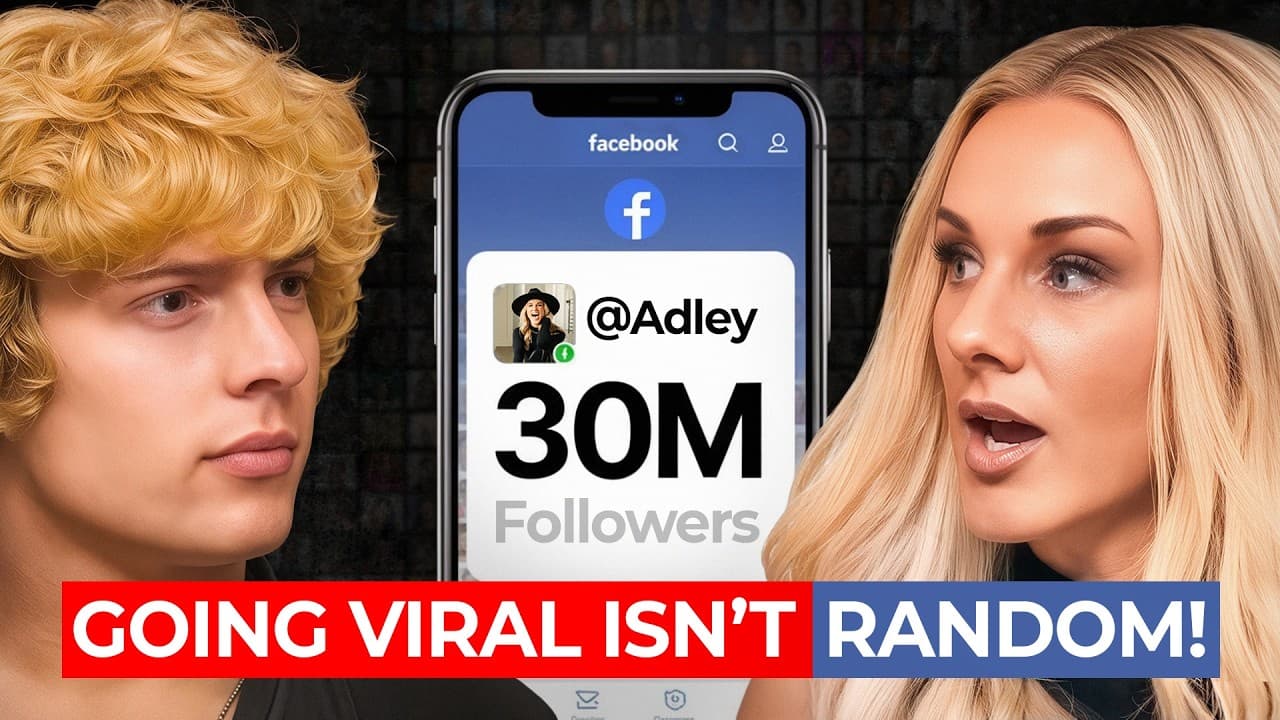
Today's guest has averaged a billion views a month for the past 5 years. I think personal brand is going to be more valuable than Bitcoin by 2030 because Bitcoin may 100x, but your personal brand can 1,000x. An aspiring singer on The Voice, she was forced into bankruptcy after a record label legally stole her name. But at her lowest point, she grab... Read More
Key Insights
- A viral hook combines emotion with a curiosity gap. The opening must make viewers feel something while leaving a clear question unresolved, because an immediate payoff can eliminate their reason to continue watching and reduce the opportunity to build retention.
- The first three seconds determine whether viewers reach the first six seconds. Kinsman aims for a six-second opening sequence, but emphasizes that creators must first stop the initial scroll before they can educate, entertain, or communicate any larger objective.
- Clarity separates productive curiosity from confusion. An unusual action, such as cooking ribs on a car engine, can raise several questions while remaining visually understandable, but unrelated text, decorations, characters, and sounds can create sensory overload that causes viewers to scroll.
- Watch time is a primary signal of audience interest. When two creators address the same audience, platforms can favor the content that holds attention longer because extended viewing indicates that people perceive it as more valuable than competing videos.
- Shareable content is built around a deliberate emotional outcome. Creators should know before filming whether they want viewers to agree, disagree, offer encouragement, or send the video to a sister, husband, friend, or another specific person.
- Reverse design begins with the intended comments and shares. Kinsman's team plans the desired response first, then evaluates the opening shot and each following three-second segment instead of beginning with a broad topic or the final educational payoff.
- A satisfying payoff can convert accumulated attention into sharing. When viewers remain through a carefully structured sequence and receive an effective resolution, they may want someone else to experience the same curiosity, emotion, and satisfaction.
- Small paid tests can help identify stronger content variations. Kinsman describes placing $5 behind every piece and variation, then examining retention data, such as a 42% audience loss between seconds 12 and 20, to locate and revise weak sections.
Install to Summarize YouTube Videos and Get Transcripts
Explore YouTube Video Summarizer or Get YouTube Transcript Extractor
Questions & Answers
Q: How do you create a strong hook for a short video?
Create a strong hook by making the audience feel an emotion immediately and opening a clear curiosity gap. The viewer should understand what is happening but still need to know where it leads. Focus first on earning three seconds of attention, then structure the next three seconds so the unresolved question continues without becoming confusing.
Q: Why is a curiosity gap important for video retention?
A curiosity gap gives viewers a reason to continue watching because it leaves a meaningful question unanswered. If the first sentence contains the complete payoff, viewers may receive everything they need within six or 12 seconds and leave. Holding back the resolution, while maintaining clarity, creates more opportunity to increase watch time and communicate the full message.
Q: How many elements should appear in a short video's opening?
The opening should generally contain no more than two or three attention-driving elements. A clear unusual visual can work with a strong text overlay that frames what viewers should notice. Adding a strange voice, a clown, controversial background decoration, circles, and other competing signals can produce sensory overload because viewers no longer know where to focus.
Q: How can creators make short videos more shareable?
Creators can make videos more shareable by deciding exactly what viewers should feel and why they would want another person to experience that feeling. Before production, define the intended comment, disagreement, encouragement, or recipient. Then build curiosity across successive segments and deliver a satisfying payoff that viewers will want to pass to a friend or family member.
Q: What does it mean to design a viral video backward?
Designing backward means starting with the desired audience response rather than the general topic. Decide what viewers should comment, feel, or share, then define the opening shot. Evaluate the next three seconds, followed by each additional three-second segment, ensuring that every section preserves clarity, emotion, and curiosity until the final payoff resolves the sequence.
Q: Why does watch time affect short-form video distribution?
Watch time signals how much value viewers find in a piece of content. If similar creators serve the same audience but one holds viewers for a minute and 30 seconds while another holds them for four seconds, the longer-viewed content provides the platform with a stronger interest signal. Platforms want material that keeps people watching longer.
Q: How can creators test a video's viral potential?
Creators can test viral potential by producing variations, placing a small amount behind each one, and comparing audience behavior. Kinsman describes using $5 for every piece of content and every variation. Retention data can expose specific weak sections, including a segment between seconds 12 and 20 where 42% of viewers were lost, allowing targeted revisions.
Q: What is the difference between curiosity and confusion in a video hook?
Curiosity occurs when viewers clearly understand the action but do not know its outcome. Confusion occurs when too many unrelated signals compete for attention and viewers cannot identify what matters. Putting salmon in a dishwasher creates a recognizable action with an uncertain result, while adding excessive text, characters, sounds, and decorations can make the audience scroll away.
Summary & Key Takeaways
-
Adley Kinsman argues that a strong opening must immediately create emotion and curiosity. The first three seconds determine whether viewers reach the next three, while a clear unanswered question encourages continued viewing. Creators should avoid revealing the entire lesson immediately because an early payoff removes the reason to keep watching.
-
Shareable videos are designed backward from a specific audience response. Before filming, creators should decide what viewers should feel, comment, and want others to experience. The production process then starts with the opening shot and advances in three-second segments, building commitment until the video reaches a satisfying resolution.
-
Watch time acts as a major interest signal because platforms compare content competing for limited attention. Clear visuals outperform sensory overload, while testing variations can reveal where viewers leave. Kinsman describes placing $5 behind each variation and using retention data to identify weak sections that can be revised.
Read in Other Languages (beta)
Share This Summary 📚
Summarize YouTube Videos and Get Video Transcripts with 1-Click
Try YouTube Summary with ChatGPT & Claude or YouTube Transcript Generator
Explore More Summaries from Jack Neel 📚


Summarize YouTube Videos and Get Video Transcripts with 1-Click
Try YouTube Summary with ChatGPT & Claude or YouTube Transcript Generator