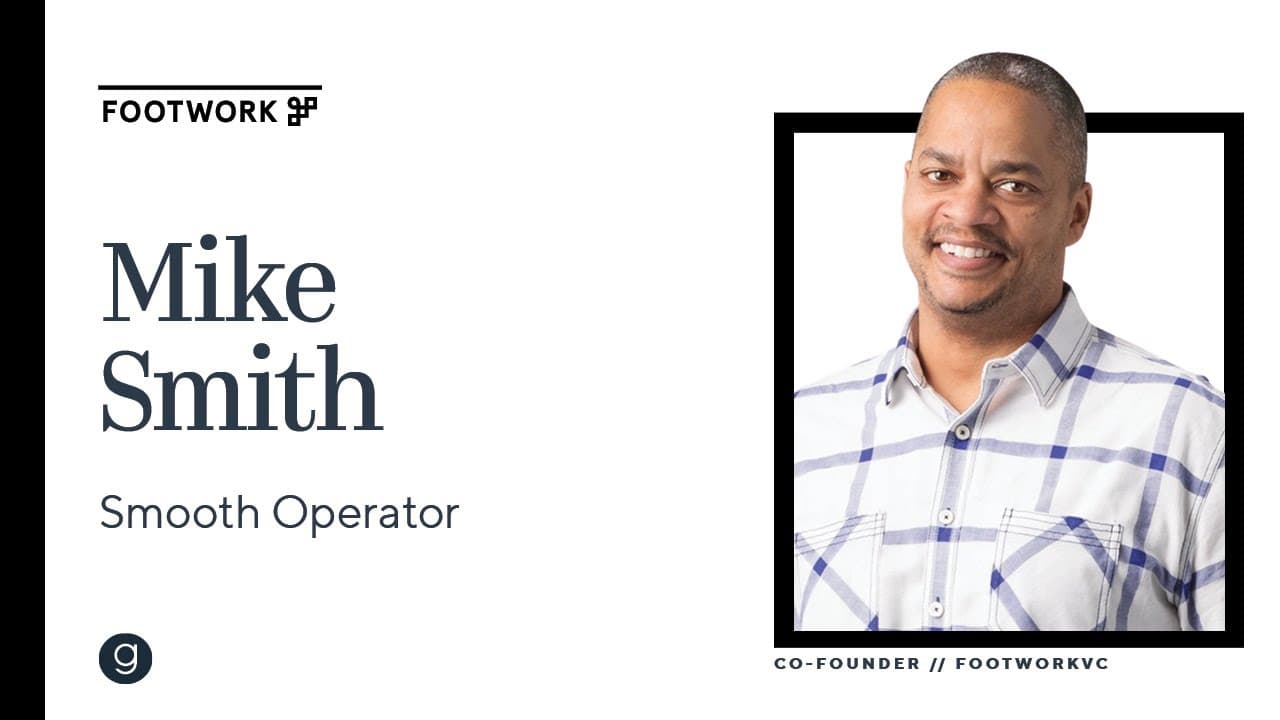
Footwork VC's Mike Smith on Finding the Right Fit in ECommerce
TL;DR
To find the right fit for your eCommerce team, look for candidates who demonstrate a clear understanding of your company's vision and express genuine excitement about solving its challenges. Seek individuals who have a track record of adapting quickly to fast-paced environments and who possess the humility to acknowledge their own limitations, along with the eagerness to learn and grow within the organization.
Transcript
hi everyone welcome to greylocks eye conversations i'm mike dubois partner here at greylock and today i'm very happy to be joined by a friend mike smith mike is widely known as one of the most skilled operators in commerce particularly in launching and advancing multi-channel retail and growth strategies um i'm personally honored to have worked wit... Read More
Key Insights
- ✖️ Operated expansive multi-channel strategies at Walmart, emphasizing operational discipline and adaptability.
- 💯 Joined Stitch Fix as a pivotal figure, drawn to innovative growth prospects and shared core values with founder Katrina Lake.
- 👍 Proved the power of customer-centric decisions by prioritizing accountability and customer experience, reinforcing trust and brand integrity.
- 📺 Advises founders on unit economics, future market scalability, and strategic vision for sustainable growth in the evolving e-commerce landscape.
- 🏂 Advocates for intentional board structures, championing diversity and operational insights to foster innovation and strategic guidance.
- 🪜 Transitioned into venture capital to leverage diverse experiences and give back through value-added mentorship in the startup ecosystem.
- 🪛 A dedicated focus on curiosity-driven learning, cultural impact, and collaborative leadership drives continuous evolution in the commerce industry.
Install to Summarize YouTube Videos and Get Transcripts
Explore YouTube Video Summarizer or Get YouTube Transcript Extractor
Questions & Answers
Q: What led Mike Smith to join the commerce sector, transitioning from consulting to Walmart?
Mike Smith was drawn to the changing landscape of commerce and believed in the digitization of e-commerce, leading him to Walmart for a transformative ten-year journey.
Q: How did Mike Smith's early career experiences shape his decision-making and principles in commerce?
Mike Smith's consulting background instilled a thirst for new challenges and continuous learning, guiding him to prioritize values such as collaboration, growth, and cultural impact in his career decisions.
Q: What factors influenced Mike Smith's decision to transition from Walmart to Stitch Fix, a small startup venture?
Mike Smith was captivated by Katrina Lake's clear vision, the potential for leveraging data science in apparel, and the unit economics of the business, ultimately driven by shared core values and principles.
Q: How does Mike Smith distinguish between future-proofing and true innovation in large companies?
Mike Smith advises large companies to avoid complacency through future-proofing tactics, focus on innovative disruption, and embrace accountability for effective long-term growth.
Summary
In this video, Mike Duboe, partner at Greylock, interviews Mike Smith, widely known as one of the most skilled operators in commerce. They discuss topics ranging from growth strategy to differentiation in a competitive market. Mike Smith shares his experience working at Walmart and Stitch Fix, and offers insights on building teams and managing capital constraints.
Questions & Answers
Q: What drew you to the commerce sector?
Mike Smith joined the commerce sector due to practical reasons, such as finding a stable company with supportive people, as well as the belief in the digitization of commerce and the potential for a successful career in the industry.
Q: What were some formative experiences early in your career?
Mike Smith's formative experiences early in his career include working in consulting, which taught him the importance of continuous learning, and making mistakes at early stage companies, which led him to prioritize working with great people, learning, and making a positive impact.
Q: How did you navigate the rapidly changing industry as the responsible for building out Walmart's multi-channel businesses?
Mike Smith credits his bosses and leaders at Walmart for allowing him to raise his hand and seek new opportunities. He gained valuable experience in multi-channel retail, scaling operations, and understanding the impact of companies like Amazon and direct-to-consumer brands.
Q: What prompted you to join a small startup like Stitch Fix after working at Walmart?
Mike Smith was drawn to the opportunity to work with Katrina Lake, the CEO of Stitch Fix, who had a clear vision and demonstrated vulnerability, along with the potential to make a positive impact. He also saw the potential in leveraging data science and improving the unit economics of the business.
Q: How do you recommend founders find the right people to build their teams?
Mike understands the challenges in finding the right people. He advises founders to reflect on whether they truly want a partner in building the business and to seek complementary skills. Founders should also be willing to give up some control, look for people frustrated with the pace of big companies, and consider a trial period before committing to a hire.
Q: How did the capital constraints at Stitch Fix impact its growth and operations?
Stitch Fix raised relatively little capital before going public, which forced the company to be disciplined and creative in its growth strategies. While it allowed them to focus on retention and build predictability, they may have benefited from more investment in infrastructure to support faster expansion.
Q: How did Stitch Fix balance predictability and being pragmatic with a broader vision for the business?
Stitch Fix maintained a focus on predictability and hitting their numbers to build trust with investors. While they may have missed out on more aggressive growth, they made the right decision for the company at the time. However, Mike acknowledges the opportunity to be more aggressive once the trust with investors was established.
Q: How did you manage growth and balance the emphasis on retention versus user acquisition at Stitch Fix?
Stitch Fix initially focused on retention and built a strong muscle in that area. While they may have been late to invest in user acquisition, it allowed them to better understand their product and channels. Mike advises companies to prioritize both retention and acquisition, as each is crucial in today's competitive landscape.
Q: What factors influenced the decision to own your own warehouses at Stitch Fix? Would you make the same decision today?
Mike believes owning warehouses provided control over the customer experience and accountability. Despite the complexities of owning a supply chain, he would still make the same decision today. It allows companies to quickly address issues and maintain a high level of customer satisfaction.
Q: What characteristics did you see in Katrina Lake that made her a successful founder?
Katrina Lake demonstrated a clear vision, the ability to stay the course, and a vulnerability to acknowledge her strengths and weaknesses. She also embraced the idea of sharing the stage and building a strong partnership with her teammates. Founders can learn from her focus on vision, humility, and building a collaborative culture.
Q: How do you balance having a clear vision with being pragmatic in execution?
Mike believes it is essential to have a clear vision but also recognize the potential for expansion into other areas. While staying focused on the core business, periodically assessing the feasibility and potential returns of expanding into adjacent categories or applications is crucial.
Takeaways
Mike Smith's insights offer valuable lessons for founders and operators in the commerce industry. It is important to find the right people who share the company's vision, complement existing skill sets, and demonstrate humility. Balancing predictability and execution with a broader vision requires careful consideration. Owning core aspects of the business, such as warehouses, can provide control and accountability. Prioritizing both retention and acquisition is crucial for sustained growth. Finally, building trust with investors through predictable execution is vital for long-term success.
Summary & Key Takeaways
-
Mike Smith, a seasoned commerce operator, shares his journey from Walmart to Stitch Fix, highlighting insights into growth strategies and disruptive innovations in the retail sector.
-
His experience includes scaling multi-channel businesses, emphasizing the importance of operational discipline and strategic foresight.
-
Collaboration with founders, understanding unit economics, and prioritizing customer experience are key elements of his success in revolutionizing e-commerce.
Read in Other Languages (beta)
Share This Summary 📚
Summarize YouTube Videos and Get Video Transcripts with 1-Click
Try YouTube Summary with ChatGPT & Claude or YouTube Transcript Generator
Explore More Summaries from Greylock 📚





Summarize YouTube Videos and Get Video Transcripts with 1-Click
Try YouTube Summary with ChatGPT & Claude or YouTube Transcript Generator