Are Popular Injectable Peptides Safe and Effective?
TL;DR
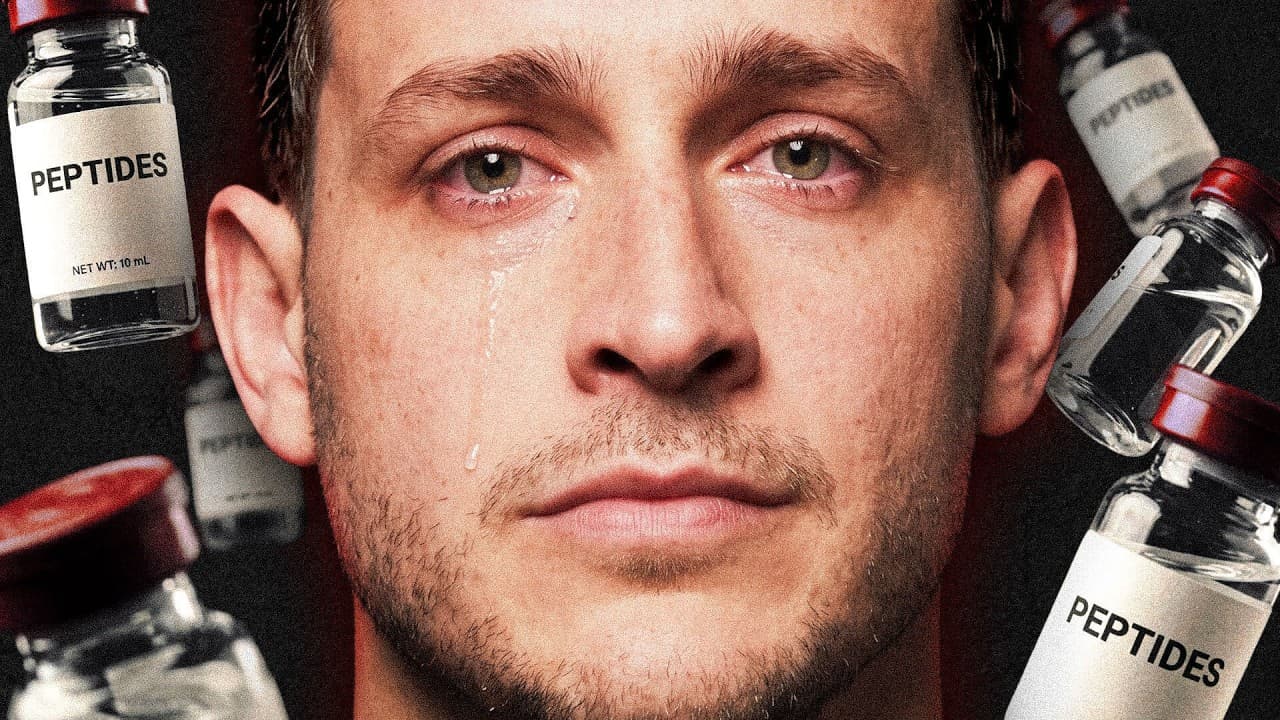
Popular wellness peptides such as BPC-157 and TB-500 lack adequate published human evidence for many promoted uses, especially injected healing or recovery claims. FDA scientists recommended against adding seven reviewed peptides to the 503A bulks list because effectiveness, safety, dosing, manufacturing consistency, and potential harms could not be established confidently.
Transcript
My patients, my friends, even my loved ones can't stop asking me about peptides. They're all over the news, podcasts, and social media. >> Few years ago, no one had even heard of peptides, and now they're everywhere. >> Imagine a tool that could speed up healing, reduce inflammation, and build muscle. >> How about peptides? If you ever get injured,... Read More
Key Insights
- Peptides are short chains of amino acids that can function as chemical messengers, helping regulate processes such as metabolism, inflammation, growth, and repair. The boundary between peptides and proteins is not governed by a universally accepted size or complexity rule.
- Insulin is an example of a well-studied peptide medicine because its biological effects, including signaling cells to take up glucose and the liver to store it, have been investigated in laboratory models, animals, humans, and an extensive regulatory review.
- The wellness peptide market expanded from bodybuilding experimentation in the mid-2000s into biohacking and mainstream media attention. Access developed through telehealth, longevity and functional medicine clinics, med spas, compounding pharmacies, and gray-market websites selling research chemicals without medical supervision.
- The 503A bulks list is not equivalent to FDA approval because it permits licensed pharmacists or physicians to compound listed bulk substances for patient needs without the substance completing the usual approval process. It is intended to support customized treatment in legitimate special circumstances.
- The 503A evaluation considers whether a substance can be identified and manufactured reliably, what safety concerns it presents, whether evidence shows effectiveness, and whether it has a meaningful history of use in compounded medications. These questions address both clinical evidence and production quality.
- BPC-157 had only one small human study relevant to the reviewed indication, presented as a meeting abstract involving 53 people who received it as an enema. The FDA considered that evidence inadequate to establish safety or effectiveness for ulcerative colitis.
- Injected BPC-157 lacked randomized controlled human trials establishing safety or effectiveness for tendon, ligament, or muscle recovery. Those popular recovery claims were also outside the ulcerative colitis indication considered during the committee's review of the substance.
- Peptide manufacturing presents safety uncertainties because products can aggregate, degrade, contain impurities, or provoke immune reactions. Differences in synthesis, storage, purity, formulation, reconstitution, and sequence mean that a purchased vial may not be chemically identical to material examined in animal research.
- More videos from this channel:
- More from this channel: Doctor Mike
Install to Summarize YouTube Videos and Get Transcripts
Explore YouTube Video Summarizer or Get YouTube Transcript Extractor
Questions & Answers
Q: What are peptides, and how are they different from proteins?
Peptides are short chains of amino acids, the same basic building blocks found in proteins. They can act as chemical messengers that help regulate metabolism, inflammation, growth, and repair. There is no universally accepted boundary separating peptides from proteins. Peptides are generally smaller, while proteins are generally larger and often perform more complex functions, but these are tendencies rather than strict rules.
Q: Are BPC-157 and TB-500 proven to heal injuries in humans?
The reviewed evidence did not establish that injected BPC-157 or TB-500 safely and effectively heals human injuries. FDA scientists found no randomized controlled human trials establishing injected BPC-157's safety or effectiveness for tendon, ligament, or muscle recovery. For TB-500, they reported that they could not identify human exposure data, leaving its effects, appropriate dose, and potential harms uncertain.
Q: What does adding a peptide to the FDA 503A bulks list mean?
Adding a substance to the 503A bulks list means a licensed pharmacist or physician may use that bulk ingredient to make a customized medication for a patient when a standard approved product does not meet the patient's needs. It does not mean the substance has received general FDA approval, and it does not replace the full approval process for broad use.
Q: Which peptides were evaluated for the 503A bulks list?
The committee was asked to review seven peptides. These included BPC-157 for ulcerative colitis, KPV and TB-500 for wound healing and inflammatory conditions, and MOTS-c for obesity and osteoporosis. Three less commonly discussed substances were also reviewed: amideptide, epitalon, and CJC. The transcript reports that FDA scientists recommended against adding every reviewed substance to the list.
Q: What human evidence did the FDA find for BPC-157?
FDA scientists found only one small human study relevant to the proposed use considered in the review. It was a meeting abstract rather than a full published study, involved 53 people, and administered BPC-157 as an enema for ulcerative colitis. The agency considered this inadequate to establish either effectiveness or safety, and it found no randomized controlled human trials supporting injected recovery claims.
Q: Why can peptide manufacturing quality affect patient safety?
Peptides can aggregate, degrade, contain impurities, or trigger immune reactions. When a substance is synthesized, shipped as powder, reconstituted, and injected, small differences in purity, storage, formulation, or chemical sequence can matter substantially. Consequently, a vial sold online or a bulk ingredient supplied to a pharmacy may not be chemically identical to the substance used in an animal study.
Q: Why did FDA scientists recommend against all seven reviewed peptides?
FDA scientists concluded that the available evidence was not strong enough to determine confidently what patients would receive, whether the substances would help, which doses should be used, or what harmful effects could occur. Their recommendations did not assert that every peptide was useless or inherently dangerous. They reflected unresolved questions about clinical evidence, safety, manufacturing reliability, and product consistency.
Q: Why are people obtaining wellness peptides outside standard medical channels?
The transcript describes consumers obtaining wellness peptides through telehealth services, longevity or functional medicine clinics, med spas, compounding pharmacies, and gray-market websites. Some online vendors sold products directly as research chemicals or labeled them not for human use, sometimes without medical supervision. Many products were supplied in vials for self-injection despite lacking regulatory review and dependable oversight.
Summary & Key Takeaways
-
Peptides are short amino acid chains that can act as chemical messengers regulating metabolism, inflammation, growth, and repair. Unlike extensively studied peptide medicines such as insulin, many newer wellness peptides became popular through bodybuilding, biohacking, celebrity podcasts, clinics, med spas, and vendors before adequate human testing established specific benefits and risks.
-
The FDA review concerned whether seven peptides should enter the 503A bulks list, not whether they deserved general FDA approval. Placement would permit licensed pharmacists or physicians to compound a substance for individual patients without the substance completing the standard approval process, which is intended for specialized needs rather than broad commercial access.
-
FDA scientists found severely limited human evidence, including only one small meeting abstract involving 53 people for BPC-157 as an enema in ulcerative colitis. They identified no randomized controlled human trials for injected recovery uses and no human exposure data for KPV, TB-500, or MOTS-c, leading to seven negative recommendations.
Read in Other Languages (beta)
Share This Summary 📚
Summarize YouTube Videos and Get Video Transcripts with 1-Click
Try YouTube Summary with ChatGPT & Claude or YouTube Transcript Generator
Explore More Summaries from Doctor Mike 📚




Summarize YouTube Videos and Get Video Transcripts with 1-Click
Try YouTube Summary with ChatGPT & Claude or YouTube Transcript Generator