How to Use Python for Algorithmic Trading
TL;DR
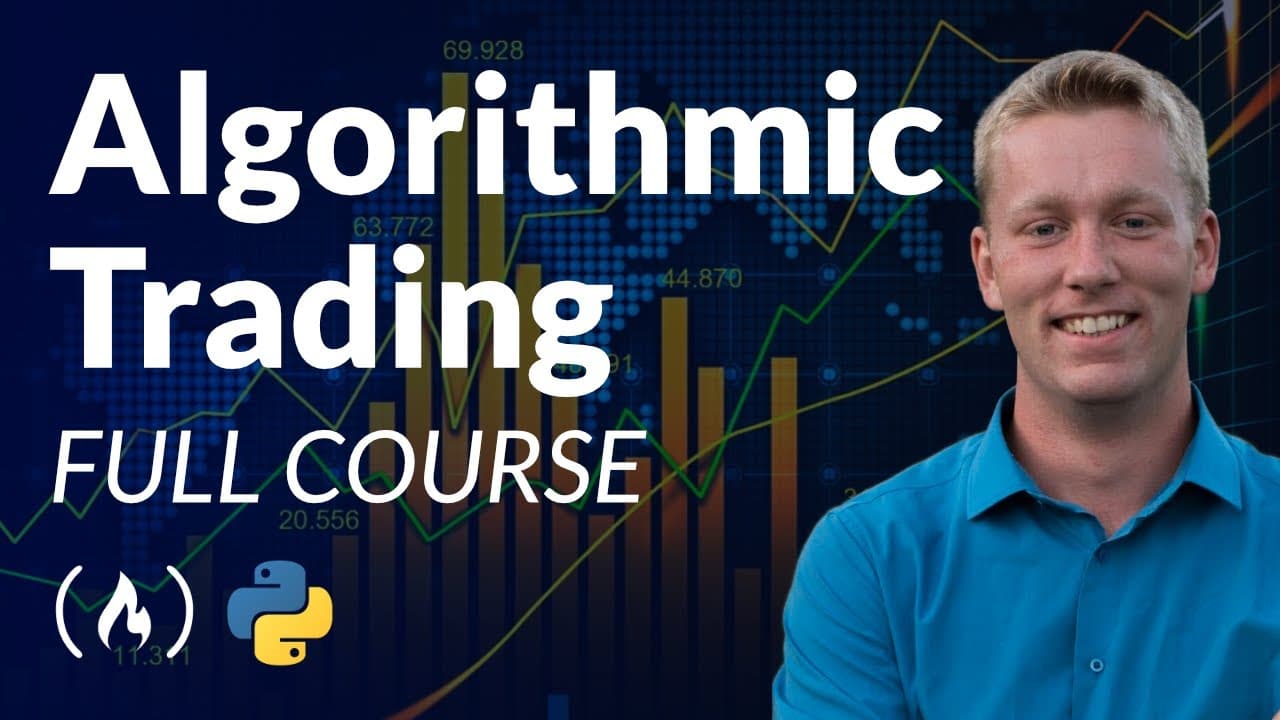
Learn to perform algorithmic trading using Python by building three projects: an equal-weight S&P 500 index fund, a quantitative momentum strategy, and a quantitative value screener. This course focuses on using Python to automate investment decisions, leveraging computer algorithms for speed and efficiency in trading.
Transcript
Hello, and welcome to this Free Code Camp course on algorithmic trading and Python. My name is Nick McCollum, I'm going to be your instructor for this course. And in this course, we're going to focus on building three large quantitative finance projects. In the first project, we are going to build an equal weight version of the popular s&p 500 inde... Read More
Key Insights
- Algorithmic trading uses computers to make investment decisions, allowing for faster and more frequent trades than human traders.
- The course covers three projects: an equal-weight S&P 500 index fund, a momentum strategy, and a value screener.
- Python is the most popular language for algorithmic trading due to its extensive libraries, despite being slower than some other languages.
- The course uses IEX Cloud API to gather financial data, with a focus on sandbox mode for free, randomized data.
- Batch API calls can significantly improve the speed of data retrieval in algorithmic trading scripts.
- An equal-weight index fund strategy involves assigning the same weight to each stock in the index, differing from market cap-weighted indices.
- Momentum investing involves selecting stocks that have shown the highest price increases over a given period.
- Value investing focuses on selecting stocks trading below their perceived intrinsic value, often using metrics like price-to-earnings or price-to-book ratios.
Install to Summarize YouTube Videos and Get Transcripts
Explore YouTube Video Summarizer or Get YouTube Transcript Extractor
Questions & Answers
Q: How does algorithmic trading work?
Algorithmic trading uses computer algorithms to automate investment decisions, executing trades at speeds and frequencies beyond human capability. These algorithms analyze data and market conditions to make informed trading decisions, often leveraging advanced strategies to optimize performance.
Q: What is an equal-weight index fund?
An equal-weight index fund assigns the same weight to each stock in the index, as opposed to market cap-weighted indices where larger companies have more influence. This approach diversifies risk and can lead to different performance outcomes compared to market cap-weighted funds.
Q: Why is Python popular for algorithmic trading?
Python is popular for algorithmic trading due to its extensive libraries and ease of use, which facilitate data analysis and algorithm development. Despite being slower than some other languages, Python's versatility and community support make it a preferred choice for many traders.
Q: What is momentum investing?
Momentum investing is a strategy that involves selecting stocks that have shown the highest price increases over a certain period. The idea is to capitalize on the continuation of existing trends, assuming that stocks that have performed well recently will continue to do so.
Q: How is the IEX Cloud API used in this course?
The IEX Cloud API is used to gather financial data necessary for building algorithmic trading strategies. The course utilizes the API's sandbox mode, which provides free, randomized data for testing and development purposes, allowing learners to experiment without financial risk.
Q: What are batch API calls and why are they important?
Batch API calls allow for the retrieval of data for multiple stocks in a single request, significantly improving the speed and efficiency of data retrieval processes. This is crucial in algorithmic trading where timely data access can impact the effectiveness of trading strategies.
Q: What is the role of a value screener in investing?
A value screener identifies stocks that are trading below their perceived intrinsic value, often using financial metrics like price-to-earnings or price-to-book ratios. This approach aims to find undervalued stocks that have the potential for price appreciation as the market recognizes their true value.
Q: How does the course handle data for educational purposes?
The course uses the IEX Cloud API's sandbox mode, which provides unlimited access to scrambled test data instead of live production data. This allows learners to experiment and develop trading strategies without financial risk, making it ideal for educational purposes.
Summary & Key Takeaways
-
Algorithmic trading uses computers to automate investment decisions, enabling faster and more frequent trades than humans. This course teaches how to build algorithmic trading strategies using Python, focusing on three projects: an equal-weight S&P 500 index fund, a momentum investing strategy, and a value screener.
-
Python is favored for algorithmic trading due to its rich libraries, despite being slower than other languages. The course utilizes the IEX Cloud API for data, emphasizing the use of sandbox mode for free, randomized data. Batch API calls are highlighted for improving data retrieval speed.
-
The course covers equal-weight and momentum investing strategies, and a value screener. Equal-weight strategies assign equal importance to each stock, while momentum strategies focus on stocks with the highest recent price increases. Value investing seeks stocks undervalued by metrics like price-to-earnings ratios.
Read in Other Languages (beta)
Share This Summary 📚
Summarize YouTube Videos and Get Video Transcripts with 1-Click
Try YouTube Summary with ChatGPT & Claude or YouTube Transcript Generator
Explore More Summaries from freeCodeCamp.org 📚


![The Most Important Skills Going Forward with CTO + Homebrew Maintainer Mike McQuaid [Podcast #204] thumbnail](/_next/image?url=https%3A%2F%2Fi.ytimg.com%2Fvi%2F58Tn2xB8kIE%2Fhqdefault.jpg&w=750&q=75)
Summarize YouTube Videos and Get Video Transcripts with 1-Click
Try YouTube Summary with ChatGPT & Claude or YouTube Transcript Generator