How to Leave Your Job and Trade Forex Full-Time
TL;DR
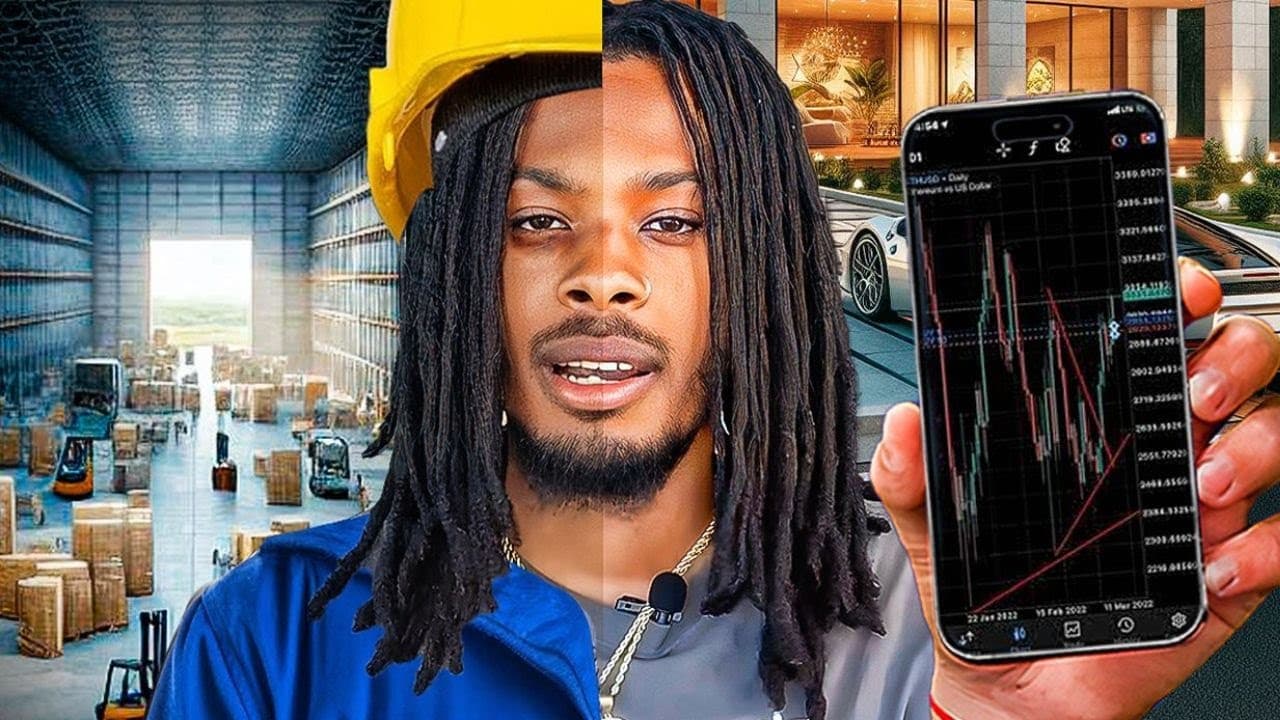
To leave your job and trade forex full-time, first achieve consistent profitability, gain confidence in a defined strategy, and build enough capital to cover your living costs. The featured ex-factory worker reduced expenses by living with his sister for about a year and centered his approach on supply and demand. Read on for his strategy, preparation, and one-to-two-trade daily routine.
Transcript
what's up guys welcome back to another set and forget pod so I mean this is a very well overdue pod you know everybody Do's Community it's time the time is here we finally are doing the center forer pod with do I've been uh we've been meaning to do this for like two three months already bro so like yeah bro so so talk to me bro like what's up you'r... Read More
Key Insights
- The trader's path began with several changes in direction, including leaving college during his senior year, making YouTube reaction videos, and trying dropshipping. He continued searching because neither graphic design nor his early online ventures matched his financial goals or sustained his motivation.
- Forex education started with four to five months in IML, where the trader learned basic concepts such as market structure. He left because he believed the program encouraged reliance on its services, while his goal was to develop the ability to analyze and trade independently.
- The trader's strategy developed through adaptation rather than strict imitation. After purchasing a Fibonacci course, he adjusted its methods to fit his preferences, earned some money with the approach, and later expanded beyond Fibonacci because he wanted to interpret the market in more than one way.
- Supply and demand became the central element of the trader's method. He also uses liquidity grabs and market structure, but says supply and demand was the main concept that advanced his trading performance and remains the primary basis of his approach.
- Consistent profitability and confidence in the strategy came before the trader quit his job or moved to Miami. He did not describe relocation as a substitute for preparation, but as a step taken after his trading process had already begun producing consistent results.
- A large trading account was essential because the trader believed daily earnings of $500 to $700 would not support the cost of living in Miami. His decision combined sufficient capital, confidence in his strategy, and evidence that he could trade consistently before assuming higher expenses.
- Low living expenses helped the trader accumulate capital. After moving back to Detroit, he lived with his sister for about a year, which reduced his bills and allowed him to save money and grow his trading account before relocating.
- The trader follows a restricted schedule of one or two trades per day on Monday, Tuesday, Thursday, and Friday. He does not trade on Wednesdays because excluding that day is part of his established trading plan, rather than trading every available weekday.
Install to Summarize YouTube Videos and Get Transcripts
Explore YouTube Video Summarizer or Get YouTube Transcript Extractor
Questions & Answers
Q: How can someone prepare to leave a job for full-time forex trading?
The trader became consistently profitable and confident in his strategy before quitting his job. He also built an account large enough to support his intended lifestyle and kept his expenses low while accumulating capital.
Q: What forex trading strategy does the full-time trader use?
His approach primarily uses supply and demand, supported by market structure and liquidity grabs. He previously modified a Fibonacci strategy from an online course, but later moved beyond relying mainly on Fibonacci because he wanted a broader view of the market.
Q: How did the trader learn forex trading?
He spent about four to five months in IML, where he learned basic concepts such as market structure. After leaving, he bought an online Fibonacci course, adapted its method to suit himself, and later incorporated supply and demand and liquidity grabs.
Q: Why did the trader leave IML?
He believed the program encouraged members to continue relying on its services instead of becoming independent traders. Because his goal was to analyze and trade for himself, he decided to leave.
Q: How did living with his sister help him become a full-time trader?
He lived with his sister in Detroit for about a year, which reduced his bills. That period allowed him to save money and grow his trading account before moving to the more expensive city of Miami.
Q: When did the trader know he was ready to move to Miami?
He was already consistently profitable, confident in his strategy, and trading with a sufficiently large account. Capital mattered because he did not believe daily earnings of $500 to $700 would adequately support Miami's high living costs.
Q: How many trades does the trader take per day?
He limits himself to one or two trades on each planned trading day. His schedule includes Monday, Tuesday, Thursday, and Friday, while Wednesday is excluded as part of his trading plan.
Q: What did the trader do before focusing on forex?
He studied graphic design at Western Michigan University but left during his senior year because he did not believe the field would meet his financial goals. He also made YouTube reaction videos and tried dropshipping before discovering forex.
Summary & Key Takeaways
-
The trader left Western Michigan University during his senior year after deciding that graphic design would not produce the financial outcome he wanted. He experimented with YouTube reaction videos and dropshipping before discovering forex, joining IML, learning basic market structure, and eventually leaving because he wanted to trade independently.
-
After purchasing an online Fibonacci course, the trader modified the strategy to suit himself and made some money with it. He later moved away from relying mainly on Fibonacci because he wanted a broader market perspective, then incorporated supply and demand and liquidity grabs into an approach he says improved his trading.
-
Before quitting his job and moving to Miami, the trader says he was already consistently profitable and confident in his strategy. His remaining requirement was a sufficiently large trading account to support Miami's high living costs. Living with his sister for about a year helped him save money and grow that account.
Read in Other Languages (beta)
Share This Summary 📚
Summarize YouTube Videos and Get Video Transcripts with 1-Click
Try YouTube Summary with ChatGPT & Claude or YouTube Transcript Generator
Explore More Summaries from fxalexg 📚



Summarize YouTube Videos and Get Video Transcripts with 1-Click
Try YouTube Summary with ChatGPT & Claude or YouTube Transcript Generator