What Causes Back Pain and How to Fix It Today
TL;DR
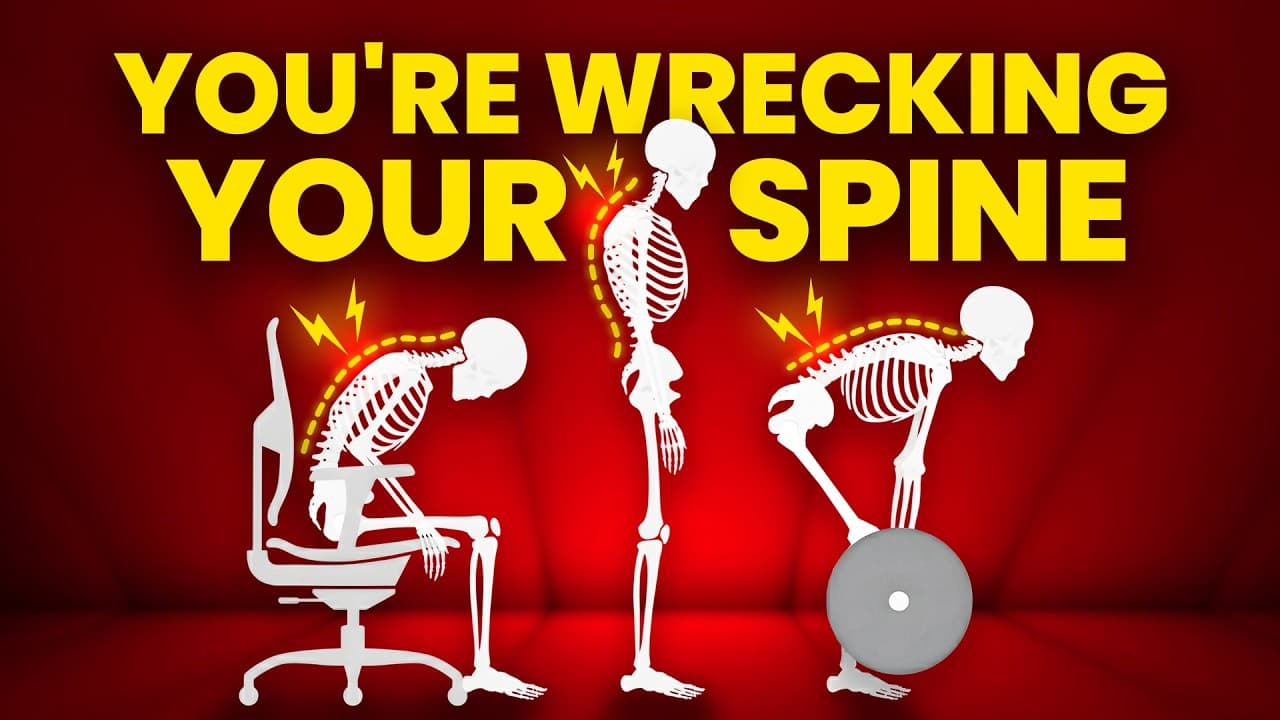
Muscle strains are the most common cause of acute back pain and usually heal in four to six weeks. Poor posture, weak supporting muscles, and sudden movements increase risk. Herniated discs can cause sciatica when the nucleus pushes through the outer ring and compresses nerves. Prevention relies on posture, ergonomics, and targeted exercises.
Transcript
The human spine is quite the intricate and remarkable structure. But we actually ask a lot of our spine. We ask it to transmit forces and provide structure and stability. We ask it to protect the spinal cord. We ask it to move in all three planes of space. And by the way, spine, while you're providing all these functions, could you please never get... Read More
Key Insights
- Back pain commonly results from muscle strains or ligament sprains, which occur after overuse, poor posture, or sudden movements.
- Herniated or bulging discs involve the nucleus pulposus pushing through the annulus fibrosus, potentially compressing nerve roots and causing sciatica.
- Sciatica arises when nerve roots contributing to the sciatic nerve are irritated, producing pain or numbness along the leg.
- Regular activity and strengthening of core and back muscles support the spine and reduce injury risk.
- Poor ergonomics and sedentary lifestyle increase back pain risk by weakening supportive musculature.
- Discs dry with age, making them more prone to herniation and pain, especially with obesity or smoking which affect nutrition and loading.
- Most back pain from strains improves within weeks with rest and conservative care, but persistent symptoms warrant evaluation.
- Preventive focus on posture, ergonomic setup, and safe lifting can significantly reduce recurrence of back pain.
Install to Summarize YouTube Videos and Get Transcripts
Explore YouTube Video Summarizer or Get YouTube Transcript Extractor
Questions & Answers
Q: A real search query question about the video (e.g. 'How to...', 'What is...', 'Why does...', 'When should...'). Question 1
Back pain is most often caused by muscle strains or ligament sprains from overuse or sudden movements, and these injuries typically heal within four to six weeks with proper care. The video explains how the erector spinae group and supporting ligaments contribute to movement and stability, and how overloading them without adequate conditioning leads to pain.
Q: Question 2
Herniated or bulging discs occur when the outer ring of a disc weakens and the inner gel pushes outward. This can irritate nearby nerve roots and cause symptoms such as sharp back pain, leg pain, numbness, or tingling, depending on which nerves are affected. The lumbar region is most commonly involved.
Q: Question 3
Sciatica is a set of symptoms caused by compression or irritation of the nerve roots that form the sciatic nerve. It can produce shooting pain from the lower back through the hip and down the leg, sometimes with numbness or weakness, and its exact pattern depends on which nerve root is involved.
Q: Question 4
Poor posture contributes to back pain by increasing stress on the spine and surrounding muscles over time. Forward head position, rounded shoulders, and slouching weaken back muscles, reduce spinal stability, and raise the risk of strains during everyday activities or work tasks.
Q: Question 5
Degenerative changes and osteoarthritis can contribute to back pain as joints deteriorate with age, reducing space and increasing friction between bones. This can lead to stiffness, reduced mobility, and localized or radiating pain that worsens with activity and improves with rest.
Q: Question 6
What exercises are best for back pain prevention? The video highlights a set of key exercises aimed at strengthening the back and supporting muscles, including the core, glutes, and erector spinae, as well as guidance on safe lifting and maintaining proper form during daily tasks.
Q: Question 7
How can ergonomics reduce back pain risk? The content emphasizes setting up workstations to maintain natural spinal curves, using supportive chairs with lumbar support, and arranging desk activities to minimize prolonged awkward postures, thereby reducing muscle fatigue and injury risk.
Q: Question 8
When should someone seek medical evaluation for back pain? The video notes that while most back pain is non-life threatening and self-limiting, red flags such as persistent severe pain, fever, numbness in both legs, or weakness may indicate a more serious condition requiring professional assessment.
Summary & Key Takeaways
-
A concise overview of spine anatomy and common pain causes, emphasizing non-life threatening issues and practical prevention strategies.
-
The video explains how muscle strains, disc problems, and degenerative changes contribute to back pain, with a focus on safe lifting and posture.
-
It ends with actionable exercises and ergonomic tips to maintain a healthy back and reduce pain episodes.
Read in Other Languages (beta)
Share This Summary 📚
Summarize YouTube Videos and Get Video Transcripts with 1-Click
Try YouTube Summary with ChatGPT & Claude or YouTube Transcript Generator
Explore More Summaries from Institute of Human Anatomy 📚




Summarize YouTube Videos and Get Video Transcripts with 1-Click
Try YouTube Summary with ChatGPT & Claude or YouTube Transcript Generator