How to Turn Plastic Bottles into Polyurethane Foam
TL;DR
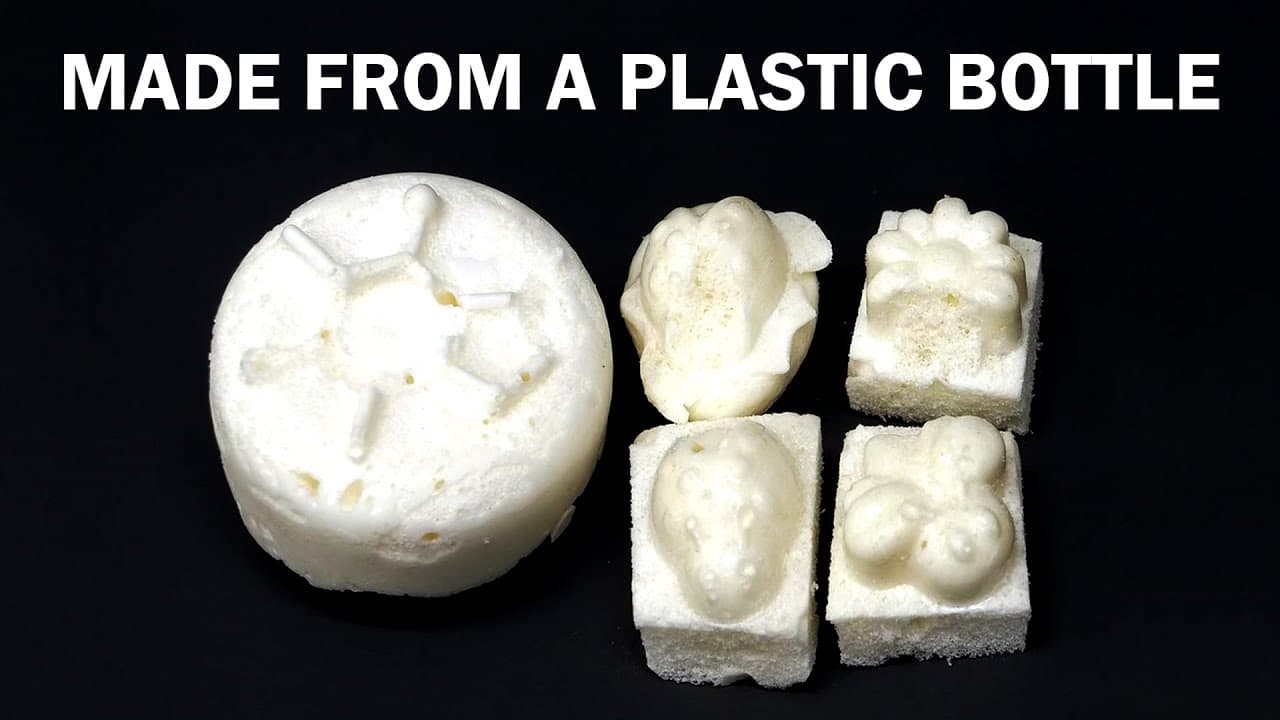
You can recycle plastic bottles into polyurethane foam by breaking down polyethylene terephthalate (PET) through a chemical process called transesterification. This involves using catalysts, diethylene glycol, and castor oil to create a new polymer, resulting in a durable foam product after curing. Variations in the methodology can alter the foam's properties, offering a versatile approach to plastic waste recycling.
Transcript
most plastic water and soda bottles are made from a polymer called PE T which stands for polyethylene terephthalate it's a very useful and versatile plastic but every year millions of tons of it are produced and it represents a huge amount of waste a small portion of it is recycled though and it's generally done in two main ways either mechanically... Read More
Key Insights
- 🐶 PET plastic bottles are a significant source of waste, and recycling them presents a potential solution to reduce environmental impact.
- ♻️ Recycling PET plastic can be done through mechanical or chemical processes, with chemical recycling offering the opportunity to create new polymers like polyurethane foam.
- ❤️🩹 The DIY experiment showcased in the video demonstrates one method of chemical recycling, using catalysts, additives, and polyurethane foam as the end product.
- 👶 The process involves breaking down the PET polymer chains through transesterification and generating new ester bonds with the help of catalysts like manganese.
- 🛢️ Castor oil is added to improve the quality of the polyurethane foam, although it is not mentioned in the original procedure.
- 💅 The polyurethane foam created from recycled PET plastic demonstrates strength and durability after curing for a significant period.
- ❓ Variations in catalysts, solvents, and additives can result in different properties of the polyurethane foam, such as density and flexibility.
Install to Summarize YouTube Videos and Get Transcripts
Explore YouTube Video Summarizer or Get YouTube Transcript Extractor
Questions & Answers
Q: How are plastic bottles typically recycled?
Plastic bottles can be recycled either mechanically, where they are melted and reshaped, or chemically, where the plastic is degraded to create new polymers.
Q: What is the purpose of chemical recycling in this experiment?
Chemical recycling aims to break apart the PET polymer chains and create new polymers, such as polyurethane foam, using different catalysts and additives.
Q: Why is it important to check the recycling number on plastic bottles before recycling them?
To ensure successful recycling, it is important to verify that the plastic bottle is indeed PET plastic by checking for recycling number one or PE-T written on the bottle.
Q: What is the role of castor oil in the polyurethane foam production?
Castor oil is added to improve the quality of the polyurethane foam. While not explicitly mentioned in the procedure, it serves as a cost-effective additive to achieve a higher-quality foam.
Summary & Key Takeaways
-
Most plastic water and soda bottles are made from polyethylene terephthalate (PET), which is a commonly used plastic but also a significant source of waste.
-
Recycling PET plastic can be done mechanically or chemically, with the latter involving the degradation of the plastic to create new polymers.
-
The video demonstrates a DIY experiment using chemical recycling to make polyurethane foam from PET plastic bottles.
Read in Other Languages (beta)
Share This Summary 📚
Summarize YouTube Videos and Get Video Transcripts with 1-Click
Try YouTube Summary with ChatGPT & Claude or YouTube Transcript Generator
Explore More Summaries from NileRed 📚
Summarize YouTube Videos and Get Video Transcripts with 1-Click
Try YouTube Summary with ChatGPT & Claude or YouTube Transcript Generator