How to Make Calcium Acetate from Eggshells
TL;DR
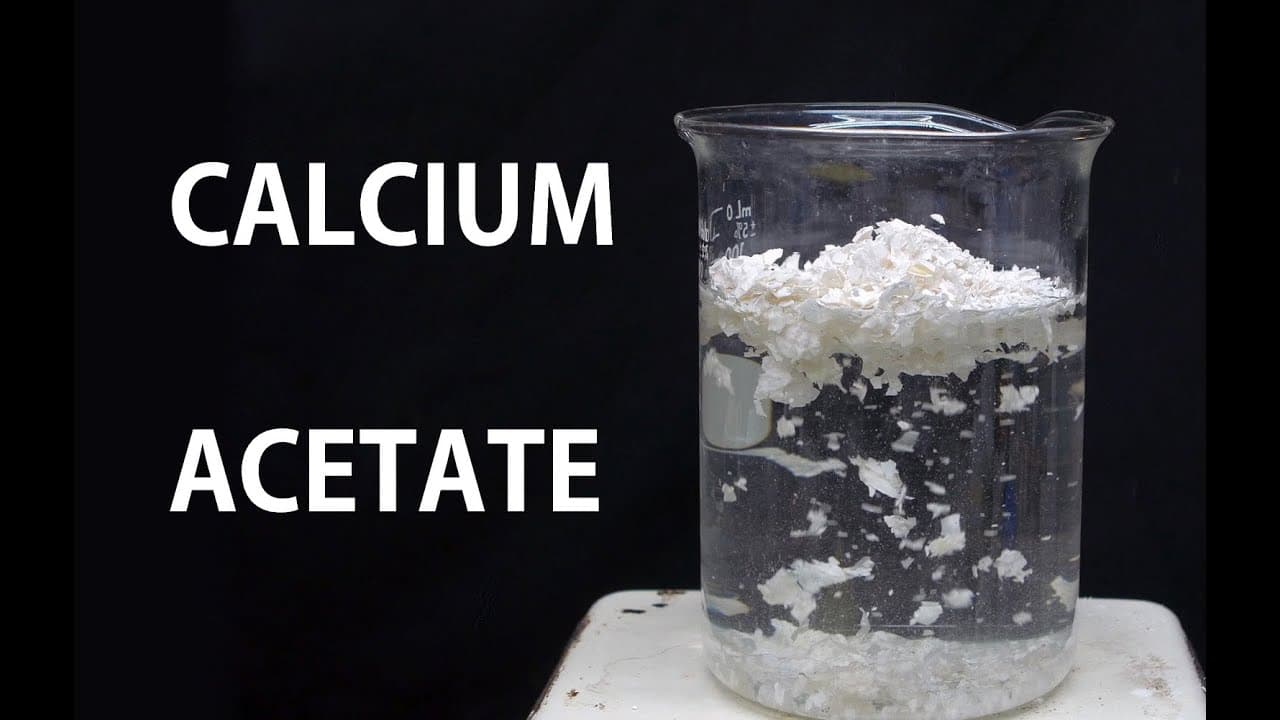
To make calcium acetate, mix calcium carbonate from crushed eggshells with vinegar. The reaction produces calcium acetate, water, and carbon dioxide, which can be filtered to remove excess calcium carbonate. Finally, boil the solution to evaporate water and obtain calcium acetate in paste form, suitable for making acetone and flammable jelly.
Transcript
hey guys so we're finally getting around to making the calcium acetate that I've been promising for a while now the calcium acetate that we make here is going to be used to make acetone and it's also going to be used to make flammable jelly to make the calcium acetate it's actually really simple and all we need to do is mix some form of calcium car... Read More
Key Insights
- ❓ Calcium acetate can be easily made by mixing calcium carbonate with vinegar.
- 🫢 The reaction between calcium carbonate and acetic acid produces calcium acetate, water, and carbon dioxide gas.
- 💦 Filtering the solution removes excess calcium carbonate, while boiling removes water to obtain calcium acetate paste.
- ℹ️ Other sources of calcium carbonate, like limestone or seashells, can be used instead of eggshells.
- 😒 The use of 5% vinegar instead of 10% vinegar will require boiling away more water.
- 😒 Impurities in the calcium acetate, such as yellow color from eggs, do not affect its use for making acetone or flammable jelly.
- 🍂 Tums cannot be used as a calcium carbonate source due to the presence of sucrose.
- 🙂 The process may result in a slightly off-colored calcium acetate solution, but this does not impact its usability.
Install to Summarize YouTube Videos and Get Transcripts
Explore YouTube Video Summarizer or Get YouTube Transcript Extractor
Questions & Answers
Q: What is the purpose of creating calcium acetate?
Calcium acetate can be used to produce acetone and flammable jelly.
Q: Can other sources of calcium carbonate be used instead of eggshells?
Yes, other sources like limestone or seashells can be used to create calcium acetate.
Q: Will using a 5% vinegar solution instead of 10% affect the process?
Using a 5% vinegar solution will work, but more water will need to be boiled away during the process.
Q: Is it necessary to remove impurities from the calcium acetate?
The presence of impurities, such as yellow color from the eggs, does not significantly affect the use of calcium acetate for making acetone or flammable jelly.
Summary & Key Takeaways
-
Calcium acetate is easily made by mixing calcium carbonate (found in eggshells) with vinegar.
-
The reaction between calcium carbonate and acetic acid produces calcium acetate, water, and carbon dioxide gas.
-
The solution is filtered to remove excess calcium carbonate, then boiled to remove water and obtain calcium acetate in paste form.
Read in Other Languages (beta)
Share This Summary 📚
Summarize YouTube Videos and Get Video Transcripts with 1-Click
Try YouTube Summary with ChatGPT & Claude or YouTube Transcript Generator
Explore More Summaries from NileRed 📚
Summarize YouTube Videos and Get Video Transcripts with 1-Click
Try YouTube Summary with ChatGPT & Claude or YouTube Transcript Generator