What Is Anthropic's Claude Conway Always-On Agent?
TL;DR
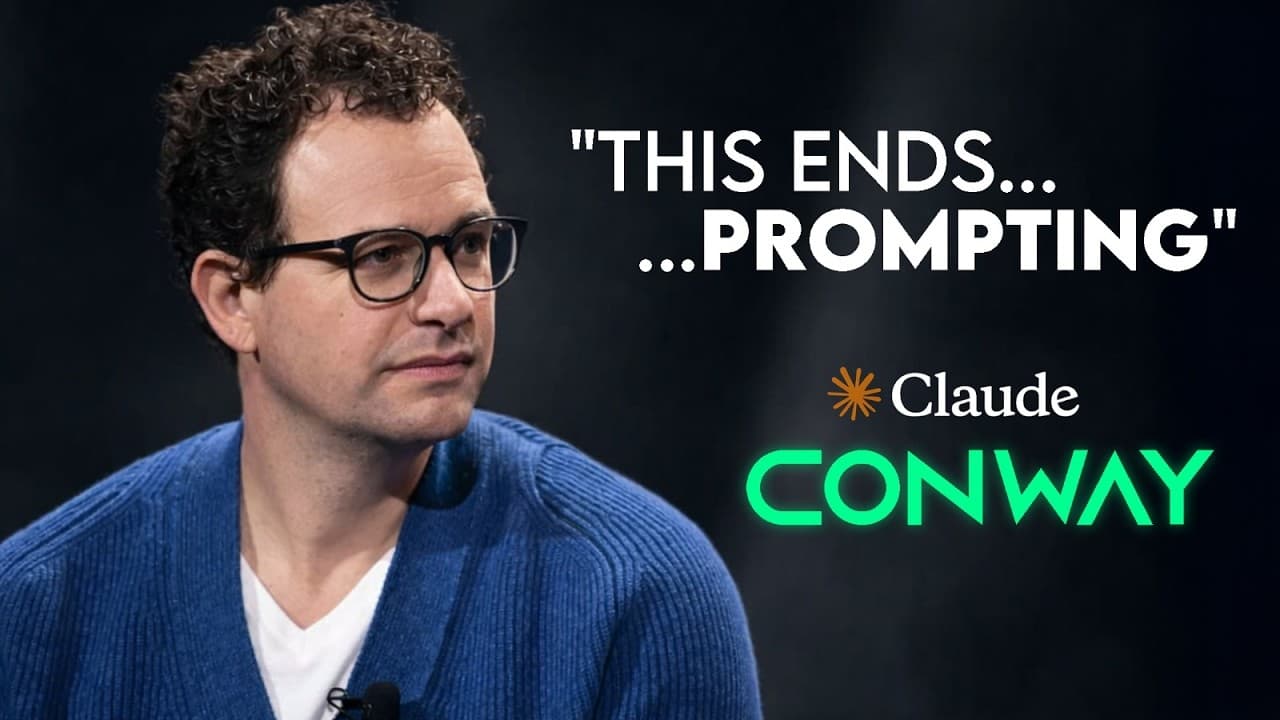
Anthropic is testing Conway, a persistent Claude environment that behaves like an operating system for AI agents rather than a chat session. It runs in its own workspace with search, chat, and system sections, supports installable extensions via CNW ZIP files, and includes a webhook system that lets external events wake the agent and start work automatically.
Transcript
Anthropic is testing a new always claude agent called Conway that can stay active, react to triggers, and run in its own environment. Z.ai just launched a screenaware vision coding model built for openclaw and clawed code workflows. And Alibaba dropped Quinn 3.6 plus with 1 million token context aimed at serious agentic coding and full real world d... Read More
Key Insights
- Conway is Anthropic's experimental always-on Claude agent that appears as its own sidebar option and launches a persistent 'Conway instance' rather than a temporary chat session, indicating it is designed to stay active in the background.
- The Conway environment functions like an operating system for AI agents, with a full workspace interface divided into search, chat, and system sections, where the system area manages the entire instance including extensions and tools.
- Conway supports an extension ecosystem through CNW ZIP files, letting developers install custom tools, add new UI tabs, and define context handlers, effectively turning Claude from a model you talk to into a platform other tools plug into.
- A built-in webhook system gives Conway public URLs that external services can call, which wakes the agent and triggers it to start working, making it an always-on agent that reacts to events instead of waiting for a user.
- Conway integrates with external systems through connectors and tools, including a toggle that lets Claude running in Chrome connect directly into Conway, making the browser part of the agent loop.
- Claude Code introduced NO_FLICKER mode, which replaces traditional rendering with a full-screen buffer similar to Vim or HTOP, only updating what is visible to remove flicker and stabilize CPU and memory during long sessions.
- Z.ai launched GLM-5V-Turbo, a native multimodal vision-coding model with a 200,000 context window that uses a CogViT vision encoder and multi-token prediction, optimized for OpenClaw and Claude Code to turn screenshots into code.
- Alibaba released Qwen 3.6 Plus with a 1 million token context window by default, built for repository-level engineering across full codebases, and offered as a free preview on OpenRouter for real-world agentic deployment.
Install to Summarize YouTube Videos and Get Transcripts
Explore YouTube Video Summarizer or Get YouTube Transcript Extractor
Questions & Answers
Q: What is Anthropic's Claude Conway?
Conway is a new always-on Claude agent Anthropic is testing that runs in its own separate environment, almost like an operating system for AI agents. Instead of a normal chat, it appears as a sidebar option and launches what internal code calls a 'Conway instance,' signaling it is persistent rather than a single session. Inside, users get a full agent workspace with search, chat, and system sections, where the system area manages the entire instance including extensions, connectors, and tools.
Q: How does Conway's webhook system make it an always-on agent?
Conway has a full webhook system built in that provides public URLs external services can call. When one of those URLs is called, it wakes up the agent and triggers it to start working. This means Conway is not waiting for a user to open it; it can sit in the background, get triggered by external events, and begin working automatically. That behavior is what makes it an always-on agent model rather than a passive chat tool you have to initiate manually.
Q: What are CNW ZIP files in Conway?
CNW ZIP files are the format Anthropic is preparing for Conway's extension ecosystem. In the system area there is an extension section where you can install custom tools, add new UI tabs, and even define context handlers. The CNW ZIP format lets developers package tools specifically for the Conway environment, similar to an app store. This changes Claude's role because it is no longer just a model you talk to; it becomes a platform that other tools can plug into and extend.
Q: What is NO_FLICKER mode in Claude Code?
NO_FLICKER mode is a new experimental Claude Code feature that fixes flickering, jumping content, and performance degradation seen in terminal-based AI tools during long sessions. It replaces the traditional rendering approach with a full-screen buffer, similar to how Vim or HTOP work, updating only what is visible instead of constantly re-rendering everything. This removes flicker completely and stabilizes CPU and memory usage. You enable it with the environment variable CLAUDE_CODE_NO_FLICKER=1, and it arrived in version 2.1.88.
Q: What mouse features did Claude Code add?
Claude Code added full mouse support alongside NO_FLICKER mode. You can click to position your cursor instead of using arrow keys, expand tool outputs by clicking, and open URLs directly by clicking them. File paths open in your editor, and you can drag to select text that automatically copies to your clipboard. The scroll wheel navigates long histories smoothly. Double-click selects words, triple-click selects entire lines, and in terminals supporting protocols like Kitty or Wezterm, Control+C copies instead of cancelling selection.
Q: What is Z.ai's GLM-5V-Turbo model built for?
GLM-5V-Turbo is a native multimodal vision-coding model from Z.ai built to look at what is on a screen and understand it well enough to help do real work. It handles images, videos, UI layouts, design mockups, and dense documents directly rather than converting screenshots to rough text first. It uses the CogViT vision encoder to preserve visual detail and multi-token prediction for speed, supports a 200,000 context window, and is optimized for OpenClaw and Claude Code, so developers can show it a bug screenshot and get suggested code.
Q: How big is Qwen 3.6 Plus's context window?
Qwen 3.6 Plus comes with a 1 million token context window by default, one of the largest highlighted in this launch. This lets the model keep far more information in view at once, so you can feed it huge documents, giant code projects, multiple files, and long instruction chains without losing the thread as quickly. That large context matters especially for agents, which need memory to track what happened earlier, which files matter, what tools were used, and what still needs to be done.
Q: What is Qwen 3.6 Plus designed to do?
Alibaba's Qwen 3.6 Plus is built around a full capability loop, designed to perceive, reason, and act inside one connected workflow so it can break down a task, work through steps, test, refine, and keep moving toward a usable result. It targets repository-level engineering across an entire project rather than single snippets. It uses an improved hybrid architecture for efficiency, is aimed at real deployment via Alibaba's Wukong enterprise platform, and works with OpenClaw, Claude Code, and Klein, with a free preview on OpenRouter.
Summary & Key Takeaways
-
Anthropic is testing Conway, a separate persistent environment built around Claude that acts like an operating system for AI agents. It appears as a sidebar option, launches a 'Conway instance,' and provides a workspace with search, chat, and system sections for managing the whole setup.
-
Conway includes an extension section using CNW ZIP files for installing custom tools and UI tabs, connectors to external systems, a Chrome integration toggle, and a webhook system with public URLs that wake the agent on external events, making it an always-on operator.
-
Claude Code added experimental NO_FLICKER mode and full mouse support in version 2.1.88. Meanwhile Z.ai's GLM-5V-Turbo brings screen-aware vision coding with a 200,000 context window, and Alibaba's Qwen 3.6 Plus offers a 1 million token context for repository-level agentic engineering.
Read in Other Languages (beta)
Share This Summary 📚
Summarize YouTube Videos and Get Video Transcripts with 1-Click
Try YouTube Summary with ChatGPT & Claude or YouTube Transcript Generator
Explore More Summaries from AI Revolution 📚



Summarize YouTube Videos and Get Video Transcripts with 1-Click
Try YouTube Summary with ChatGPT & Claude or YouTube Transcript Generator