How to Build a Simple App That Users Pay For
TL;DR
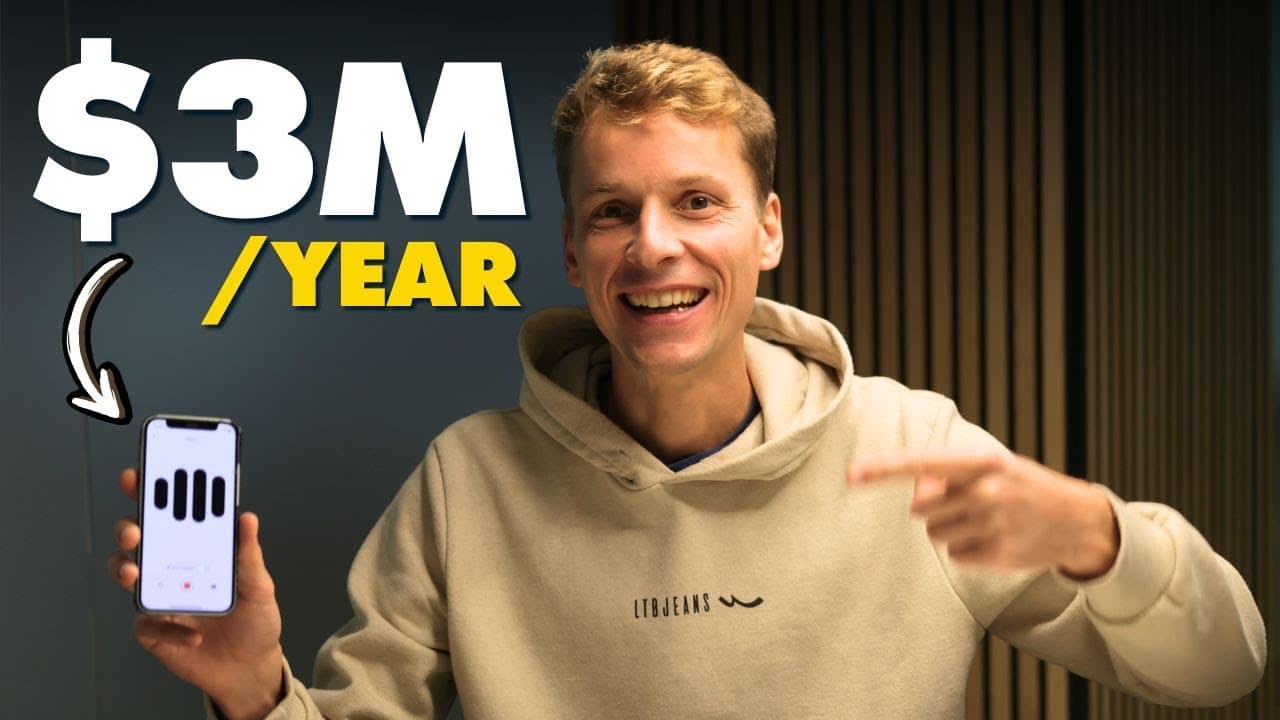
A simple app can earn substantial revenue when it solves a validated problem with less friction than free alternatives. Letterly reached $250,000 in monthly revenue by turning speech into polished text through a fast, accessible workflow. Its founder treats user experience as a dedicated feature, repeatedly simplifying prototypes, builds, and released functionality based on observed behavior and customer feedback.
Transcript
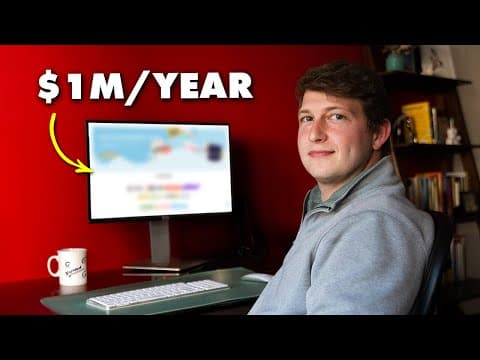
My name is Anton and my app makes $250,000 a month. This is Anton. He spent years on failed apps until he finally figured it out. What did he change? Well, it's not what you'd expect. Our secret is, and let me show you why. Most founders think more features equals more value. But Anton proved the opposite. And the proof is in his app that makes mil... Read More
Key Insights
- Letterly generates $250,000 in monthly revenue from a deliberately simple speech-to-text product. After two years, the app had 30,000 monthly active users, 20,000 paid subscribers, and 150,000 total downloads, despite competing with tools that can provide similar underlying functionality for free.
- Letterly turns spoken words into polished written text for notes, messages, emails, social media posts, and meeting notes. It serves people who find speaking faster or easier than typing, whether because of their thought process, their preferred working speed, or difficulty with typing.
- Simplicity is Letterly's primary competitive advantage. The team evaluates every screen and interaction for unnecessary friction, making it possible to start recording with a click, stop recording, receive text quickly, and trigger common actions without navigating through a complicated sequence.
- User experience is a multiplier across several parts of an app business. Anton says easier interactions can improve onboarding, retention, sales conversion, and customer recommendations, although strong user experience cannot compensate for a product that fails to solve a worthwhile problem.
- A validated business model can be safer than an entirely original idea. Anton's earlier attempts emphasized building something unique, but often produced products people did not need enough. With Letterly, he intentionally selected an already tested concept and focused on making its execution simpler and better.
- Simplicity is a separate feature that requires significant time and resources. Letterly's apparently straightforward interface resulted from thousands of hours spent creating prototypes, rebuilding flows, testing versions, and sometimes postponing promised features for several weeks so the team could improve their usability.
- Product simplification continues through prototypes, development, and release. The team first draws and discusses possible flows, reassesses whether the built version matches the intended experience, then uses customer feedback, observed behavior, and recurring questions to identify friction that earlier iterations missed.
- Letterly prioritizes convenient actions within the main workflow. Users can create and favorite rewriting options, generate takeaways, move between rewritten versions, copy text with one click, share it to services such as Google Docs or Notion, and append new speech to an existing note.
Install to Summarize YouTube Videos and Get Transcripts
Explore YouTube Video Summarizer or Get YouTube Transcript Extractor
Questions & Answers
Q: How did Letterly reach $250,000 in monthly revenue?
Letterly reached $250,000 in monthly revenue by combining a validated speech-to-text use case with an unusually simple workflow. Its founder attributes the product's performance primarily to eliminating friction across recording, transcription, rewriting, copying, and sharing. After two years, the app reported 30,000 monthly active users, 20,000 paid subscribers, and 150,000 total downloads.
Q: Why do users pay for Letterly when free alternatives exist?
Users pay for Letterly because it makes the complete task easier, even though similar transcription and rewriting functions are available through free tools such as ChatGPT. Customers told the company that starting a recording in Letterly felt easier. A user can begin from a button or widget, stop recording, receive text, rewrite it, and copy or share it with few interactions.
Q: What does the Letterly app do?
Letterly converts speech into polished written text that can be used for notes, messages, emails, social media posts, and meeting notes. It can transcribe recordings in real time, offer multiple rewriting options, extract takeaways, and let users create their own rewrite instructions. Users can also copy results, share them, or add another spoken passage to an existing note.
Q: How does user experience help an app grow?
Anton describes user experience as a multiplier because it affects several stages of the customer journey. A simpler product can make onboarding easier, encourage people to continue using the app, improve conversion to paid subscriptions, and generate recommendations from satisfied customers. He also stresses that usability is not sufficient by itself. The product must first solve a good problem.
Q: How can founders make an app simpler to use?
Founders can treat simplicity as its own product feature and evaluate it during every development stage. Anton's process begins with drawing, discussing, testing, and simplifying prototypes. The team then pauses during development to reassess usability before release. After launch, it studies feedback, observes how people use the feature, identifies recurring questions, and begins another round of improvements.
Q: Should founders build an original idea or improve an existing one?
Anton's experience favors improving a concept that has already demonstrated demand. His earlier startups focused on creating something unique that did not exist, but he concluded that customers often did not need those products enough. Letterly instead entered a validated category and concentrated on making the experience much simpler. He recommends this approach for the majority of people.
Q: Which Letterly features reduce friction for users?
Letterly reduces friction through immediate recording, fast transcription, visible rewriting options, and direct actions on the note screen. Users can favorite common rewrites so they appear near the note, create additional versions such as takeaways, scroll between results, copy text with one click, share it to Google Docs or Notion, and append new speech to an existing recording.
Q: What technology stack does Letterly use?
Letterly initially built its mobile application with React Native, then later changed its Apple implementation to Swift. Anton also states that the backend uses Python. The interview describes these as the basic technologies used for the app, but it does not provide further infrastructure details, service costs, architecture choices, or a complete list of external transcription and rewriting components.
Summary & Key Takeaways
-
Anton launched Letterly after spending 15 years attempting six or seven startups that failed. The app turns speech into polished text for notes, messages, emails, social media posts, and meeting notes. Two years after launch, it generated $250,000 in monthly revenue from 20,000 paid subscribers and 30,000 monthly active users.
-
Letterly competes with free alternatives by reducing the effort required to begin recording, receive a transcription, rewrite the result, and move it elsewhere. Anton describes user experience as a multiplier that improves onboarding, retention, sales conversion, and recommendations, provided the product already addresses a meaningful and validated customer problem.
-
Anton treats simplicity as an expensive, separate product feature that requires repeated iteration. His team simplifies ideas during prototyping, reassesses usability while building, and continues improving after release through feedback and observed questions. Letterly moved from React Native to Swift for its Apple app, while its backend uses Python.
Read in Other Languages (beta)
Share This Summary 📚
Summarize YouTube Videos and Get Video Transcripts with 1-Click
Try YouTube Summary with ChatGPT & Claude or YouTube Transcript Generator
Explore More Summaries from Starter Story 📚


Summarize YouTube Videos and Get Video Transcripts with 1-Click
Try YouTube Summary with ChatGPT & Claude or YouTube Transcript Generator