How to Politely Decline Invitations with Grace
TL;DR
To politely decline an invitation, express genuine gratitude for the offer while clearly stating your inability to participate. It's important to balance your heartfelt sentiments with your available time and interests, ensuring that your response reflects both appreciation and honesty.
Transcript
foreign this is a polite decline I'm not going to say rejection a polite decline when I via a mutual acquaintance close friend of mine Jeffrey zarovsky reached out to see if if you would participate in my book tribe of mentors and the beauty was your response ended up being incredibly valuable as a polite decline so I I'm going to be paraphrasing a... Read More
Key Insights
- 🍃 Genuine sentiments in written communication leave a lasting impact.
- ⚖️ Balancing desires, capabilities, and obligations when responding to invitations.
- 🤩 Authenticity and appreciation are key in expressing gratitude in polite declines.
- ❓ Procrastination may stem from conflicting emotions of rationality and emotionality.
- ❓ Distinguishing between genuine desires and obligatory commitments is crucial.
- 🍵 Jeremy King's advice on handling "shoulds" by assessing present excitement levels.
- 😨 Prioritizing courtesy and gracious responses to invitations show genuine care.
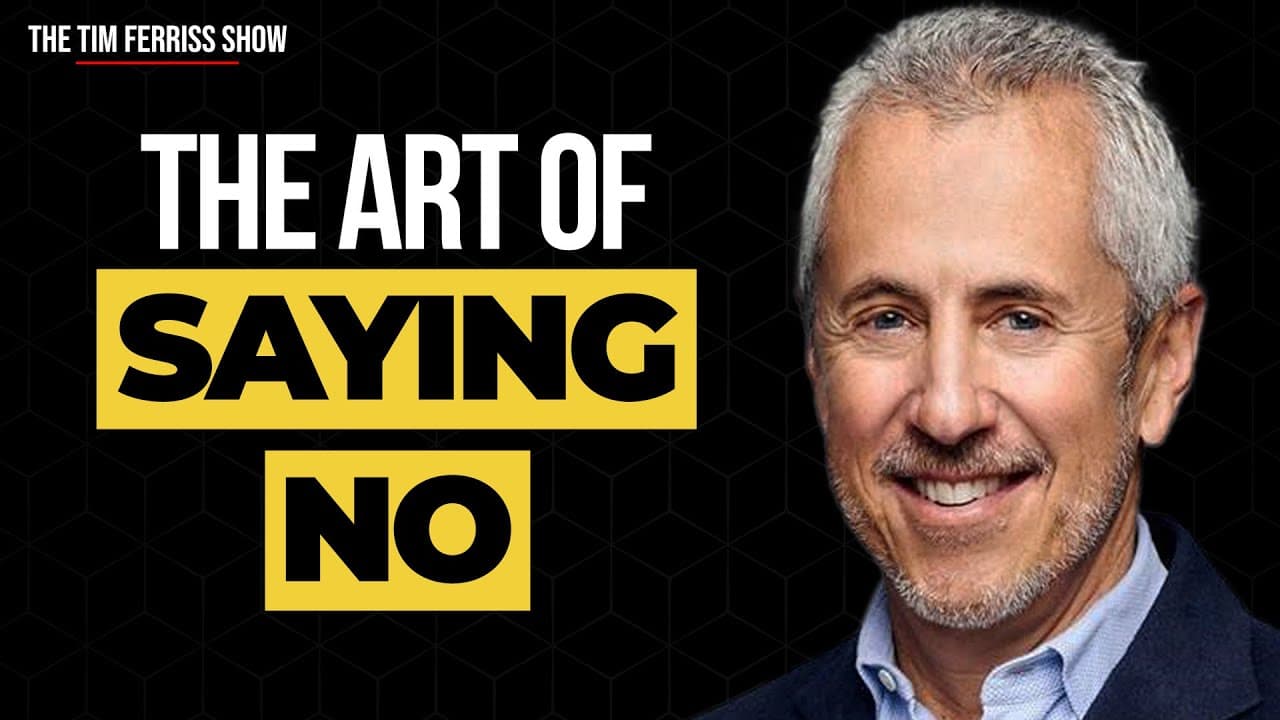
- 🎙️ More videos with Danny Meyer:
Install to Summarize YouTube Videos and Get Transcripts
Explore YouTube Video Summarizer or Get YouTube Transcript Extractor
Questions & Answers
Q: How did Tim Ferriss learn to write polite declines?
Tim Ferriss learned from his father, an editor, who instilled the value of genuine sentiments behind writing. He believes in expressing gratitude authentically.
Q: Has Tim Ferriss's approach to polite declines changed over time?
Yes, Tim Ferriss emphasizes discerning between genuine desires and obligations when responding to invitations. He values the importance of conveying appreciation sincerely.
Q: Why does Tim Ferriss procrastinate writing polite decline notes?
Tim Ferriss procrastinates out of a conflict between his mind and heart – the rationality of declining versus the emotion of wanting to show appreciation sincerely.
Q: How does Tim Ferriss differentiate between what he wants to do, can do, and should do?
Tim Ferriss differentiates by evaluating if an invitation sparks genuine excitement, rather than approaching it as an obligation. He values authenticity and genuine interest in his responses.
Summary & Key Takeaways
-
Tim Ferriss shares a valuable experience of receiving a polite decline letter for his book.
-
The importance of genuine sentiments behind written communication and expressing gratitude.
-
Insights on navigating between what you want to do, what you can do, and what you should do.
Read in Other Languages (beta)
Share This Summary 📚
Summarize YouTube Videos and Get Video Transcripts with 1-Click
Try YouTube Summary with ChatGPT & Claude or YouTube Transcript Generator
Explore More Summaries from Tim Ferriss 📚




Summarize YouTube Videos and Get Video Transcripts with 1-Click
Try YouTube Summary with ChatGPT & Claude or YouTube Transcript Generator