How to Write Website Copy for Brand Strategy
TL;DR
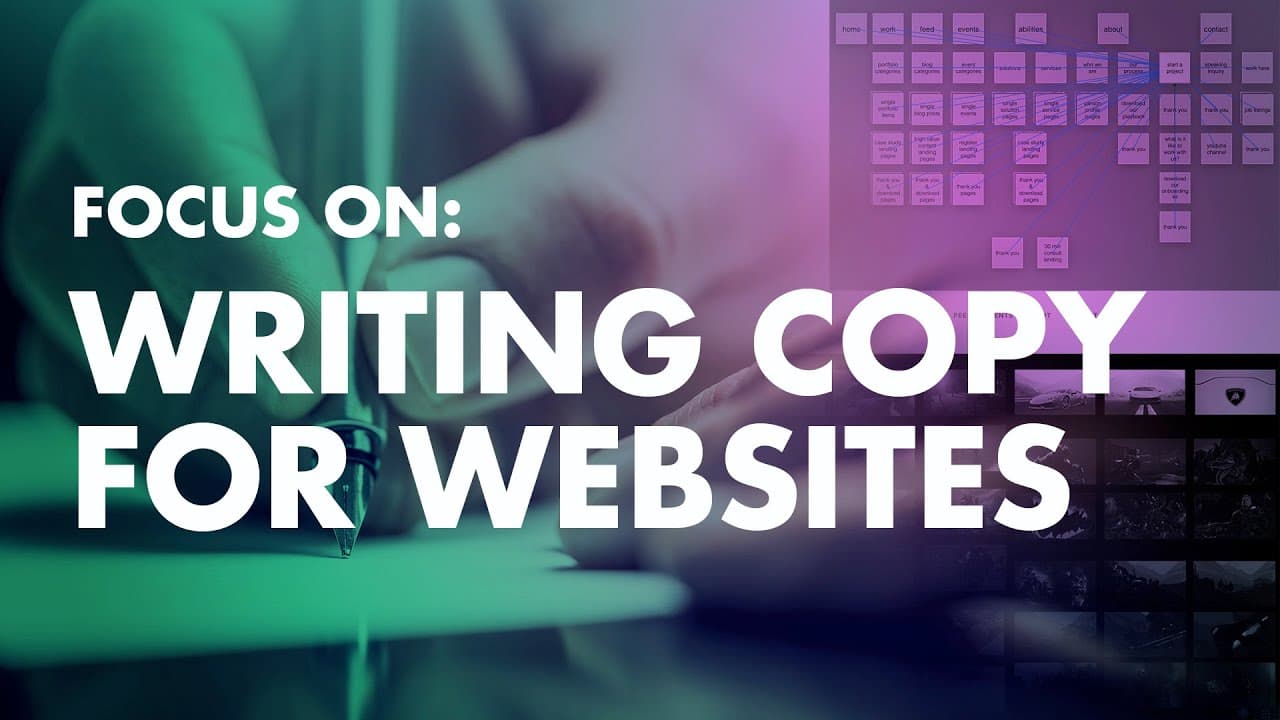
Start website copy by identifying the audience, its needs, and the results the business helps deliver. Generate many versions without overediting, then delete, refine, and simplify until the message is clear enough for a fifth grader while still expressing the company’s purpose, strategy, services, and value to users.
Transcript
I just finished having a brainstorming session with Janica, who's our writer, who's helping us to write all the copy for our website and a whole bunch of other things. And there's this gap. There's this gap between what you're thinking and the words that you want to express, between goals and results, between brands and consumers, the gap between w... Read More
Key Insights
- Effective website copy is built on understanding the gap between what a company intends to communicate and the words audiences actually receive. A writer needs access to the company’s goals, thinking, and context, followed by enough time and space to process that material into clear language.
- Search positioning is a deliberate part of the website strategy. Blind identifies “brand strategy agency” and “business design consultancy” as phrases it wants associated with its work, so the copy must attract people seeking those services while accurately representing the firm’s preferred direction.
- Information architecture is a blueprint for how visitors navigate a website. Blind’s existing site emphasizes portfolio work with “just show me the work,” but its repositioned site must help a different audience assess the company’s branding perspective, services, purpose, and suitability as a strategic partner.
- A company’s purpose is more meaningful than a simple list of deliverables. The discussion distinguishes why a company exists, how it operates, and what it makes, arguing that beliefs, values, and the people a company serves should shape the message before specific products or services are introduced.
- The bridge metaphor connects ideas to tangible form, conceived strategy to realized strategy, goals to results, and brands to users. It describes an agency that participates in shaping the thinking and then carries that thinking into execution, instead of simply decorating a solution created elsewhere.
- User value is the basis of the proposed brand strategy. The agency facilitates dialogue, develops user profiles, examines pains and gains, and helps clients identify ways to improve users’ lives. Those findings guide both the strategy and the tangible form through which the strategy is expressed.
- Clear copy avoids language that overemphasizes artfulness, beauty, or awards when those qualities are not the client’s main concern. The message should explain what the agency changes for the client and its users, including how it connects business needs, user wants, strategic decisions, and meaningful results.
- Iterative writing works by producing many versions before selecting and refining one. Janica describes writing freely, deleting, repeating a line many times, choosing the version that sounds best, and massaging it. Chris adds a three-part word exercise to expose the essential relationships beneath supporting language.
Install to Summarize YouTube Videos and Get Transcripts
Explore YouTube Video Summarizer or Get YouTube Transcript Extractor
Questions & Answers
Q: How do you write website copy during a brand repositioning?
Begin by defining the position the company wants to occupy, the audience it hopes to attract, and the search phrases connected to its desired services. Then explain the company’s purpose, users, approach, and value in ordinary language. Generate multiple versions of each key sentence, select the clearest version, and refine it until a parent or fifth grader could understand the central idea.
Q: How should website copy reflect search positioning?
Website copy should use the service terms for which the company wants to be known, provided those terms accurately match the work it intends to pursue. Blind identifies “brand strategy agency” and “business design consultancy” as its target phrases. The surrounding copy must do more than repeat them. It should explain the firm’s perspective, process, users, services, and client value clearly.
Q: Why should a service website focus on users instead of only showing work?
A portfolio-led website mainly answers what the company has made, while a strategically oriented visitor may need to decide whether the firm is the right fit. Copy can support that decision by addressing the visitor’s needs, clarifying the company’s purpose and beliefs, explaining its services, and showing how its approach connects business goals with better outcomes for users.
Q: What does the bridge metaphor mean in brand strategy copy?
The bridge metaphor describes connections the agency helps create. These include the movement from ideas to tangible form, conceived strategy to realized strategy, goals to results, and brands to users. It also signals that the agency contributes to strategic thinking and execution together, rather than waiting for another party to complete the strategy and then merely styling the final solution.
Q: How can website copy explain the value of design strategy?
Website copy can explain design strategy through the outcomes and relationships it improves. The transcript frames the work as understanding users, identifying their pains and gains, forming a strategy, and giving that strategy a tangible shape. This language shows how design supports business needs and user wants without depending on insider jargon, awards, visual beauty, or vague claims about creativity.
Q: How do writers refine a difficult website sentence?
A writer can begin by drafting freely and allowing the language to flow without editing every word immediately. The same idea can then be written repeatedly in many forms. After enough alternatives exist, the writer deletes weaker material, selects the version that sounds strongest, and massages it further. This separates initial idea generation from the later work of judgment and refinement.
Q: How can a company simplify an elevator pitch?
Reduce the pitch to a few essential relationships before adding supporting words. Chris Do proposes three phrases and places one core word on each side of a gap, such as “goals” and “results.” The remaining language should make those connections easier to say. The final pitch should be concise, immediately understandable, and free of terminology that requires additional explanation.
Q: Why should creatives participate in strategy as well as execution?
When strategists develop a brief without the people who will realize it, the final makers must interpret decisions they did not help shape. The transcript argues that free thinkers and creative people should help solve the problem, surface user needs, and form the strategy, not merely give an existing solution visual form. Their involvement connects strategic conception more directly with tangible execution.
Summary & Key Takeaways
-
Blind’s repositioning requires copy that moves beyond its history in motion design and presents the company as a brand strategy agency and business design consultancy. The new website must attract clients searching for those services while helping visitors determine whether the firm’s purpose, beliefs, approach, and capabilities fit their needs.
-
The proposed messaging uses bridge-building as a metaphor for connecting ideas with tangible form, goals with results, and brands with users. The agency wants to involve creative thinkers in both strategy and execution, rather than receiving a completed brief and merely giving someone else’s solution an attractive or award-winning visual form.
-
The writing process begins with discussion, context, and repeated drafts. The writer generates numerous versions of the same idea, avoids editing too early, selects the strongest option, and then massages it. Chris Do further simplifies the message by identifying three core phrases and testing whether each can be understood by a parent or fifth grader.
Read in Other Languages (beta)
Share This Summary 📚
Summarize YouTube Videos and Get Video Transcripts with 1-Click
Try YouTube Summary with ChatGPT & Claude or YouTube Transcript Generator
Explore More Summaries from The Futur 📚
Summarize YouTube Videos and Get Video Transcripts with 1-Click
Try YouTube Summary with ChatGPT & Claude or YouTube Transcript Generator