How to Build AI Apps with Voice Data Using Frameworks
TL;DR
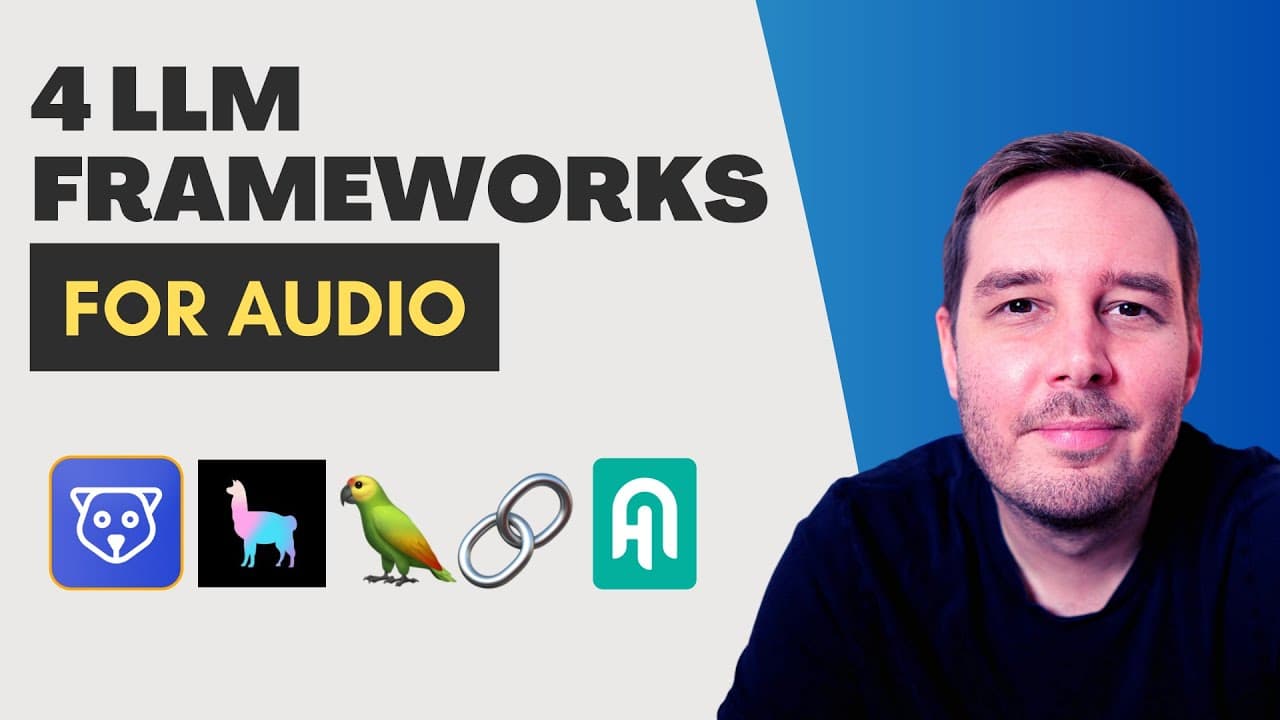
To build AI applications using voice data, you need to transcribe audio, store transcripts, and leverage large language models. Four main frameworks—Assembly AI SLO, LangChain, LlamaIndex, and HastStack—simplify these processes. Each framework offers unique features for handling audio data, allowing customizations based on user needs.
Transcript
hi everyone I'm Patrick from assembly Ai and in this video I show you four Frameworks that let you build AI applications with audio data and ledge language models this allows a lot of cool use cases like you can summarize meetings podcasts videos or ask any question you want about your data here I have a quick example we have one MP3 file about spo... Read More
Key Insights
- 🈸 Building AI applications with audio data involves distinct steps like transcription, storage, text splitting, embedding calculation, prompt building, model application, and deployment.
- 👨💻 The Assembly AI SLO Framework offers a streamlined approach with minimal code for processing audio data efficiently.
- 🫰 Lang chain, Lama index, and Hast stack provide flexibility and customization options for users to tailor their AI applications with language models.
- 🍳 Text splitting is essential to ensure that large language models can process audio data effectively by breaking it into manageable segments.
- 🐕🦺 The integration of Assembly AI, OpenAI, and other services in the Frameworks enhances their functionality and performance for handling audio data.
- 😄 The simplicity of code examples for each Framework demonstrates their ease of use and effectiveness in working with language models and audio data.
- 🧑🏭 Users can choose the Framework that best fits their needs based on factors like simplicity, customization options, and automation capabilities.
Install to Summarize YouTube Videos and Get Transcripts
Explore YouTube Video Summarizer or Get YouTube Transcript Extractor
Questions & Answers
Q: What are the key steps involved in building AI applications with audio data?
Building AI apps with audio data requires transcription, storage, text splitting, embedding calculation, prompt building, model application, and deployment. These steps ensure effective utilization of language models.
Q: How do the Assembly AI SLO Framework and Hast stack differ in handling audio data?
The Assembly AI SLO Framework streamlines the process in just a few lines of code, while Hast stack allows for more customization and control by combining multiple services.
Q: Can you explain the importance of text splitting in the context of large language models?
Text splitting is crucial for ensuring that large language models can effectively process long audio files by dividing them into manageable segments that fit the context window of the model.
Q: How do the different Frameworks handle prompt building and language model application?
Each Framework provides unique capabilities for prompt building and language model application, with varying levels of automation and customization based on the user's preferences and requirements.
Summary & Key Takeaways
-
Understand the essential steps needed to build audio AI apps, from transcription to deployment.
-
Explore four different Frameworks (Assembly AI SLO, Lang chain, Lama index, Hast stack) that streamline the process.
-
Discover code examples for each Framework, showcasing their simplicity and effectiveness in handling audio data.
Read in Other Languages (beta)
Share This Summary 📚
Summarize YouTube Videos and Get Video Transcripts with 1-Click
Try YouTube Summary with ChatGPT & Claude or YouTube Transcript Generator
Explore More Summaries from AssemblyAI 📚




Summarize YouTube Videos and Get Video Transcripts with 1-Click
Try YouTube Summary with ChatGPT & Claude or YouTube Transcript Generator