How AI Tools Automate White Collar Work by 2026
TL;DR
Claude Co-work, an AI tool developed by Anthropic, has gained significant attention for its potential to automate white collar tasks. While it offers productivity boosts, it is not without errors, highlighting the need for human oversight. The tool exemplifies the balance between AI capabilities and limitations, suggesting that AI can enhance productivity but is not yet fully reliable.
Transcript
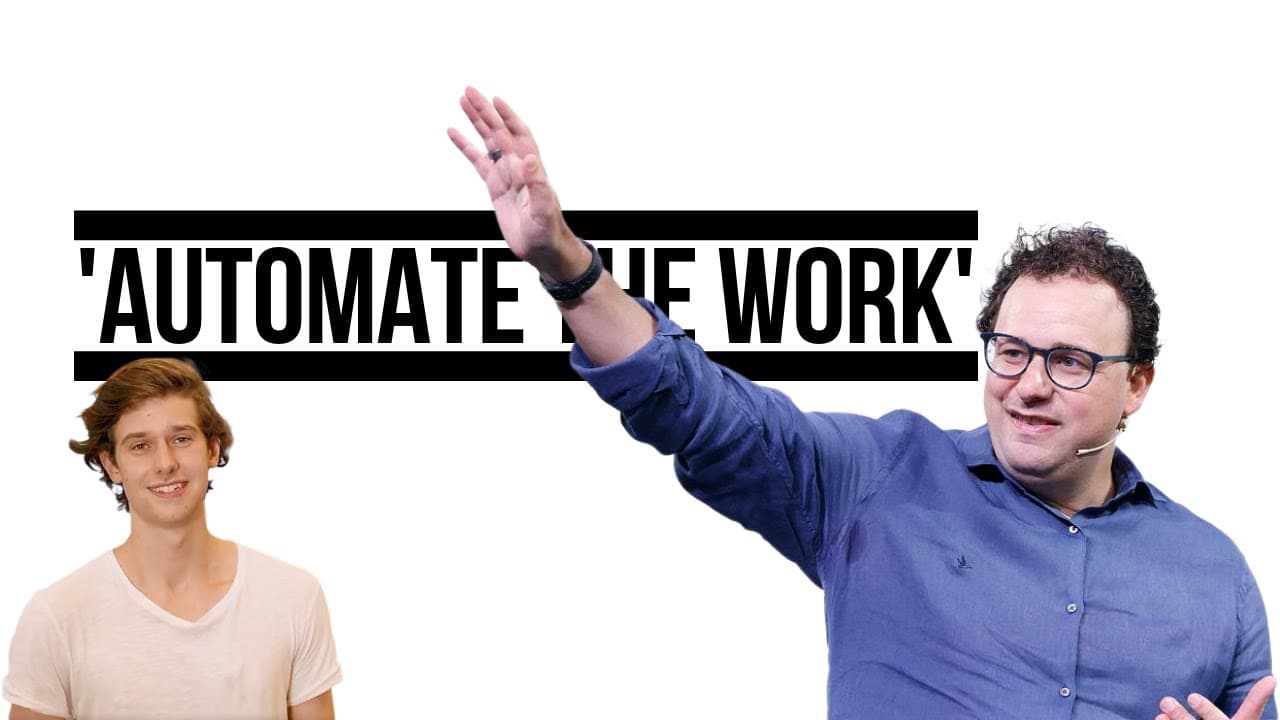
the CEO of one of the major AI labs predicted last year that by around now 100% of the code written by that company would be produced by one of their AI models. Next up within 2026 would be all other knowledge work and a new tool released by Anthropic in the last couple of days seems to back that up. It's called Claude Co-work. Not only has it gone... Read More
Key Insights
- Claude Co-work is an AI tool designed to automate various non-coding tasks, developed using Anthropic's Claude Opus 4.5 model.
- The tool has gone viral, indicating widespread interest and potential impact on productivity in white collar jobs.
- Despite its capabilities, Claude Co-work still makes errors, requiring human intervention to ensure accuracy.
- AI models like Claude Opus 4.5 are not fully autonomous and require human collaboration to achieve optimal results.
- The productivity gains from using AI tools are significant but not without challenges, as they sometimes rely on brittle memorization.
- AI's impact on job markets is nuanced, with some sectors experiencing changes but no drastic increase in unemployment.
- Understanding in AI models varies, with some tasks showing deep comprehension while others display shallow processing.
- Continued advancements in AI could lead to more robust understanding and capabilities, enhancing their utility in various fields.
Install to Summarize YouTube Videos and Get Transcripts
Explore YouTube Video Summarizer or Get YouTube Transcript Extractor
Questions & Answers
Q: How does Claude Co-work automate white collar tasks?
Claude Co-work automates white collar tasks by utilizing the Claude Opus 4.5 model to perform non-coding activities. It can generate plans, execute tasks, and produce outputs like presentation slides. However, it requires human oversight to ensure accuracy, as it may still make errors in data retrieval and task execution. The tool exemplifies the potential for AI to assist in various knowledge work functions, enhancing efficiency while necessitating human collaboration.
Q: What are the limitations of using AI tools like Claude Co-work?
AI tools like Claude Co-work have limitations such as occasional errors in task execution and data accuracy. While they can automate tasks and improve productivity, they still rely on human intervention to verify and correct outputs. These tools may also depend on brittle memorization rather than deep understanding, leading to inconsistencies in performance. Therefore, while beneficial, they are not yet fully autonomous or reliable for all tasks.
Q: What impact does AI automation have on job markets?
AI automation's impact on job markets is multifaceted. While some sectors may experience changes due to increased efficiency and automation, there is no significant rise in unemployment attributed solely to AI. The technology's influence varies across industries, with some adopting AI more rapidly than others. The overall effect on employment is gradual, with AI tools complementing rather than completely replacing human roles, allowing for a more balanced integration into existing work environments.
Q: Why do AI models like Claude sometimes make errors?
AI models like Claude make errors due to their reliance on both deep and shallow processing mechanisms. While they can achieve high levels of understanding for certain tasks, they may also depend on brittle memorization for others, leading to mistakes. These models are designed to predict outcomes based on patterns, but they can struggle with tasks requiring nuanced comprehension or when dealing with unfamiliar data. Human oversight is essential to mitigate these errors and ensure reliable performance.
Q: How can AI enhance productivity in white collar work?
AI can enhance productivity in white collar work by automating routine tasks, generating insights, and providing decision support. Tools like Claude Co-work can handle data processing, create presentations, and perform other non-coding tasks, allowing human workers to focus on more complex and creative activities. By streamlining workflows and reducing the time spent on mundane tasks, AI enables greater efficiency and can lead to significant productivity gains when integrated effectively into work processes.
Q: What are the key factors for successful AI integration in workplaces?
Successful AI integration in workplaces requires a balanced approach that combines AI capabilities with human oversight. Key factors include selecting appropriate tasks for automation, ensuring data accuracy, and maintaining human involvement in decision-making processes. Training employees to work alongside AI tools, addressing ethical considerations, and continuously evaluating AI performance are also crucial. By fostering a collaborative environment, organizations can harness AI's potential while mitigating its limitations.
Q: What does the future hold for AI in knowledge work?
The future of AI in knowledge work involves continued advancements in technology, leading to more sophisticated and reliable tools. As AI models improve their understanding and processing capabilities, they are likely to take on more complex tasks, further enhancing productivity. However, human collaboration will remain essential to guide AI applications and ensure ethical and effective use. The evolution of AI will likely result in a dynamic interplay between automation and human expertise, shaping the future of work.
Q: How do AI tools like Claude Co-work balance between hype and reality?
AI tools like Claude Co-work balance between hype and reality by demonstrating significant potential for productivity gains while also revealing current limitations. The tool's viral success highlights interest and perceived value, yet its errors and need for human oversight temper expectations. This duality reflects the broader state of AI, where impressive capabilities coexist with challenges, requiring users to adopt a nuanced perspective that appreciates both the promise and the practical constraints of AI technology.
Summary & Key Takeaways
-
Claude Co-work, an AI-powered tool, aims to automate white collar work, offering productivity enhancements. However, it still requires human oversight due to occasional errors. While the tool has gone viral, its current capabilities highlight the balance between AI's potential and its limitations, suggesting a future where AI assists rather than replaces human workers.
-
The development of Claude Co-work by Anthropic demonstrates the potential for AI to take over non-coding tasks, aligning with predictions of increasing automation in knowledge work. Despite its promise, the tool's errors underscore the necessity of human involvement in the process, reflecting the current state of AI technology.
-
AI's role in the job market is complex, with some industries seeing shifts but no significant rise in unemployment. Claude Co-work's example shows that AI can boost productivity but is not infallible, requiring a middle ground approach that leverages AI's strengths while acknowledging its current weaknesses.
Read in Other Languages (beta)
Share This Summary 📚
Summarize YouTube Videos and Get Video Transcripts with 1-Click
Try YouTube Summary with ChatGPT & Claude or YouTube Transcript Generator
Explore More Summaries from AI Explained 📚




Summarize YouTube Videos and Get Video Transcripts with 1-Click
Try YouTube Summary with ChatGPT & Claude or YouTube Transcript Generator