How Does Meditation Affect the Brain and Body?
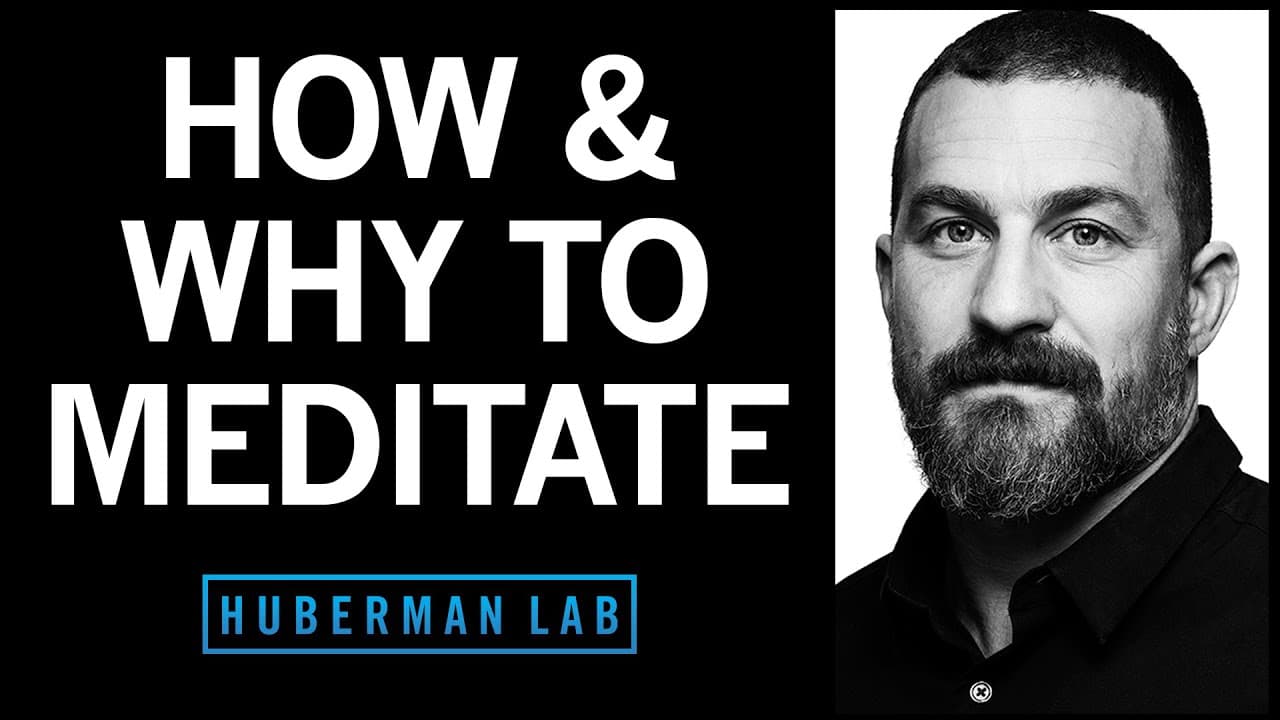
TL;DR
Meditation can change the brain and body by activating key areas such as the prefrontal cortex, anterior cingulate cortex, and insula, which help interpret bodily sensations and emotions. By closing the eyes, meditation shifts perception from external stimuli to internal sensations, fostering interoceptive awareness and leading to benefits like improved focus, reduced symptoms of depression, and enhanced sleep.
Transcript
- Welcome to the Huberman Lab podcast where we discuss science and science-based tools for everyday life. [MUSIC PLAYING] I'm Andrew Huberman, and I'm a professor of neurobiology and ophthalmology at Stanford School of Medicine. Today, we are discussing meditation. We are going to discuss the science of meditation, that is, what happens in the brai... Read More
Key Insights
- 🧠 Meditation can lead to significant changes in the brain and body, including activation of specific brain areas involved in interpreting bodily sensations and emotions.
- 😚 Closing the eyes during meditation shifts perception from external stimuli to internal sensations, promoting interoceptive awareness.
- 😪 Different types of meditation have specific effects, such as reducing symptoms of depression, enhancing focus, improving sleep, and enhancing cognitive and physical abilities.
Install to Summarize YouTube Videos and Get Transcripts
Explore YouTube Video Summarizer or Get YouTube Transcript Extractor
Questions & Answers
Q: What is the default mode network and how is it related to meditation?
The default mode network is a collection of brain areas active during mind wandering or thoughts drifting. Meditation can quiet the default mode network and promote focus and present-moment awareness.
Q: Can meditation benefit symptoms of depression?
Yes, meditation has been shown to alleviate symptoms of depression. It can help regulate emotions, reduce rumination, and promote positive mental states.
Q: How can meditation enhance focus?
Meditation can enhance focus by training attention and reducing distractions. It can improve cognitive control, increase working memory capacity, and help regulate attentional resources.
Q: Is it necessary to close the eyes during meditation?
Closing the eyes is a common practice in meditation, but it is not required. Some forms of meditation, such as walking meditation, can be done with eyes open. The important aspect is to find a practice that works best for individual goals and preferences.
Summary & Key Takeaways
-
Meditation encompasses various practices, including sitting or lying down with eyes closed, focusing on the third eye center, body scanning, and walking meditations.
-
Meditation can activate specific brain areas such as the prefrontal cortex, anterior cingulate cortex, and insula, which are involved in interpreting bodily sensations and emotions.
-
Closing the eyes during meditation shifts perception from exteroception (external stimuli) to interoception (internal sensations).
-
The default mode network, associated with mind wandering, is active when the mind is not focused on a specific task.
Read in Other Languages (beta)
Share This Summary 📚
Summarize YouTube Videos and Get Video Transcripts with 1-Click
Try YouTube Summary with ChatGPT & Claude or YouTube Transcript Generator
Explore More Summaries from Andrew Huberman 📚



Summarize YouTube Videos and Get Video Transcripts with 1-Click
Try YouTube Summary with ChatGPT & Claude or YouTube Transcript Generator