How to Define Success and Build a Fulfilling Life
TL;DR
Success is an evolving state shaped by personal choices, changing circumstances, and both internal and external measures. A fulfilling life requires defining success for yourself, accepting tradeoffs, seizing opportunities, and acting honestly on the best information available. Achievement alone may neglect family, community, happiness, or identity, while thoughtful choices can limit process-based regret even when outcomes go wrong.
Transcript
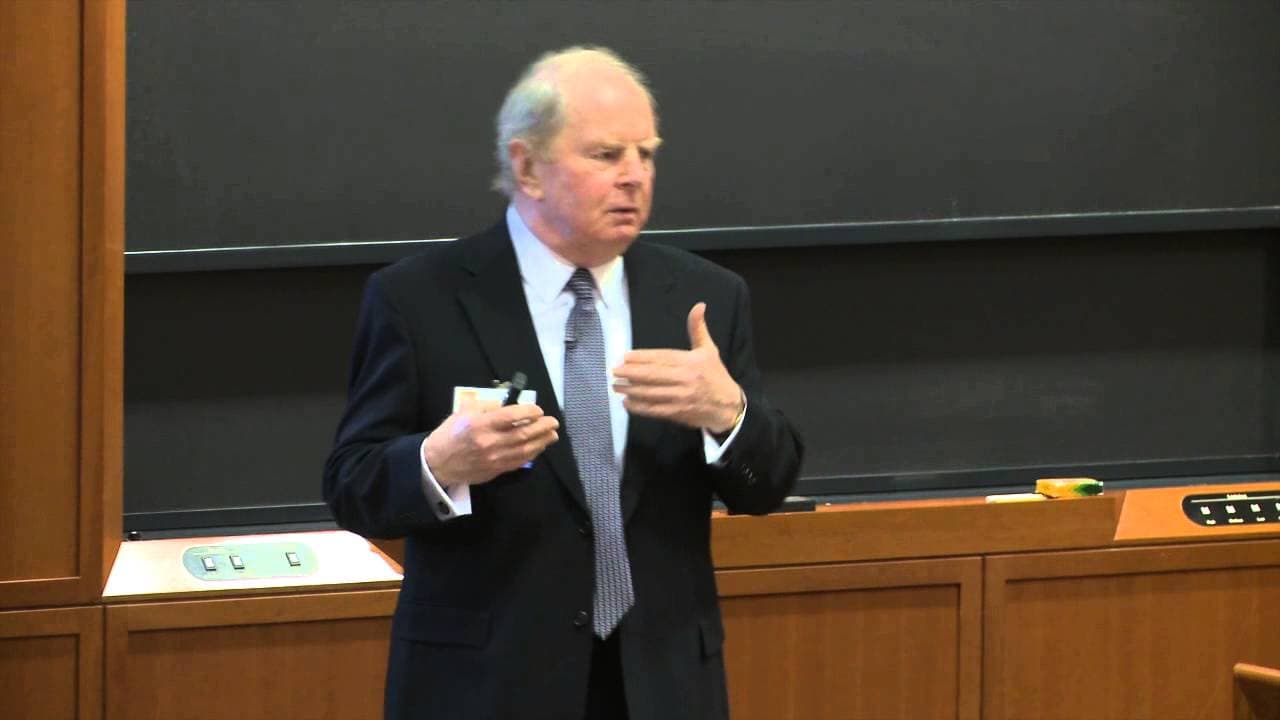
HOWARD STEVENSON: I'm Howard Stevenson. It's a pleasure to be with you. I mean that sincerely, since I died once out here. As I say, we're going to talk about building a life. I was telling Howard I failed once at retirement, three times at dying, and 71 times at being on the Forbes list. [LAUGHTER] So I'm used to failure. Now we'll go forward from... Read More
Key Insights
- Success is a continuing state of being, not a permanent achievement that can be frozen in place. Declaring oneself successful may encourage failure because circumstances keep changing, satisfaction remains unstable, and accomplishments that once seemed decisive eventually become only one part of a longer life.
- Success is uniquely defined by what a person brings, where that person comes from, and when an achievement occurs. No single profile fits everyone, and even a room full of successful people cannot identify its most successful member without first choosing a particular measure.
- External measures of success are not always aligned with internal measures. People may receive rewards for work they do not value, while receiving no reward for accomplishments that make them proud, so public recognition alone cannot determine whether a life feels successful.
- Life is shaped by choices made without certainty about what lies ahead. Stevenson resigned after receiving tenure because many tenured faculty members he interviewed seemed unhappy, choosing an uncertain alternative that eventually brought him back under different terms.
- Context is essential because opportunities and competitive environments change over time. Stevenson argues that children cannot simply reproduce a successful parent's path, using entrepreneurship and hedge funds to show how strategies suited to one period may work differently in another.
- Tradeoffs are unavoidable because time and attention are limited. Stevenson left a hedge fund after becoming a single parent, sacrificing one visible route to financial distinction while gaining the ability to fulfill family responsibilities and pursue other meaningful activities.
- Happiness differs from conventional success because getting what one wants does not guarantee wanting what one gets. Stevenson warns that achievement may still feel insufficient or require unacceptable sacrifices, particularly when people neglect family, community, personal values, or identity.
- Process-based regret can be limited even when consequences are disappointing. Stevenson and Laura Nash concluded that undesirable outcomes still occur, but regret is harder to sustain when a person acted honestly and made a decision using the best information available at the time.
Install to Summarize YouTube Videos and Get Transcripts
Explore YouTube Video Summarizer or Get YouTube Transcript Extractor
Questions & Answers
Q: What does Howard Stevenson mean by success?
Howard Stevenson describes success as an evolving state of being rather than a fixed score, title, or achievement. Its meaning depends on a person's abilities, origins, circumstances, values, and stage of life. Because both people and the surrounding world change, success cannot be permanently secured or measured through one universal profile that applies equally to everyone.
Q: Why is success difficult to measure?
Success is difficult to measure because the chosen standard determines who appears most successful. Money, professional recognition, family responsibility, community contribution, happiness, and personal pride may point toward different conclusions. Stevenson also notes that achievement is uneven and unstable, so someone may flourish in one area while experiencing pain, disruption, or dissatisfaction in another part of life.
Q: How do internal and external measures of success conflict?
Internal and external measures conflict when institutions or other people reward achievements that do not make someone proud, or ignore work that carries deep personal meaning. Stevenson argues that public status cannot settle the question of success because private satisfaction and social recognition may diverge. A person therefore needs to evaluate both visible outcomes and personal values.
Q: Why can copying a successful parent's career path fail?
Copying a successful parent's career may fail because the context surrounding that career has changed. Stevenson says his own early work in entrepreneurship occurred when few people cared about the field, while later entrants faced different conditions. He similarly contrasts involvement in an early hedge fund with a later environment containing many new funds and many failures.
Q: How do life choices affect professional success?
Life choices can close one professional path while making other valuable activities possible. Stevenson left a hedge fund when he became a single parent, which meant giving up potential financial distinction associated with that firm. However, remaining on that route would have prevented him from meeting family responsibilities and doing the other work that later became part of his life.
Q: Why did Howard Stevenson resign after receiving tenure?
Stevenson resigned immediately after receiving tenure in 1978 because he had interviewed many tenured faculty members and found that they were not happy. He did not see a reason to continue along an established route when many people considered successful on that route appeared dissatisfied. He chose an uncertain alternative without knowing where it would lead.
Q: What fears can accompany professional success?
Stevenson identifies three fears he associates with many Harvard Business School graduates: failing to become successful, becoming successful but finding that it is not enough, and succeeding only by selling one's soul. These fears show why professional attainment alone may not create satisfaction, especially when achievement demands sacrificing relationships, community, identity, or personally important values.
Q: How can people reduce regret when making life decisions?
People can reduce process-based regret by acting honestly toward themselves and deciding from the best information available at the time. Stevenson distinguishes this from controlling consequences, because choices can still produce bad outcomes. His point is that disappointment does not automatically become regret when the original decision was thoughtful, sincere, and consistent with what the person reasonably knew.
Summary & Key Takeaways
-
Howard Stevenson presents success as an unstable, continuing state rather than a permanent score or status. Its meaning differs among individuals because each person brings distinct abilities, origins, relationships, opportunities, and circumstances. External recognition may conflict with internal pride, and achievements that once mattered can lose relevance as people and contexts change.
-
Life consists of choices made without knowing what lies beyond each crossroads. Stevenson illustrates this through resigning immediately after receiving tenure and leaving a hedge fund while becoming a single parent. Both choices involved visible sacrifices, but they enabled other experiences and responsibilities that would have been impossible on the abandoned paths.
-
Interviews with about 150 varied high achievers suggested that satisfying lives involve more than personal advancement. The interviewees cared about others, continued growing, seized available opportunities, and generally felt good about themselves and their lives. They also distinguished regrettable outcomes from regrettable processes, emphasizing honest decisions based on the best available information.
Read in Other Languages (beta)
Share This Summary 📚
Summarize YouTube Videos and Get Video Transcripts with 1-Click
Try YouTube Summary with ChatGPT & Claude or YouTube Transcript Generator
Explore More Summaries from Harvard Business School 📚






Summarize YouTube Videos and Get Video Transcripts with 1-Click
Try YouTube Summary with ChatGPT & Claude or YouTube Transcript Generator