Why Do English Speakers Use Confusing Yes-No Answers?
TL;DR
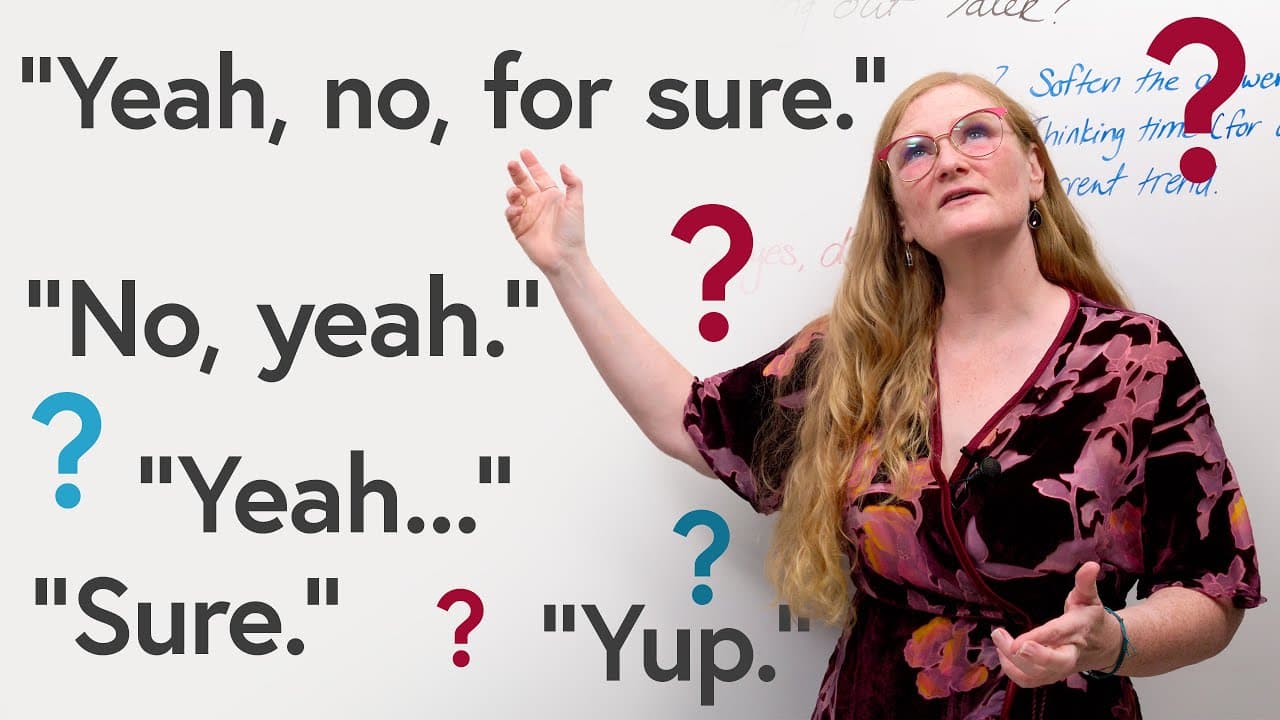
English speakers in North America often use ambiguous responses like 'yeah, no' and 'nope' to soften negative answers, which can create confusion. This trend has emerged recently, potentially to enhance social interaction. Understanding these responses requires asking clarifying questions and practicing conversational skills.
Transcript
Hi. Are you confused sometimes with people's answers? Yeah? No? Yeah? Sure. Okay. This is a recent trend that started, I don't know how long ago, 42 minutes ago it started. Starting now. And the way that people in North America, Canada, and America, because in Mexico they speak Spanish, and some other English-speaking countries, I don't know, Engla... Read More
Key Insights
- 😃 Confusing yes-no responses like "yeah, no" are common among English speakers in North America, making conversations unclear.
- 🤕 Softening the answer is a technique used to maintain politeness and avoid hurting feelings when giving negative responses.
- 🚨 The trend of ambiguous responses may have emerged recently to increase social interactions during conversations.
- 😷 English learners can improve their understanding of ambiguous responses by asking clarifying questions in conversations.
- 🥺 The use of ambiguous yes-no answers can lead to misunderstandings and confusion in English conversations.
- 😒 Regular practice and exposure to English conversations can help learners become familiar with the use of conflicting responses.
- 😃 The trend of ambiguous yes-no answers may reflect a cultural shift towards increased social interaction and engagement in conversations.
Install to Summarize YouTube Videos and Get Transcripts
Explore YouTube Video Summarizer or Get YouTube Transcript Extractor
Questions & Answers
Q: Why do English speakers in North America use conflicting yes-no responses?
English speakers use ambiguous responses like "yeah, no" to soften their answers and maintain politeness, even when declining an invitation.
Q: What is the purpose of softening the answer in conversations?
Softening the answer is a technique to cushion the impact of negative responses and avoid hurting the feelings of the person asking the question.
Q: Why has the trend of ambiguous yes-no responses become more common?
The trend of using confusing answers has emerged recently, possibly to make conversations more engaging and increase social interaction among English speakers.
Q: How can English learners navigate through the ambiguous yes-no responses in conversations?
English learners can clarify ambiguous responses by asking follow-up questions to ensure they understand the speaker's intended meaning accurately.
Summary & Key Takeaways
-
English speakers in North America often use conflicting yes-no responses, such as "yeah, no" or "nope," leading to confusion.
-
Softening the answer is a common technique to avoid hurting feelings when declining an invitation.
-
This trend of ambiguous responses has emerged recently, possibly to increase social interaction.
Read in Other Languages (beta)
Share This Summary 📚
Summarize YouTube Videos and Get Video Transcripts with 1-Click
Try YouTube Summary with ChatGPT & Claude or YouTube Transcript Generator
Explore More Summaries from English with Ronnie · EnglishLessons4U with engVid 📚






Summarize YouTube Videos and Get Video Transcripts with 1-Click
Try YouTube Summary with ChatGPT & Claude or YouTube Transcript Generator