How Do Ultra-Processed Foods Affect Health?
TL;DR
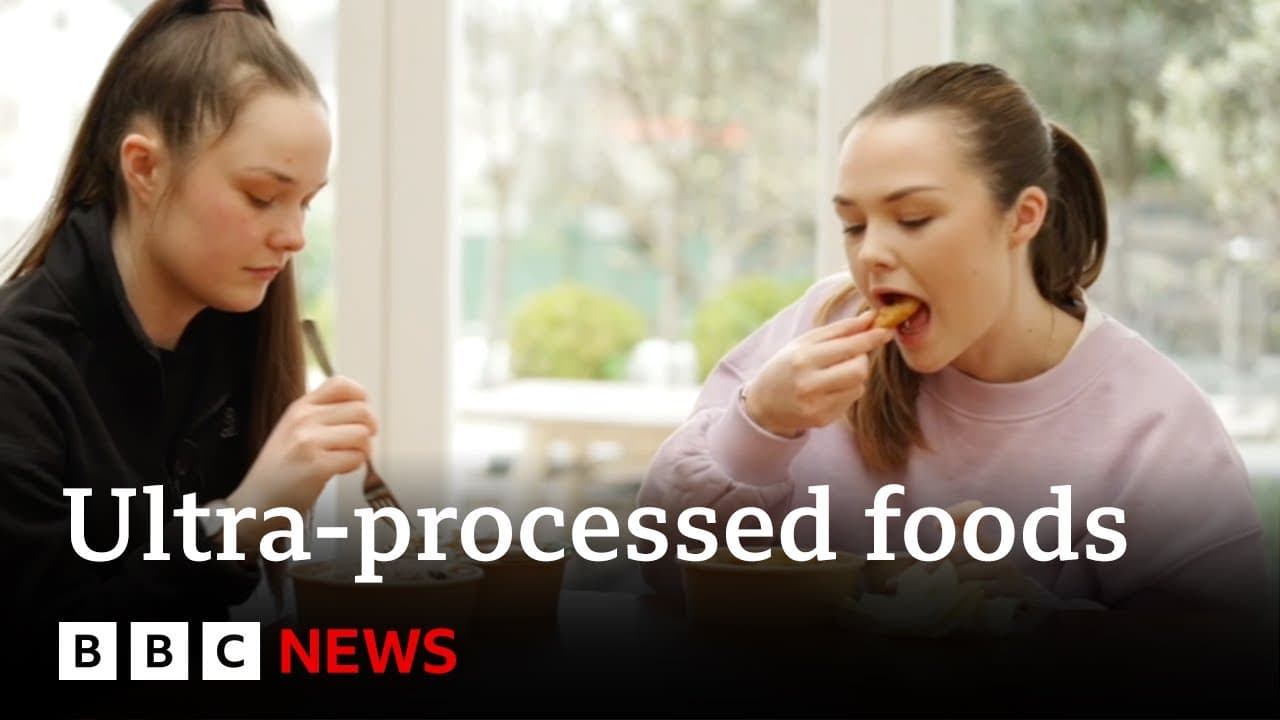
Ultra-processed foods may worsen blood sugar, blood fats, weight, and hunger even when diets are matched for calories and key nutrients. In a two-week test involving identical twins, the twin eating ultra-processed food gained nearly a kilogram and showed poorer metabolic results, while emerging observational research also associated emulsifier intake with cancer and cardiovascular disease risks.
Transcript
to your 160.5 lovely so step forward Amy and Nancy are 24 year old twins so Amy and Nancy what we want to do is to look at how food processing impacts your health they're taking part in a test with Dr Sarah Berry and Professor Tim Spector from King's College London what you're going to do is for two weeks Nancy you're going to be doing the unproces... Read More
Key Insights
- Ultra-processed foods account for more than 50 percent of energy intake overall and about 65 percent of children's energy intake, according to the researchers. They described children's consumption as increasing at an alarming rate and warned about potential long-term health consequences.
- The twin experiment compared food processing while matching the diets for calories, nutrients, fat, sugar, and fiber. Nancy ate an unprocessed diet, while Amy ate an ultra-processed diet for two weeks before both returned for repeat health measurements.
- Food processing can break down the natural structure of foods, which researchers believe may contribute to unfavorable health effects. Ultra-processed products also often contain very little fiber or have fiber removed, although the experiment matched fiber intake between the twins.
- Glucose dips can occur two to four hours after consuming heavily processed refined carbohydrates. Amy's hunger, headache, and generally poor feeling at the end of a day on the ultra-processed diet were described as signs that could indicate such a dip.
- A health halo is created when packaging emphasizes claims such as high fiber, low sugar, low salt, or plant-based. These terms can make a product appear healthy even when its ingredient list contains numerous additives and heavily processed components.
- Emulsifiers act like glue by holding food components together and improving mouthfeel, appearance, texture, and shelf life. The food industry uses around 60 different emulsifiers, including naturally occurring and chemically produced varieties, across many ultra-processed foods.
- Observational research involving 174,000 people found significant associations between emulsifier intake and increased risks of overall cancer, breast cancer, and cardiovascular disease. The reported early results had not yet undergone peer review, so they were presented as concerning associations rather than verified proof of causation.
- Amy's health measurements worsened after only two weeks on ultra-processed food. Her blood fats rose, heart-disease-related lipid markers increased, blood sugar became noticeably worse, and she gained nearly a kilogram, while Nancy lost weight on the unprocessed diet.
Install to Summarize YouTube Videos and Get Transcripts
Explore YouTube Video Summarizer or Get YouTube Transcript Extractor
Questions & Answers
Q: How do ultra-processed foods affect blood sugar and blood fats?
Ultra-processed foods may produce worse blood sugar and blood fat responses, based on the two-week comparison involving identical twins. Amy, who ate the ultra-processed diet, had noticeably worse blood sugar, higher blood fat levels, and increased lipids described as markers of heart disease. Her sister Nancy followed an unprocessed diet matched for calories, nutrients, fat, sugar, and fiber and received better results.
Q: What happened during the two-week ultra-processed food experiment?
Identical twins followed different diets for two weeks. Amy ate an ultra-processed diet, while Nancy ate an unprocessed diet. The researchers matched their calories, nutrients, fat, sugar, and fiber. At the end, Amy had worse blood sugar and blood fat results, increased lipid markers, and nearly one kilogram of weight gain. Nancy lost weight during the same period.
Q: Why can ultra-processed foods leave someone hungry or give them a headache?
Hunger and headaches after eating heavily processed refined carbohydrates may indicate a glucose dip, according to the researcher in the report. This dip in blood sugar can happen about two to four hours after consumption. During the ultra-processed diet, Amy ended one day still hungry, feeling unwell, and experiencing a headache, symptoms the researcher said pointed toward this type of response.
Q: What is the health halo on processed food packaging?
The health halo is the favorable impression created by packaging terms such as high fiber, low sugar, low salt, or plant-based. These claims can lead consumers to assume a product is healthy without examining its full ingredient list. The report showed a low-calorie fruit mousse that appeared healthy but contained ingredients including pork gelatin, glucose-fructose syrup, acidity regulator, sodium hydroxide, and modified maize starch.
Q: What are emulsifiers, and why are they added to food?
Emulsifiers are ingredients that hold food components together, functioning like glue so a product maintains its structure and has a desirable mouthfeel. Manufacturers use around 60 different emulsifiers to improve appearance, texture, and shelf life in ultra-processed foods. Some occur naturally, while others are chemically produced. Carboxymethyl cellulose, also called CMC, was demonstrated rapidly becoming glue-like when mixed with water.
Q: Are emulsifiers linked to cancer and cardiovascular disease?
Early observational results reported significant associations between emulsifier intake and increased risks of cancer overall, breast cancer in particular, and cardiovascular disease. The research leader based these findings on health and eating data from 174,000 people. However, the results had not yet been verified through peer review, so the report treated them as concerning associations and did not establish that emulsifiers directly caused these diseases.
Q: Can the health effects of a short ultra-processed diet be reversed?
The report stated that the effects Amy experienced after two weeks on an ultra-processed diet would be fully reversible. Her measurements nevertheless showed how quickly changes could appear, including worse blood sugar, higher blood fats, increased lipid markers, and nearly one kilogram of weight gain. The researchers raised concern about what sustained consumption might mean over many years, while not presenting the short experiment as proof of long-term outcomes.
Q: How much ultra-processed food do adults and children consume?
Ultra-processed food accounts for more than 50 percent of energy intake overall, according to the researchers featured in the report. The proportion is even higher among children, where it represents about 65 percent of energy intake. Researchers said children's consumption is increasing at an alarming rate and connected this pattern to concerns about future obesity, type 2 diabetes, cancers, heart disease, misery, and mental illness.
Summary & Key Takeaways
-
Identical twins Amy and Nancy followed contrasting diets for two weeks under researchers from King's College London. Amy ate ultra-processed food, while Nancy ate unprocessed food. Their diets were matched for calories, nutrients, fat, sugar, and fiber, allowing researchers to examine how food processing itself might affect their health outcomes.
-
Amy reported hunger, a headache, and feeling unwell during the ultra-processed diet. Researchers linked those symptoms to a possible glucose dip after heavily processed refined carbohydrates. The report also examined the health halo created by packaging claims and highlighted emulsifiers, which manufacturers use to improve food appearance, texture, and shelf life.
-
After two weeks, Amy had higher blood fats, increased lipids associated with heart disease, worse blood sugar, and a weight gain of nearly one kilogram. Nancy lost weight. Researchers said Amy's short-term changes were fully reversible, but presented the findings alongside growing evidence associating ultra-processed diets and certain additives with serious health consequences.
Read in Other Languages (beta)
Share This Summary 📚
Summarize YouTube Videos and Get Video Transcripts with 1-Click
Try YouTube Summary with ChatGPT & Claude or YouTube Transcript Generator
Explore More Summaries from BBC News 📚





Summarize YouTube Videos and Get Video Transcripts with 1-Click
Try YouTube Summary with ChatGPT & Claude or YouTube Transcript Generator