How to Trade Stocks for Beginners: Free Step-by-Step Full Course
TL;DR
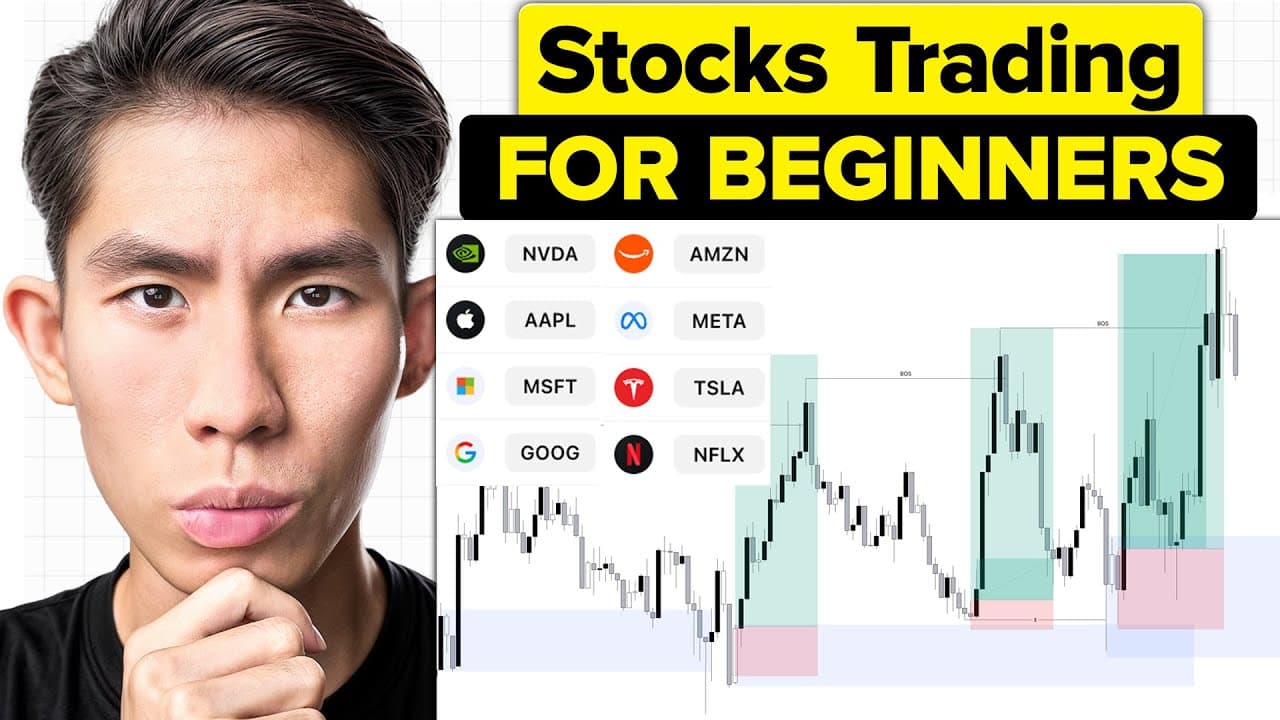
Beginners should approach stock trading as short-term speculation built on market structure, liquidity, psychology, disciplined execution, and risk management, not simply buying low and selling high. The guide explains exchanges, brokers, market sessions, technical analysis, order types, and mechanical trading systems, while noting that institutions, algorithms, bots, and professionals generate over 70% of daily trading volume. Read on for a structured foundation for making clearer, less emotional trading decisions.
Transcript
Most stock traders lose because they think trading is about buying low and selling high. News flash, it's not. Trading is about understanding how the market really works. The psychology, the liquidity, and the structure behind every single move. And that's exactly what I'm going to break down for you in this video. Everything from how the market ac... Read More
Key Insights
- Trading is about timing the market, not time in the market, focusing on short-term price movements.
- The stock market functions through exchanges where traders buy and sell from each other, not directly from companies.
- Institutions and algorithms dominate trading volume, making it crucial to understand market behavior over predictions.
- Order types such as market, limit, and stop orders have specific uses and impacts on trading outcomes.
- Pre-market and after-hours trading sessions can be riskier due to low liquidity and wider spreads.
- Fundamental analysis focuses on company health, while technical analysis emphasizes price and volume patterns.
- Trading success relies on a mechanical system with clear entry criteria, predefined risk, and emotionless execution.
- Mastery in one asset class and trading style is more beneficial than diversifying across multiple markets.
Install to Summarize YouTube Videos and Get Transcripts
Explore YouTube Video Summarizer or Get YouTube Transcript Extractor
Questions & Answers
Q: How can beginners learn to trade stocks step by step?
Start by understanding that trading is short-term speculation intended to profit from price movements, while investing involves long-term company ownership. Then study how exchanges and brokers work, order types, market sessions, technical analysis, risk management, and mechanical execution. The course emphasizes discipline and market behavior instead of gambling, guessing, or trading emotionally.
Q: What is the difference between stock trading and investing?
Trading seeks to profit from short-term price movements that may last minutes, days, or weeks. Investing means owning companies for longer periods, such as 5 or 10 years, and holding through market fluctuations. Put simply, investing is about time in the market, while trading is about timing the market.
Q: How does a stock trade work behind the scenes?
When traders buy or sell shares, they transact with another market participant through an exchange such as the New York Stock Exchange or NASDAQ, rather than buying directly from the company. A broker acts as the middleman by routing the order and connecting parties willing to take opposite sides. This disagreement between buyers and sellers creates liquidity.
Q: What are the main stock order types?
Market orders execute immediately at current available prices, prioritizing speed over price control. Limit orders specify an execution price but may remain unfilled if the market never reaches it. Stop orders activate after a specified price is reached and then trigger a market order.
Q: Why do institutions and algorithms matter to retail stock traders?
The guide states that institutions, algorithms, bots, professional traders, and Wall Street traders account for over 70% of daily trading volume. Beginners therefore compete in a market heavily influenced by experienced professionals and automated systems. The recommended edge is structural discipline and an understanding of market behavior rather than trying to predict every price move.
Q: How does technical analysis differ from fundamental analysis?
Technical analysis studies price patterns, trends, and volume and is used to time shorter-term trades. Fundamental analysis evaluates a company’s financial health, earnings, growth, and economic conditions. The former focuses on market behavior, while the latter focuses on the underlying company.
Q: Why are pre-market and after-hours trading riskier?
Pre-market and after-hours sessions generally have lower liquidity and wider spreads than the regular session. Those conditions can produce less predictable price movements and spikes, particularly around news. The guide therefore presents regular trading hours as the more stable starting point for beginners.
Q: Why should traders use a mechanical trading system?
A mechanical system defines entry criteria and risk before a trade, helping the trader execute without gambling, guessing, or reacting emotionally. The speaker attributes disciplined results to following such a system, managing risk, and compounding profits intelligently. The broader goal is consistent decision-making based on structure rather than impulse.
Summary & Key Takeaways
-
Stock trading requires understanding market mechanics beyond just buying low and selling high. It involves grasping market psychology, liquidity, and structure. The video emphasizes a disciplined, mechanical trading approach, highlighting the importance of order types, market sessions, and distinguishing trading from investing.
-
Successful trading is rooted in a systematic approach, focusing on timing the market with clear entry criteria and risk management. Understanding the difference between trading and investing, and the role of institutions and algorithms in market movements, is crucial for consistent profitability.
-
Technical analysis plays a key role in short-term trading, relying on price and volume patterns rather than company fundamentals. The video stresses the importance of waiting for high-probability setups and mastering one asset class for long-term success in trading.
Read in Other Languages (beta)
Share This Summary 📚
Summarize YouTube Videos and Get Video Transcripts with 1-Click
Try YouTube Summary with ChatGPT & Claude or YouTube Transcript Generator
Explore More Summaries from The Trading Geek 📚
Summarize YouTube Videos and Get Video Transcripts with 1-Click
Try YouTube Summary with ChatGPT & Claude or YouTube Transcript Generator