How Can Generative AI Improve Healthcare at Boston Children's Hospital?
TL;DR
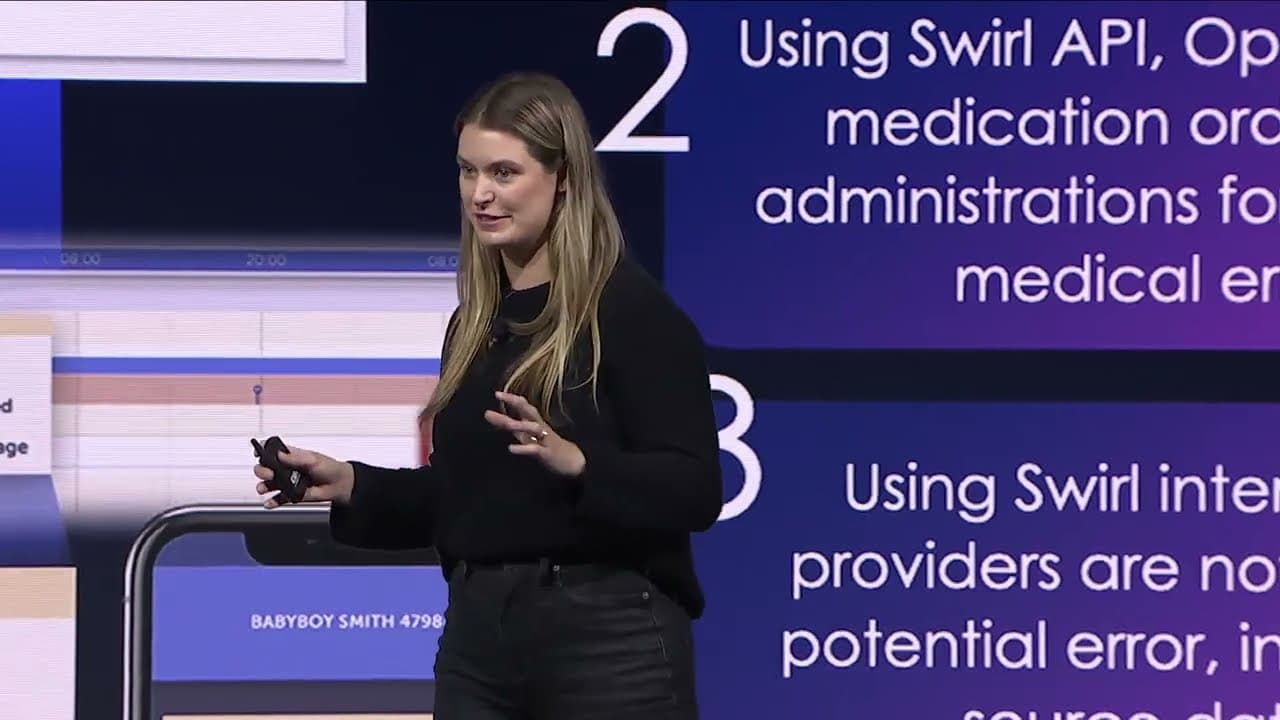
Generative AI can significantly enhance healthcare at Boston Children's Hospital by reducing staff burnout, supporting clinical teams, and improving research efficiency. The hospital is developing innovative applications like MedTutor for personalized medical education and integrating AI into systems like Swirl to facilitate better patient care and safety through real-time information retrieval and context-driven error detection.
Transcript
[music] [applause] -Hi, everyone. My name is Annie. I'm from the Innovation & Digital Health Accelerator group at Boston Children's Hospital. For those of you who don't know, Boston Children's is a world leader in providing compassionate, equitable, and family-centered care. We are ranked among the top pediatric hospitals in the country, and we are... Read More
Key Insights
- 🏥 Boston Children's Hospital is a world leader in pediatric care, committed to innovation and digital health, and is ranked among the top pediatric hospitals in the country.
- 🤝 The Innovation & Digital Health Accelerator group focuses on utilizing generative AI to address healthcare challenges and enhance patient care.
- ⚕️ The hospital aims to reduce burnout by utilizing generative AI to automate tasks and allow healthcare employees to focus on fulfilling job roles.
- 🌍 Boston Children's Hospital is committed to equity, diversity, and inclusion, and is developing an LLM implementation equity guideline to ensure AI is used in a fair and inclusive manner.
- 🔎 The hospital identified operational, clinical, and research challenges as pain points that can be addressed with generative AI solutions.
- 🎓 MedTutor, powered by LLM, will provide personalized and interactive medical case guidance to healthcare learners, improving learning opportunities and outcomes.
- 💡 Integrating LLMs into Swirl, a provider-facing system, can enhance real-time patient views, streamline information retrieval, and improve error detection for better patient safety.
- ⚕️ Boston Children's Hospital is excited about the advancements in generative AI and will continue to evaluate its impact on healthcare, both now and in the future.
Install to Summarize YouTube Videos and Get Transcripts
Explore YouTube Video Summarizer or Get YouTube Transcript Extractor
Questions & Answers
Q: How does Boston Children's Hospital plan to reduce burnout among healthcare professionals using generative AI?
Boston Children's Hospital aims to reduce burnout by developing applications that streamline tasks and allow employees to focus on fulfilling job roles. For example, the MedTutor application will guide medical learners through personalized and interactive medical cases, increasing learning opportunities and tailoring the experience to the needs of each student.
Q: How will generative AI be integrated into existing systems at Boston Children's Hospital to improve patient care?
Integrating generative AI, specifically LLMs, into existing systems like Swirl will enable providers to ask patient-specific questions and receive comprehensive answers aggregated from different clinical sources. This integration will significantly reduce the time spent searching for relevant patient information, resulting in higher quality and more efficient care delivery.
Q: What research challenges does Boston Children's Hospital aim to address with generative AI?
In terms of research challenges, Boston Children's Hospital is exploring the use of LLMs for the first-pass analysis of qualitative data sets, such as interview data from clinical studies. LLM-powered applications can save time by analyzing large data sets and extracting meaningful insights, enhancing the research process.
Q: How does Boston Children's Hospital prioritize equity, diversity, and inclusion (EDI) in their AI initiatives?
Boston Children's Hospital is committed to EDI and is actively building LLM implementation equity guidelines to ensure that AI development and research activities align with equity principles. They recognize the importance of considering biases and inclusivity in all aspects related to AI, including research and development efforts.
Summary & Key Takeaways
-
Boston Children's Hospital's Innovation & Digital Health Accelerator group focuses on leveraging generative AI to address pain points in healthcare.
-
They identify three pillars for implementation: reducing burnout, supporting clinical teams, and improving research efficiency.
-
The hospital is developing applications like MedTutor and integrating LLMs into existing systems like Swirl to enhance medical education, patient care, and error detection.
Read in Other Languages (beta)
Share This Summary 📚
Summarize YouTube Videos and Get Video Transcripts with 1-Click
Try YouTube Summary with ChatGPT & Claude or YouTube Transcript Generator
Explore More Summaries from OpenAI 📚






Summarize YouTube Videos and Get Video Transcripts with 1-Click
Try YouTube Summary with ChatGPT & Claude or YouTube Transcript Generator