How to Build an AI Software Business in 2026
TL;DR
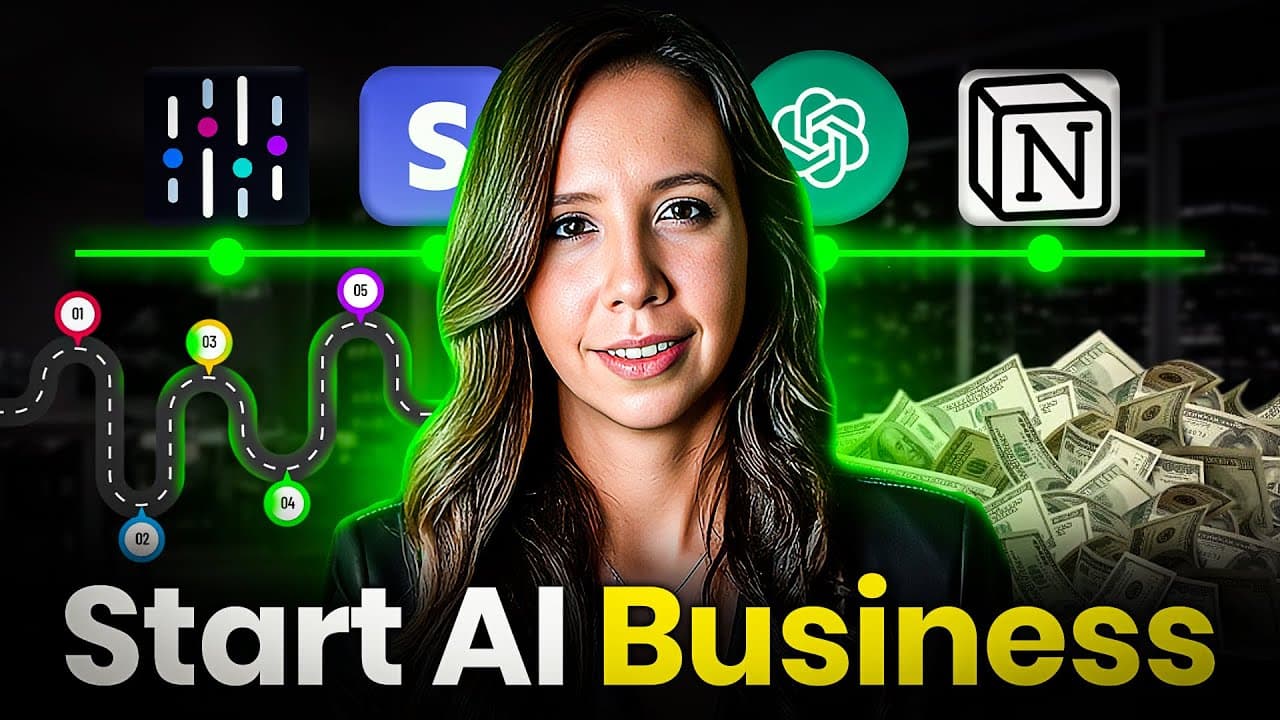
Start by choosing one narrow problem that 100 to 1,000 people may pay $20 to $50 per month to solve, then use an AI coding agent to create a rough prototype. Test it with 10 target users, improve it from observed feedback, integrate Stripe, and launch to 100 prospects. If 10 people pay, the product has demonstrated business potential.
Transcript
2026, 2027, 2028. These aren't just years on a calendar. They're the final countdown before everything you know about building a business completely transforms. While everyone's obsessing over ChatGpt, a small group of builders are already creating AI powered businesses that will dominate the next decade. What I'm about to show you isn't theory. It... Read More
Key Insights
- AI coding agents are presented as builders of complete applications, not merely code-writing assistants. They can create authentication, databases, roles, permissions, payment integrations, and live-data features that previously required more development time, capital, and technical personnel.
- The central founder skill is identifying a problem customers will pay to solve and describing the desired solution clearly to AI. According to the transcript, traditional coding expertise becomes less important when an agent can implement instructions and the founder can direct its work effectively.
- A viable starting problem is narrow, familiar, and repeatedly experienced by a defined audience. The suggested target is an annoyance affecting 100 to 1,000 people who may each pay $20 to $50 per month for a dependable solution.
- The micro-SaaS model is based on operating five to 10 specialized tools instead of one broad platform. Examples include scheduling for dentists, inventory tracking for Etsy sellers, and client portals for wedding photographers, with each product serving a specific niche.
- The agency automation model is designed to improve an existing service business rather than replace it. Marketing agencies, bookkeeping firms, and consultancies can use AI agents and custom software to automate as much as 80% of delivery while maintaining their existing prices.
- The data-intelligence model creates subscription products that aggregate, analyze, and present useful information automatically. Suggested applications include industry reports, competitive intelligence, stock insights, market analysis, and trend dashboards that continuously update without repeated manual compilation.
- A rough first version is valuable because speed enables direct customer learning. The recommended process is to make the product work, place it in front of 10 people with the relevant problem, observe their confusion, and use that evidence to guide improvements.
- The initial market test is a launch to 100 people after feedback-driven iteration and Stripe integration. If 10 become paying customers, the product has evidence of commercial demand. If they do not, AI-assisted development makes it possible to revise or pivot within days.
Install to Summarize YouTube Videos and Get Transcripts
Explore YouTube Video Summarizer or Get YouTube Transcript Extractor
Questions & Answers
Q: How can I start an AI software business in 2026?
Choose one recurring problem that you understand deeply and that affects a clearly defined group. Use an AI coding agent to create a rough working version, even if it is unattractive or incomplete. Observe 10 people who experience the problem as they use it, revise the product from their feedback, integrate Stripe, and launch it to 100 potential customers.
Q: What problem should an AI business solve first?
The first problem should be a narrow annoyance found in your industry, daily life, or community. It should be something people complain about regularly and lack a satisfactory solution for. The transcript recommends avoiding an oversized opportunity and instead finding one issue that 100 to 1,000 people could reasonably pay $20 to $50 per month to resolve.
Q: What can AI coding agents build for a business?
AI coding agents can build applications with user authentication, role-based access, complex permissions, databases, live-data connections, and payment systems. The examples include a niche project-management tool, a CRM for real estate agents, an inventory system for e-commerce brands, and a financial-insights platform that collects data, analyzes trends, and presents actionable information automatically.
Q: What is the micro-SaaS empire business model?
The micro-SaaS model involves creating five to 10 focused products for distinct niches instead of investing everything in one large platform. Examples include a dentist scheduling application, an Etsy inventory tracker, and a wedding photographer client portal. The transcript proposes charging $20 to $50 per month for each focused tool and operating them with substantial automation.
Q: How can AI improve an existing service agency?
AI can automate a large share of service delivery through agents and custom internal tools. The transcript identifies marketing agencies, bookkeeping firms, and consulting practices as suitable examples and suggests that as much as 80% of delivery may be automated. The goal is to preserve the business and its pricing while reducing operating costs and increasing profitability.
Q: How does an AI data-intelligence business work?
An AI data-intelligence business collects, analyzes, and presents information that customers need but do not want to assemble manually. Possible products include industry reports, competitive-intelligence services, market-trend dashboards, stock insights, and market analysis. The application is built once, updates its information automatically, and sells continued access through a subscription model.
Q: How should I validate an AI-built product?
Begin with a rough but functioning product and give it to 10 people who already experience the target problem. Watch how they use it instead of focusing first on selling it, because their confusion reveals weaknesses and missing features. After revising the application and adding Stripe, launch to 100 people. Ten paying users provide evidence of a business.
Q: What skills matter most for an AI solopreneur?
The most important skills are recognizing valuable problems, thinking clearly about solutions, and communicating precise instructions to an AI coding agent. The transcript argues that coding knowledge, large amounts of capital, and a technical co-founder are no longer the primary barriers. Professional or business experience can help because it often provides direct knowledge of specialized problems worth solving.
Summary & Key Takeaways
-
AI coding agents can create sophisticated software with authentication, permissions, databases, live data, and payment integration. The transcript argues that a founder can now begin with a laptop and a $10 monthly tool instead of needing a technical co-founder, approximately $50,000 in capital, and six to 12 months of development.
-
Three proposed business models are focused micro-SaaS products, AI-automated service agencies, and subscription data-intelligence platforms. Each model applies AI differently: building narrow recurring-revenue tools, automating much of an existing service workflow, or continuously collecting and analyzing information that customers need but do not want to compile themselves.
-
The recommended roadmap begins with a familiar, recurring problem and a deliberately rough first version. Founders should observe 10 affected users, improve the product from their confusion and feedback, add Stripe payments, and present it to 100 prospects. Ten paying customers indicate a business, while weak demand supports a rapid pivot.
Read in Other Languages (beta)
Share This Summary 📚
Summarize YouTube Videos and Get Video Transcripts with 1-Click
Try YouTube Summary with ChatGPT & Claude or YouTube Transcript Generator
Explore More Summaries from Julia McCoy 📚






Summarize YouTube Videos and Get Video Transcripts with 1-Click
Try YouTube Summary with ChatGPT & Claude or YouTube Transcript Generator