How did a teen assassin target a Japanese politician?
TL;DR
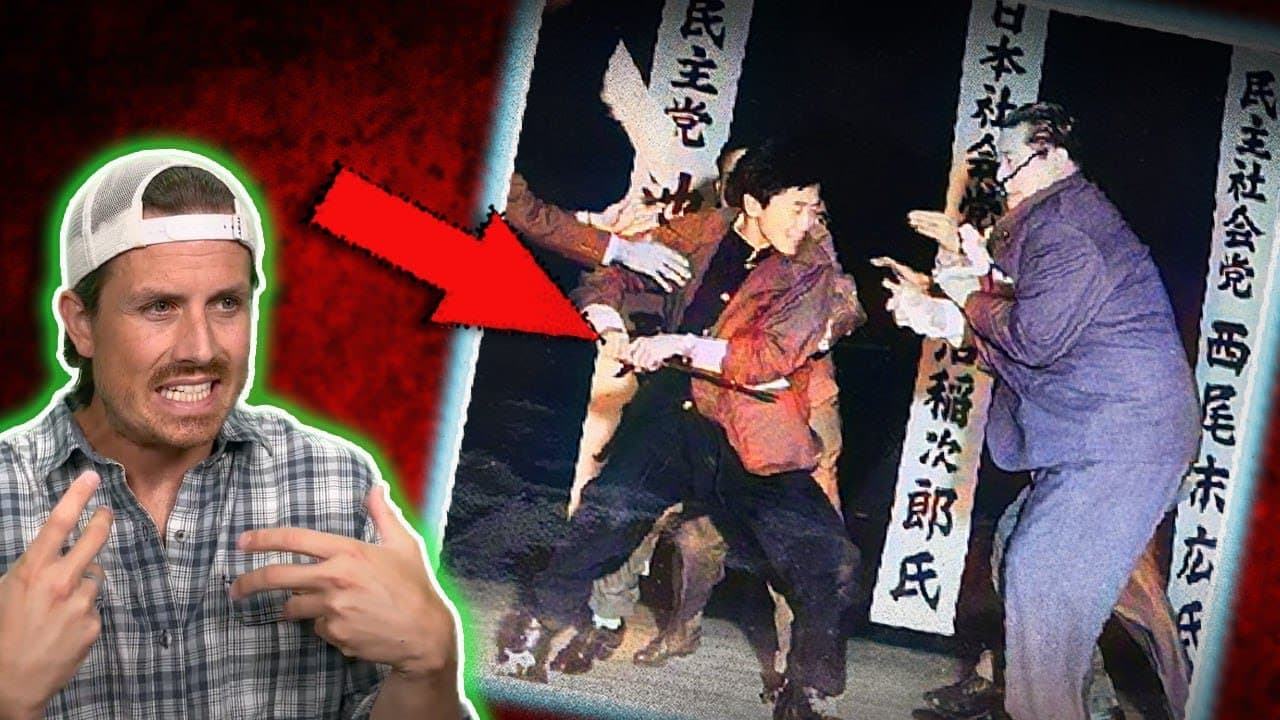
The teen, Otoya Yamaguchi, carried a samurai sword to a 1960 Tokyo political rally and attacked Inajiro Asanuma, the Japan Socialist Party leader. The act was filmed live, the killer was arrested, and the famous photograph captured the moment as Asanuma died, while Otoya later died by suicide in prison. The event shocked Japan and the world.
Transcript
today I'm going to share three progressively more unbelievable stories and at the end of each of them I will share the famous photo or photos that are associated with them but before we get into those stories if you're a fan of the strange dark and mysterious delivered in story format then you come to the right place because that's all we do and we... Read More
Key Insights
- Otoya Yamaguchi was a 17 year old high school student who radicalized and planned a violent act in Tokyo.
- The target was Inajiro Asanuma, chairman of the Japan Socialist Party, who was presenting at a public debate at Habia Public Hall.
- Yamaguchi carried a samurai sword obtained from a package brought from his father’s home use to deliver a note he believed expressed the bad news.
- The assassination occurred on live television, ensuring immediate national and international attention.
- A photographer captured the moment of the stabbing and the image later won a Pulitzer Prize in 1961.
- The note Yamaguchi wrote stated he could not forgive Asanuma for moving Japan toward communism, revealing the motive behind the act.
- After the attack, onlookers and security wrestled the assailant to the ground, but Asanuma died within the hour from his injuries.
- Yamaguchi was arrested at the scene and, two weeks later, died by suicide in prison, ending the incident with a self inflicted death.
- More videos from this channel:
- More from this channel: MrBallen
Install to Summarize YouTube Videos and Get Transcripts
Explore YouTube Video Summarizer or Get YouTube Transcript Extractor
Questions & Answers
Q: How did the assassination actually unfold on stage?
The attacker waited for the right moment during a public debate at Habia Public Hall, pulled a wrapped package from his jacket, unwrapped a samurai sword, and ran toward the podium. He delivered a fatal stab to the speaker, took the sword out before being restrained by bystanders, and the scene was broadcast live, making the event instantly notorious and widely documented.
Q: Who was the target and why was he targeted?
The target was Inajiro Asanuma, the chairman of the Japan Socialist Party, who was speaking at a political rally. The attacker believed Asanuma was guiding Japan toward communism and was unable to forgive him for this political direction, which allegedly drove him to act. The motive was political extremism rather than personal grievance.
Q: What evidence linked the attacker to his political beliefs?
The attacker carried a note written by himself stating a belief that Asanuma was transforming Japan into a communist state and that he could not forgive him for this. This note, found on the attacker, clarified the ideological motive behind the crime and provided context for his actions.
Q: What happened to the assailant after the attack?
The attacker was quickly restrained by onlookers and security staff, but not before Asanuma died from his injuries an hour later. The assailant was arrested at the scene and remained in custody. He died by suicide in prison two weeks later, ending the case and prompting further investigation into political violence.
Q: What role did the media play in this event?
The attack was broadcast live across Japan and quickly became a global story due to the dramatic stage confrontation. A photographer captured a pivotal moment of the stabbing, an image that later won a Pulitzer Prize, underscoring the power of media to shape public memory of political violence.
Q: What happened to the photographer who captured the moment?
The photographer in the crowd captured the moment of the stabbing as it unfolded on stage, producing a photograph that became iconic and won the Pulitzer Prize in 1961, cementing the image as a defining representation of the incident and illustrating the impact of photojournalism on history.
Q: What were the consequences for political violence in Japan after the event?
The event shocked Japan and drew intense scrutiny of political violence, extremism, and security at public political gatherings. It highlighted the volatility of postwar politics and prompted discussions about safeguarding public spaces, as well as the ethical responsibilities of media and at times influencing policy.
Q: What is known about the assailant’s family or background?
The attacker came from a background where his father was a military officer, and he had migrated between schools and living situations to pursue opportunities in Tokyo. This history of pressure from his family and his search for personal purpose contributed to his radicalization and his willingness to act on his beliefs.
Summary & Key Takeaways
-
A dramatic event in Tokyo in 1960 involved a 17 year old who planned to deliver a brutal note by attacking a political speaker with a sword, an act seen on live television. The attack ended in the death of the speaker and a national crisis.
-
The footage of the stabbing and the subsequent arrest made the incident a worldwide story, awarding a Pulitzer to the photographer who captured the moment. The assailant’s motives were tied to political extremism and his view of Japan turning toward communism.
-
The killer later committed suicide in a prison cell, ending a case that highlighted political violence and the volatility of postwar Japanese politics, leaving a legacy of discussion about security, media coverage, and radicalized individuals.
Read in Other Languages (beta)
Share This Summary 📚
Summarize YouTube Videos and Get Video Transcripts with 1-Click
Try YouTube Summary with ChatGPT & Claude or YouTube Transcript Generator
Explore More Summaries from MrBallen 📚



Summarize YouTube Videos and Get Video Transcripts with 1-Click
Try YouTube Summary with ChatGPT & Claude or YouTube Transcript Generator