How to Stick to a Language Learning Plan in 2026
TL;DR
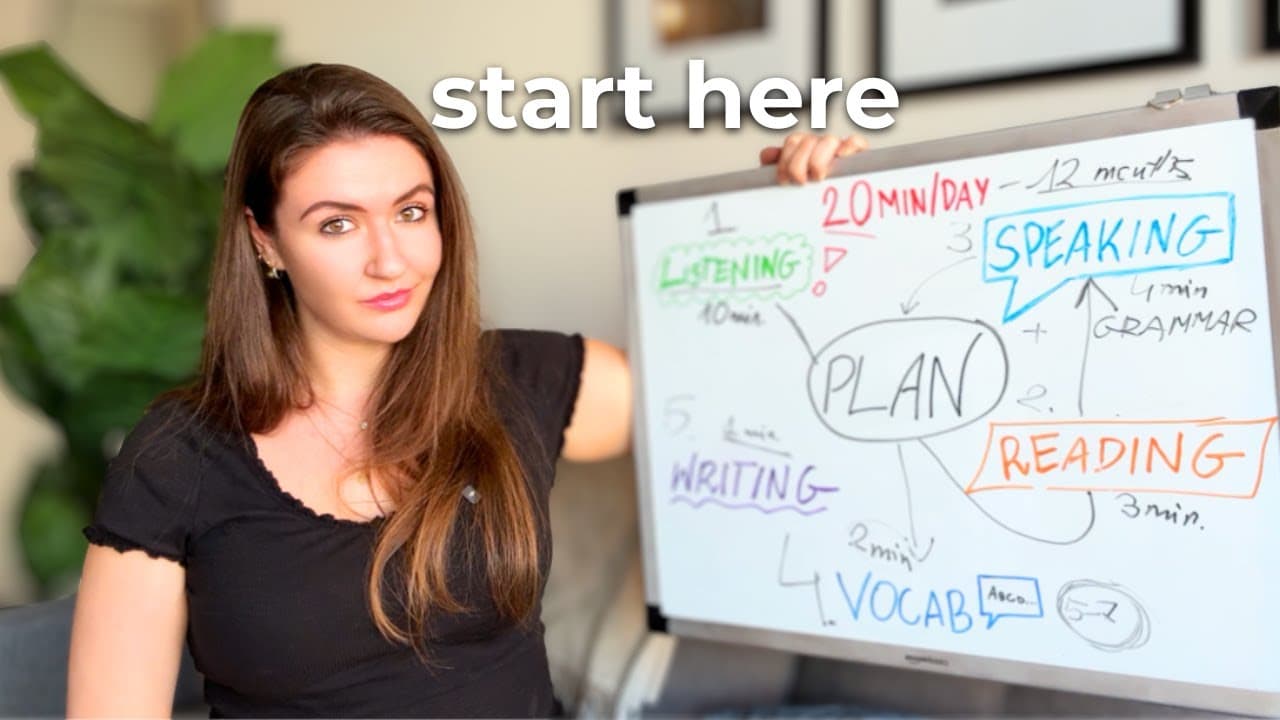
Achieving fluency in a new language requires a consistent, manageable plan. Dedicate just 20 minutes daily to listening, reading, speaking, vocabulary, and writing. Motivation is fleeting; instead, focus on identity and daily habits. This structured approach, using comprehensible input and shadowing techniques, helps you engage with the language naturally and effectively.
Transcript
New year, new me. This year, I'm finally going to learn this language. Yeah, we both know how that usually ends. You start motivated, then life happens, and by February, it's over. In today's video, guys, I'm about to give you a real language learning plan that actually works for the entire year, not just for one month. No studying for hours, just ... Read More
Key Insights
- Motivation is unstable; identity-driven habits lead to success.
- Listening is crucial; use comprehensible input for 10 minutes daily.
- Reading aloud bridges listening and speaking; do it for 3 minutes.
- Speaking practice involves shadowing native speakers for 4 minutes.
- Shadowing plus grammar practice enhances language skills.
- Learn vocabulary in chunks, focusing on useful phrases, not isolated words.
- Writing for 1 minute daily reinforces vocabulary and language structure.
- Habit stacking can integrate language practice into daily routines.
Install to Summarize YouTube Videos and Get Transcripts
Explore YouTube Video Summarizer or Get YouTube Transcript Extractor
Questions & Answers
Q: How to create a sustainable language learning plan?
A sustainable language learning plan involves dedicating just 20 minutes daily to key activities: listening, reading, speaking, vocabulary, and writing. Focus on identity-driven habits rather than motivation, and use techniques like comprehensible input and shadowing to engage with the language naturally and consistently.
Q: Why is motivation not enough for language learning?
Motivation is an emotion that fluctuates, making it unreliable for long-term language learning. Instead, building identity-driven habits, where you see yourself as a fluent speaker, provides a stable foundation. Consistent daily practice, rather than relying on motivation, leads to sustainable progress and fluency.
Q: What is the comprehensible input method?
The comprehensible input method involves listening to content that is mostly understandable but includes new words or phrases. This method helps learners acquire new language skills naturally, as they can grasp the main ideas while gradually expanding their vocabulary and understanding through exposure to slightly challenging material.
Q: How does shadowing improve language skills?
Shadowing involves listening to native speakers and repeating their sentences, which enhances pronunciation, rhythm, and intonation. This technique trains the brain to think in the target language, improves fluency, and can be combined with grammar practice by transforming sentences into different tenses during the exercise.
Q: What are vocabulary chunks and why are they important?
Vocabulary chunks are phrases or groups of words learned together, rather than isolated words. This approach is important because it reflects how language is used in real life, helping learners understand context and usage. Learning chunks aids in building practical language skills and improves communication efficiency.
Q: How can habit stacking aid language learning?
Habit stacking involves pairing language learning activities with existing daily habits, making it easier to integrate practice into your routine. For example, listen to language content while commuting or read a short passage after meals. This approach ensures regular practice without overwhelming your schedule, fostering consistency.
Q: What role does writing play in language learning?
Writing reinforces language skills by allowing learners to practice vocabulary and sentence structure. Spending just one minute writing sentences using new vocabulary chunks helps solidify understanding and aids in retention. This brief, focused exercise complements other language activities and supports overall fluency development.
Q: How can busy individuals fit language learning into their schedule?
Busy individuals can fit language learning into their schedule by employing habit stacking and utilizing short, focused activities. Listen to content during commutes, read aloud for a few minutes after meals, and practice speaking during breaks. This flexible approach allows for consistent practice without disrupting daily routines.
Summary & Key Takeaways
-
The key to learning a new language is consistency, not motivation. Spend 20 minutes daily on structured activities: listening with comprehensible input, reading aloud, speaking using shadowing, learning vocabulary in chunks, and writing briefly. This method builds fluency by engaging with the language naturally.
-
Listening is the foundation of language learning, requiring 10 minutes of comprehensible input daily. Reading aloud for 3 minutes helps transition from listening to speaking, while shadowing native speakers for 4 minutes enhances pronunciation and fluency.
-
Grammar can be practiced alongside shadowing by transforming sentences into different tenses. Vocabulary should be learned in chunks, focusing on practical phrases. Writing briefly each day reinforces these skills, and habit stacking helps integrate this routine into daily life.
Read in Other Languages (beta)
Share This Summary 📚
Summarize YouTube Videos and Get Video Transcripts with 1-Click
Try YouTube Summary with ChatGPT & Claude or YouTube Transcript Generator
Explore More Summaries from Wannaspeak by Veroniq 📚



Summarize YouTube Videos and Get Video Transcripts with 1-Click
Try YouTube Summary with ChatGPT & Claude or YouTube Transcript Generator