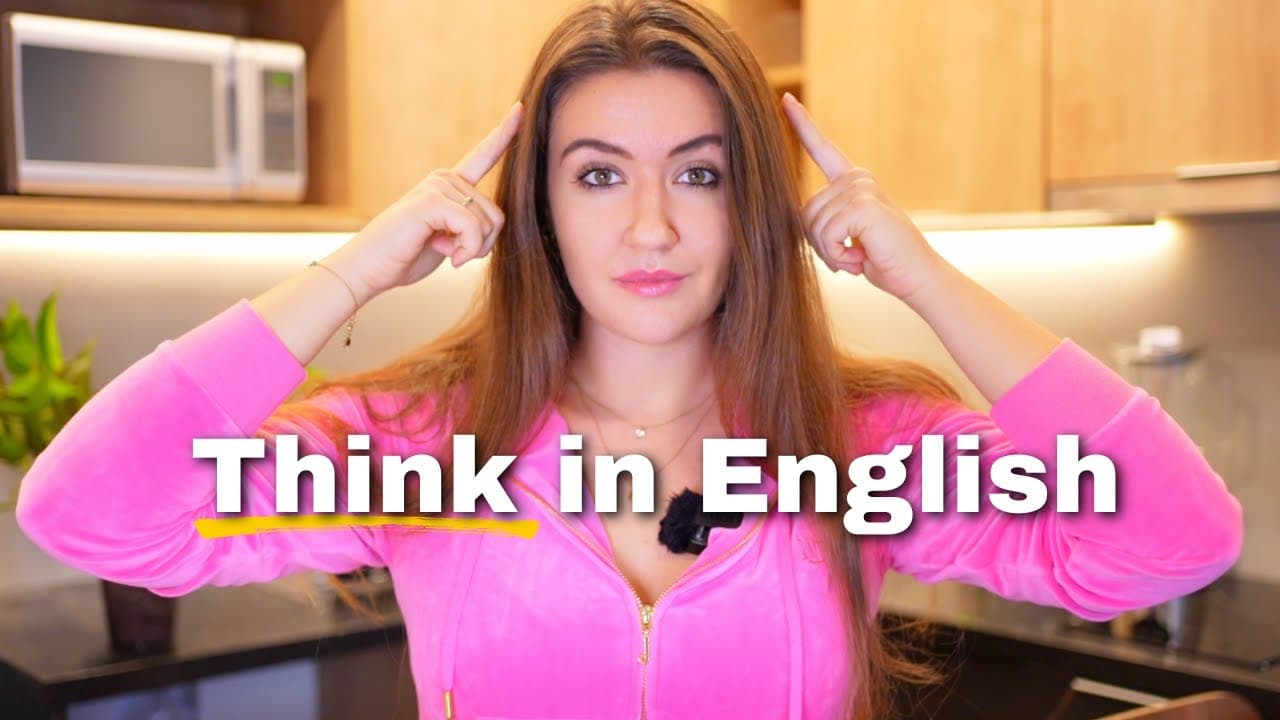
How to Think in English Without Translating
TL;DR
Build a direct path from thoughts to English by catching translation attempts, expressing ideas with familiar English, and practicing ready-made phrases in context. Combine comprehensible input, immersion, shadowing, natural fillers, and brief daily speaking exercises. Consistent practice, even for five minutes, gradually replaces hesitation with faster, more confident expression.
Transcript
You know that feeling when you try to speak English but your brain is still in another language. You are halfway through a sentence and suddenly you are like wait a second. Did I just say I have 26 years old? It happens to everyone at some point. You are not bad at English. Your brain just hasn't learned how to think in it yet. And this is exactly ... Read More
Key Insights
- Word-by-word translation is a three-step process in which a learner thinks in a native language, translates the thought, and then speaks. This longer route encourages overthinking, hesitation, slower responses, and frustration because the brain is handling both languages at once.
- The goal is a direct pathway from thought to English speech. Neuroplasticity allows the brain to develop this shortcut, and every attempt to speak directly in English helps reinforce a new pattern instead of relying on the established translation habit.
- Catching a translation attempt is an opportunity to change the habit. Instead of searching for an exact native-language equivalent, learners can ask how an English speaker might express the idea or describe the meaning using words and patterns they already know.
- Comprehensible input is material that feels slightly challenging without being too easy or too difficult. Combining this level of content with regular immersion helps learners encounter English in meaningful situations, including words and expressions that may not translate directly between languages.
- Vocabulary chunks are complete, ready-to-use phrases such as "at the end of the day," "to be honest," and "take your time." Learning these expressions in context gives the brain natural patterns it can retrieve more quickly than separately memorized words.
- Personal use creates an emotional connection with English expressions. Favorite phrases, jokes, and idioms become easier to remember when learners apply them to their own lives, interests, and experiences instead of treating English as a collection of isolated study materials.
- Shadowing is active imitation of a native speaker from a short clip. Learners listen, observe mouth movements, pause, and repeat while copying sounds, gestures, rhythm, intonation, and emotional expression, which trains both pronunciation muscles and recognition of spoken patterns.
- Daily consistency is more important than waiting for a large block of free time. Speaking while cooking, thinking during a walk, explaining ideas while driving, recording a short video, or practicing for five minutes can repeatedly strengthen direct English thinking.
Install to Summarize YouTube Videos and Get Transcripts
Explore YouTube Video Summarizer or Get YouTube Transcript Extractor
Questions & Answers
Q: Why do English learners translate in their heads?
English learners may translate internally because school instruction trained them to move from their native language into English. Their brains therefore follow three stages: form the thought in the first language, translate it, and speak it. This route keeps both languages active, which can create mental traffic, hesitation, overthinking, slow responses, and frustration during conversation.
Q: How can I stop translating word by word into English?
Catch the moment when you begin asking how to translate something, then redirect your attention toward expressing the idea directly in English. Ask how an English speaker might say it. If the exact words are unavailable, describe or explain the meaning with language you already know. Repeating this process builds new English patterns instead of reinforcing translation.
Q: What kind of English input helps direct thinking?
Use comprehensible input that sits between material that is too easy and material that is too difficult. Content that is slightly challenging can maintain interest without causing excessive frustration or overwhelm. Surrounding yourself with this kind of English and connecting it with situations and emotions helps build meaning directly, including for expressions without exact native-language equivalents.
Q: Why should I learn English phrases instead of individual words?
Complete phrases are ready-to-use vocabulary chunks that reflect how people naturally speak. Examples include "at the end of the day," "to be honest," and "take your time." Learning each chunk in context connects the expression with a situation, allowing the brain to retrieve a natural pattern quickly instead of assembling or translating separate words during conversation.
Q: How does shadowing improve spoken English?
Shadowing trains spoken English through active imitation. Select a short clip, listen carefully, observe the speaker's mouth, pause, and repeat what you hear. Copy the sounds, mouth movements, gestures, rhythm, intonation, and emotional expression. This practice helps facial muscles produce unfamiliar sounds and trains the brain to recognize and absorb English speech patterns.
Q: Which English fillers and connectors should learners practice?
Learners should practice fillers and connectors used in the variety of English they want to speak. The transcript gives examples such as "like," "you know," and "by the way," while distinguishing between American and British preferences. These expressions help conversations sound smoother and give speakers natural ways to think, connect ideas, and engage emotionally while speaking.
Q: How can busy people practice thinking in English every day?
Use small moments already available in the daily routine. Talk to yourself while cooking, think in English while walking, explain an idea while driving, record a short video, or consume English while exercising. The method does not require waiting for perfect conditions. Even five minutes of repeated practice contributes to building a faster English-speaking pathway.
Q: How should I adapt English practice to my learning style?
Choose activities that fit how you learn most effectively. Visual learners can connect language with images, auditory learners can listen during activities such as exercise, and movement-based learners can practice while walking or doing. People who prefer reading and writing can journal, describe their day, or write goals and to-do lists in English.
Summary & Key Takeaways
-
Translating creates a slow three-step process: thinking in a native language, converting the thought, and finally speaking. The proposed alternative is a direct connection between thought and English. Neuroplasticity makes this change possible, and each attempt to speak directly in English strengthens the new pathway while weakening the translation habit.
-
The practical method combines comprehensible input with active output. Learners should consume material that is challenging without becoming overwhelming, collect complete phrases in context, personalize those expressions, and shadow short clips. Copying pronunciation, mouth movements, rhythm, gestures, intonation, and emotion trains both the brain and facial muscles for spoken English.
-
English practice can fit into small moments throughout the day, including cooking, walking, driving, exercising, recording short videos, journaling, and writing plans. Activities should match personal learning preferences, whether visual, auditory, movement-based, or reading and writing focused. Confidence grows through consistent action, self-belief, and repeated speaking practice.
Read in Other Languages (beta)
Share This Summary 📚
Summarize YouTube Videos and Get Video Transcripts with 1-Click
Try YouTube Summary with ChatGPT & Claude or YouTube Transcript Generator
Explore More Summaries from Wannaspeak by Veroniq 📚


Summarize YouTube Videos and Get Video Transcripts with 1-Click
Try YouTube Summary with ChatGPT & Claude or YouTube Transcript Generator