How to Make Azo Dye and Color Socks from Scratch
TL;DR
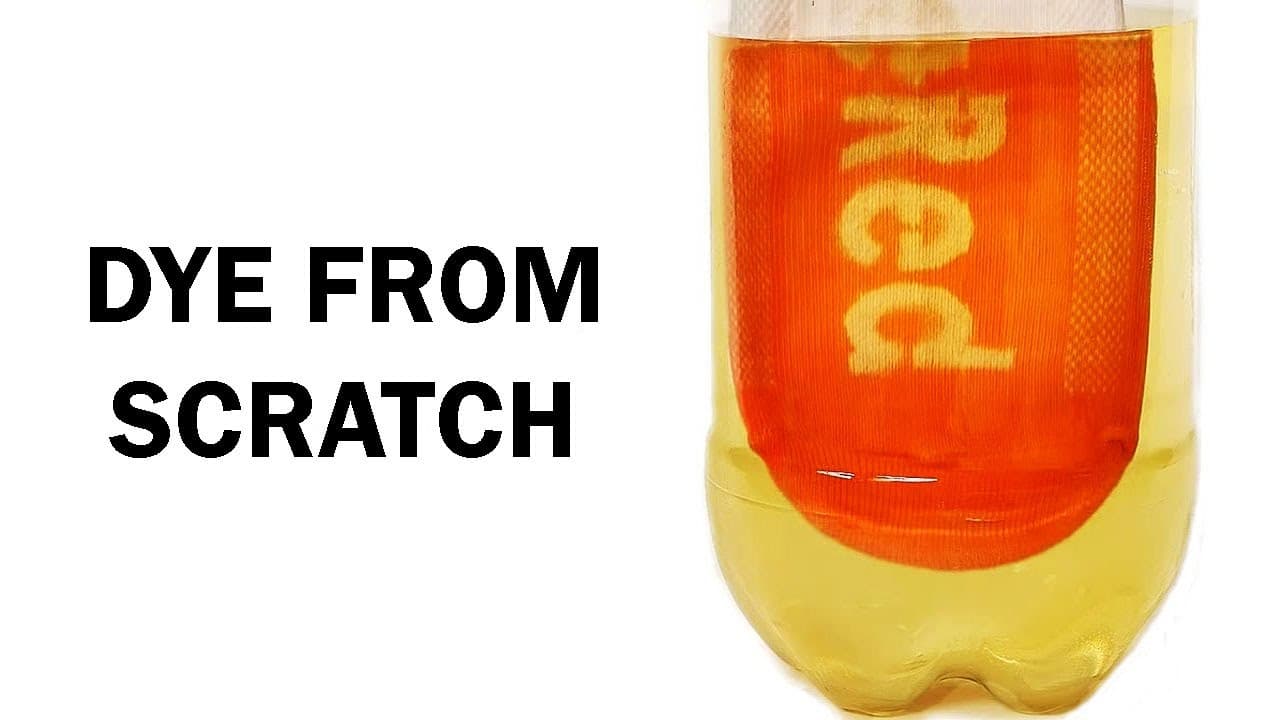
To create azo dye and color socks, start by making a diazonium salt through an azo coupling reaction using p-nitroaniline and sodium nitrite. Then, couple this with 2-naphthol to produce para red dye before soaking your socks in the dye solution. This method can result in vibrant colors, though the dye’s sticking power can vary.
Transcript
this video has been sponsored by squarespace the dyeing of textiles has been done for thousands of years but for most of this time the dyes were from natural sources derived from things like plants animals insects and minerals it was only in the mid to late 1800s that synthetic organic dyes started to emerge the first one was discovered accidentall... Read More
Key Insights
- 💜 Synthetic organic dyes emerged in the mid-1800s, starting with the accidental discovery of aniline purple by William Henry Perkin.
- 👥 Azo dyes, derived from aniline, are widely used and can produce a variety of colors by modifying the attachments on the azo group.
- 🪒 Azo coupling is the process used to create azo dyes, involving the reaction between a diazonium salt and a coupling agent.
- 😪 Para red, a type of azo dye, has limited sticking power and can easily wash away or rub off.
- 😋 Azo dyes find applications in various industries, including textiles, food, paint, and optical media.
- 😪 The video demonstrates a step-by-step process of making para red dye and dyeing clothing using the azo coupling method.
- 💁 The dyeing process involves soaking the fabric in a solution of the coupling agent, followed by a solution of the diazonium salt, resulting in the formation of the dye within the fibers.
Install to Summarize YouTube Videos and Get Transcripts
Explore YouTube Video Summarizer or Get YouTube Transcript Extractor
Questions & Answers
Q: What was the significance of William Henry Perkin's accidental discovery of aniline purple?
William Henry Perkin's accidental discovery marked the beginning of the synthetic dye industry and paved the way for the creation of a whole range of aniline-based dyes.
Q: How do azo dyes work in the dyeing process?
Azo dyes work through the azo coupling reaction, where the diazonium salt reacts with a coupling agent (such as naphthol) to form the dye. This reaction allows for the generation of various colored dyes by altering the coupling agents used.
Q: What are some applications of azo dyes?
Azo dyes are used to color cotton, food, paint, burnable CDs, DVDs, and Blu-rays. They have versatile and widespread applications due to their ability to produce a wide range of colors.
Q: Why does para red have limited sticking power?
Para red, like many azo dyes, can rub off or wash away easily, making it less durable compared to other red azo dyes. Its limited sticking power is one of its shortcomings in textile dyeing.
Summary & Key Takeaways
-
The video discusses the discovery of synthetic organic dyes in the mid-1800s, specifically focusing on William Henry Perkin's accidental discovery of aniline purple, or mauve.
-
The azo dyes, derived from aniline, have a nitrogen-nitrogen double bond called an azo group, which can generate a wide range of colors by changing the attachments on either side.
-
The video demonstrates the process of making para red dye through the azo coupling reaction and shows how to dye clothing using this method.
Read in Other Languages (beta)
Share This Summary 📚
Summarize YouTube Videos and Get Video Transcripts with 1-Click
Try YouTube Summary with ChatGPT & Claude or YouTube Transcript Generator
Explore More Summaries from NileRed 📚
Summarize YouTube Videos and Get Video Transcripts with 1-Click
Try YouTube Summary with ChatGPT & Claude or YouTube Transcript Generator