How Did Jing Wang Build Optimism from Plasma to Optimistic Rollups?
TL;DR
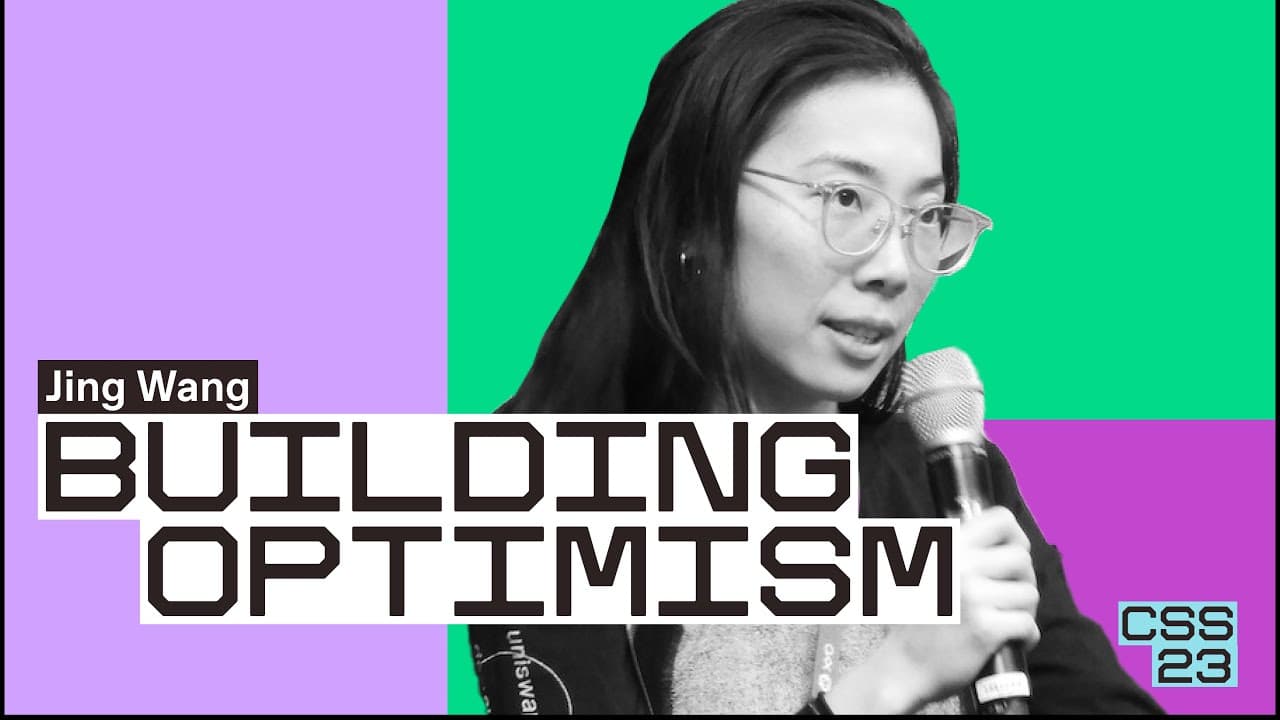
Optimism began when founder Jing Wang assembled researchers to build Plasma, then pivoted after its testnet averaged only about 10 transactions per day. User interviews revealed that developers wanted lower fees, faster transactions, and scalable computation, not merely higher transaction throughput, leading the team to design an optimistic rollup within a month. Read on for the origin story, product lessons, and sub-200-millisecond confirmation target behind that shift.
Transcript
thank you I think I know all of you here but I'm of course Eddie lazarin the CTO for a 16c crypto team and joining us today is uh Jing Wang who is the who founded optimism and she was the CEO at op labs for a while before moving over to the optimism Foundation where she's the executive director and of course she's deeply involved in optimism world ... Read More
Key Insights
- 🗞️ Scalability challenges in the crypto space drove optimism's evolution from plasma to optimistic roll-ups.
- 🤗 Opting for open-source solutions and prioritizing community contributions led to innovation and standardization.
- 👤 Balancing user feedback and technical advancements helped optimism pivot towards a focus on compute over transactions.
- 🤩 Strong hiring practices, decision-making frameworks, and mentorship played key roles in optimism's growth and evolution.
- 🤗 Strategies for developer engagement, open-source collaboration, and focusing on user needs propel optimism's vision of decentralized, scalable blockchain ecosystems forward.
- 🏛️ Addressing Mev challenges, industry dynamics, and building strategic partnerships are critical for optimism's sustainable growth.
- 👤 Leveraging decision-making frameworks, strategic hiring, and prioritizing user needs are pivotal for early-stage startups like optimism to navigate the evolving crypto landscape.
Install to Summarize YouTube Videos and Get Transcripts
Explore YouTube Video Summarizer or Get YouTube Transcript Extractor
Questions & Answers
Q: How did Jing Wang build Optimism?
Jing Wang began by writing a cryptoeconomics textbook section about Plasma, a blockchain scaling design that preceded optimistic rollups. After completing the chapter, she gathered the researchers she had learned from and started Plasma Group to build the design. User feedback later prompted the team to rethink its approach and create an optimistic rollup.
Q: Why did Optimism pivot away from Plasma?
After a year, the Plasma testnet averaged only about 10 transactions per day despite scaling being widely discussed as a major problem. Interviews showed that users found the system too complicated and its new language created a poor developer experience. The team concluded that people wanted to scale computation rather than transactions alone.
Q: What did users want from Ethereum scaling?
Users said they wanted lower fees and fast transactions. They were not primarily asking for 100,000 transactions per second, so the team shifted its focus from maximizing transaction throughput to scaling computation and improving the user experience.
Q: How quickly did the team develop its optimistic rollup design?
After returning to the drawing board, the team produced its first optimistic rollup scaling design about a month later. It then partnered with Uniswap to demonstrate the design and an experience built around instant transactions.
Q: What confirmation speed did Optimism target?
The team targeted confirmations below 200 milliseconds because that speed feels real-time or instant to users. Jing Wang said the instant transaction sequencing model later became standard across optimistic rollups.
Q: How did Jing Wang enter the Ethereum community?
Wang said she had previously been a Bitcoin maximalist but found the Bitcoin environment unwelcoming, particularly to women. At a 2016 Scaling Bitcoin conference in Montreal, she recalled seeing 300 attendees and only three women. Vitalik Buterin encouraged her to contribute to Ethereum and connected her with researcher Carl Flur for mentorship.
Q: How did writing about Plasma lead to Plasma Group?
Wang repeatedly rewrote the Plasma chapter because research advanced so quickly that each new design increased throughput by another 10 times. After finishing a section on Plasma Cash, based on work from Kelvin, Victor, and Carl, she wondered why nobody was building it. She then invited the people who had taught her to build it together as Plasma Group.
Q: What startup lesson did Optimism learn from its early testnet?
A technically ambitious solution does not guarantee adoption if it fails to address what users actually need. Optimism learned this after its Plasma testnet saw little usage, then used interviews arranged by friends at IDEO to uncover complexity and developer-experience problems. Those conversations directly informed the pivot toward optimistic rollups.
Summary & Key Takeaways
-
Jing Wang shares insights on optimism's journey from inception to evolution in the crypto world.
-
The team's origin story involved early adoption of blockchain technology and pivoting to meet market needs.
-
Wang emphasizes the importance of decision-making frameworks and hiring experienced individuals in startup growth.
Read in Other Languages (beta)
Share This Summary 📚
Summarize YouTube Videos and Get Video Transcripts with 1-Click
Try YouTube Summary with ChatGPT & Claude or YouTube Transcript Generator
Explore More Summaries from a16z crypto 📚




Summarize YouTube Videos and Get Video Transcripts with 1-Click
Try YouTube Summary with ChatGPT & Claude or YouTube Transcript Generator