Which Podcast Microphone Should You Buy in 2026?
TL;DR
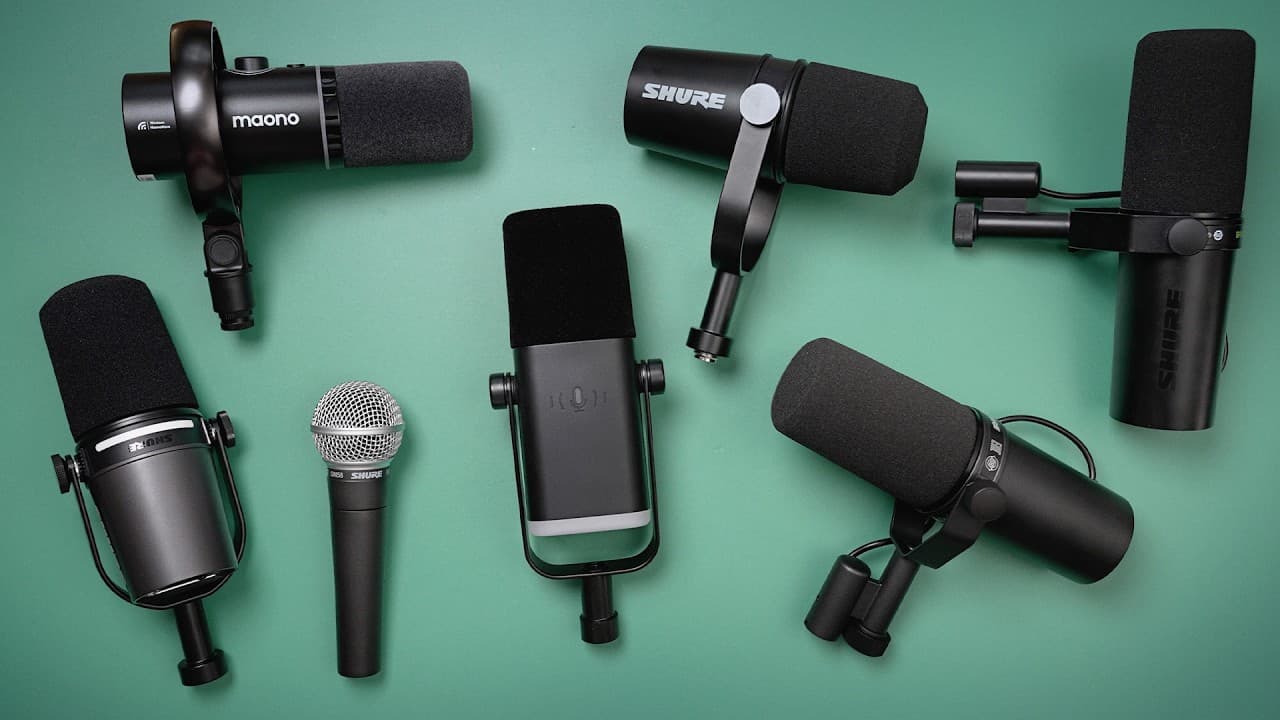
The Fifine AM8 is the strongest budget recommendation at about $50, while the Shure SM7B delivers the premium, warm sound commonly used by major creators and studios. Choose according to your recording environment and connection needs: USB-C offers simple device compatibility, XLR supports interface-based setups, and specialized options address wireless recording, noisy venues, or two-person production.
Transcript
I've tested 22 different podcast microphones from $50 ultra budget options all the way up to the industry legends. And a few of these have actually shocked me with features I have never seen before. So, in this video, I'll break down the best podcast microphones at every price point so you can choose the right one for your setup. Now, the first mic... Read More
Key Insights
- The Fifine AM8 is the recommended budget microphone because it delivers strong raw audio for about $50 and competes favorably with much more expensive options in the presented tests. Its price rises to around $65 when purchased as a kit with a boom arm.
- The Fifine AM8 supports both USB-C and XLR connections, allowing direct recording to a computer, tablet, or smartphone as well as integration with an audio interface. The reviewer reports that its raw audio quality is effectively the same through either connection format.
- The MAONO PD200W is designed for flexible wired and wireless recording. It provides USB-C and XLR outputs, includes a wireless USB-C receiver, and can work with optional accessories for older iPhones or cameras, making it particularly relevant to mobile creators and outdoor recording.
- The Shure SM58 is suited to handheld interviews, live events, vocals, and podcasts. Its close speaking position helps reject noisy surroundings, while its construction reduces the handling noise that can become obvious when guests move less suitable microphones during interviews.
- The Shure MV7X is an approximately $200, XLR-only podcast microphone with noticeably stronger construction than the budget models discussed. It requires an audio interface, placing it within a more professional setup rather than a simple direct-to-computer USB recording workflow.
- The Shure MV7i is both a USB-C microphone and an audio interface. Its additional XLR or quarter-inch input can accept a second audio source, allowing two signals to be recorded simultaneously and sent to a smartphone or computer through one USB-C connection.
- The Shure SM7B is valued for its warm, enriched sound and neutral response, which supports detailed editing after recording. It is widely used by major creators and production studios, but its listed $439 price and interface-based setup place it firmly in the premium category.
- The Shure SM7dB adds a built-in preamp to the core SM7B design. This produces a cleaner, sufficiently powerful signal with weaker or cheaper audio interfaces and removes the need for an additional preamp accessory, although the microphone still requires an XLR-connected audio interface.
Install to Summarize YouTube Videos and Get Transcripts
Explore YouTube Video Summarizer or Get YouTube Transcript Extractor
Questions & Answers
Q: What is the best budget podcast microphone under $60?
The Fifine AM8 is the reviewer's preferred budget podcast microphone below roughly $60. The microphone itself costs about $50, while a package with a boom arm typically costs closer to $65. It produces audio that compares well with microphones costing several times more, and its USB-C and XLR outputs support both direct device recording and future interface-based upgrades.
Q: Should I use USB-C or XLR for podcast recording?
USB-C is useful when you want to connect a microphone directly to a computer, tablet, or smartphone without adding an audio interface. XLR is appropriate for a more expandable podcast setup built around an interface. The Fifine AM8 supports both methods, and the reviewer says its raw audio quality sounds effectively the same through USB-C and XLR.
Q: Which podcast microphone is best for wireless recording?
The MAONO PD200W is the wireless-focused option in the comparison. It includes a USB-C receiver that can send podcast audio to compatible smartphones, tablets, and computers. Optional accessories include a Lightning adapter for older iPhones and a 3.5 millimeter receiver for cameras. It also provides standard USB-C and XLR outputs for wired recording situations.
Q: What microphone works well for interviews in noisy environments?
The Shure SM58 is the recommended option for handheld interviews on noisy show floors and at events such as NAB or VidCon. It is designed to be positioned close to the speaker's mouth, helping it capture clear speech while rejecting surrounding noise. It also limits obvious handling sounds when a guest moves the microphone during an interview.
Q: What equipment does the Shure MV7X require?
The Shure MV7X requires an audio interface because its only output is XLR. The video mentions the Vocaster 2 as an approximately $100 budget interface and also discusses the more expensive RODECaster Duo and RODECaster Pro 2 as broader production options. Unlike a USB microphone, the MV7X is intended for an interface-based podcast recording setup.
Q: How does the Shure MV7i record two audio sources?
The Shure MV7i functions as both a USB-C microphone and an audio interface. In addition to capturing its own microphone signal, it accepts another source through an XLR or quarter-inch input on the microphone. Both signals can then be sent through USB-C to a smartphone or computer, allowing two sources to be recorded simultaneously without a separate interface.
Q: Why is the Shure SM7B popular for podcasting?
The Shure SM7B is popular because it produces a warm, enriched sound that the reviewer describes as essentially unmatched among the podcast microphones discussed. Its relatively neutral response also gives editors flexibility to shape the recording afterward. Major creators and production studios commonly use it, although its listed price of $439 makes it a premium purchase.
Q: What is the difference between the Shure SM7B and SM7dB?
The Shure SM7dB is effectively an SM7B with a built-in preamp. That integrated component provides enough signal for weaker or cheaper audio interfaces and removes the need to purchase an additional preamp accessory. Both microphones still rely on XLR and require an audio interface, so the SM7dB does not provide the direct USB-C connection found on the MV7i.
Summary & Key Takeaways
-
The Fifine AM8 is presented as the best-sounding option below roughly $60. It costs about $50 with a tabletop stand or around $65 with a boom arm. Its USB-C and XLR outputs let beginners connect directly to devices while preserving an upgrade path toward an audio interface and more advanced podcast equipment.
-
The MAONO PD200W adds wireless operation through an included USB-C receiver, while the Shure SM58 suits handheld interviews in noisy environments. These microphones solve different production problems: the PD200W provides mobility across compatible devices, and the SM58 captures close speech while reducing surrounding noise and limiting distracting handling sounds during energetic interviews.
-
Shure's MV7X, MV7i, SM7B, and SM7dB address increasingly advanced podcast setups. The MV7X is an XLR-only microphone, while the USB-C MV7i also functions as an interface for a second signal. The SM7B provides premium, editable sound, and the SM7dB adds a built-in preamp while retaining its required XLR connection.
Read in Other Languages (beta)
Share This Summary 📚
Summarize YouTube Videos and Get Video Transcripts with 1-Click
Try YouTube Summary with ChatGPT & Claude or YouTube Transcript Generator
Explore More Summaries from Think Media 📚



Summarize YouTube Videos and Get Video Transcripts with 1-Click
Try YouTube Summary with ChatGPT & Claude or YouTube Transcript Generator