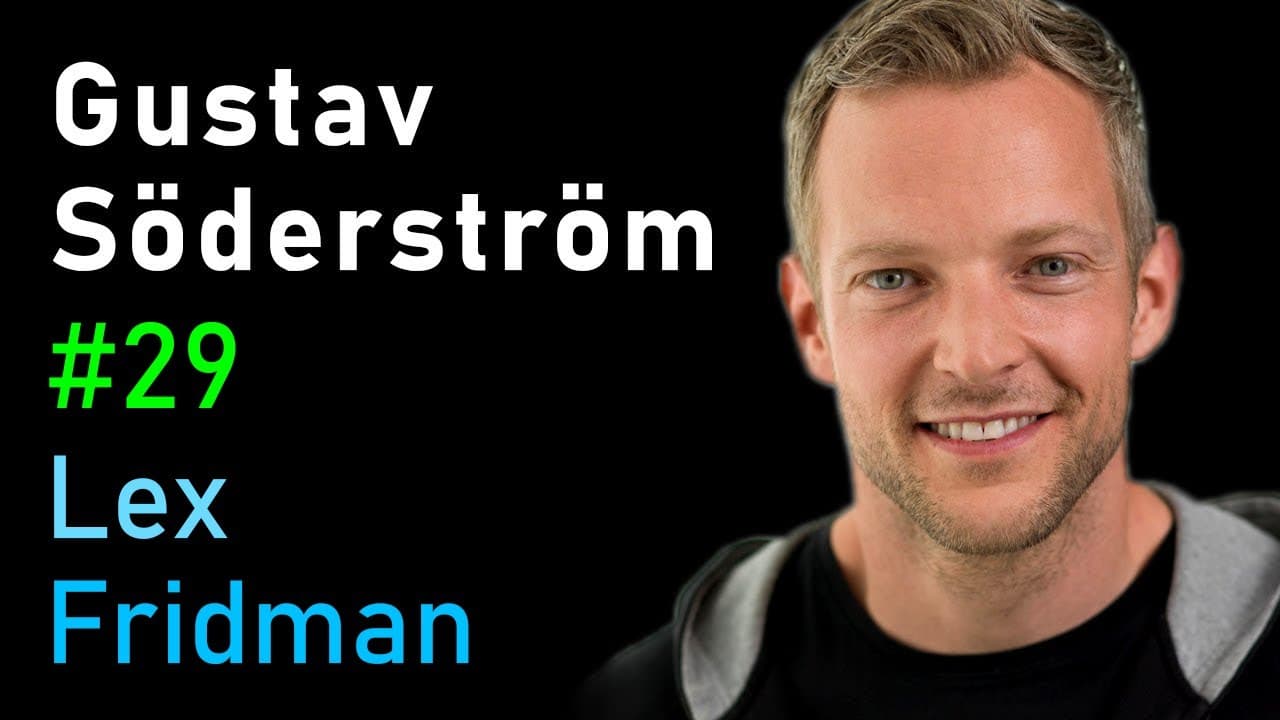
Gustav Soderstrom: Spotify | Lex Fridman Podcast #29
TL;DR
Spotify leverages machine learning to enhance music discovery and personalization. Gustav Soderstrom emphasizes the emotional connection to music and its dual purpose of serving as both an escape and a focus aid. The video explores how Spotify's innovative model competes with free platforms by prioritizing user experience and the potential future of AI in music creation.
Transcript
the following is a conversation with Gustav Sorum he's the chief research and development officer Spotify leading their product design data technology and engineering teams as I've said before in my research and in life in general I love music listening to it and creating it and using technology especially personalization through machine learning t... Read More
Key Insights
- 🥶 Spotify competes with free music streaming platforms by offering a superior user experience and a free tier for exploration and discovery.
- 😌 The future of music creation lies in AI-assisted tools and collaborative platforms that enable better workflow and maximize creativity.
- 🙈 Spotify sees tremendous potential in podcasting and aims to improve the discovery experience for listeners, as well as enhance the tools and support available to creators.
- 👻 Playlists and albums both have value in the streaming era, catering to different user preferences and allowing for personalized listening experiences.
Install to Summarize YouTube Videos and Get Transcripts
Explore YouTube Video Summarizer or Get YouTube Transcript Extractor
Questions & Answers
Q: How does Spotify compete with free music streaming?
Spotify offers a compelling user experience and a free tier, which allows users to explore and try different tracks without any marginal costs. This access model, combined with a great product, sets Spotify apart from illegal streaming platforms.
Q: Can Spotify's algorithms be used to help music creators in the creative process?
Yes, Spotify plans to build tools to assist music creators by introducing AI assistants, optimizing tracks, and helping with mixing and mastering. The goal is to provide a better product and improve the overall workflow for creators.
Q: Does Spotify have plans to dominate the podcasting industry?
Spotify is serious about podcasting and aims to be a leader in the industry. By offering a seamless audio experience, combining music and podcasts in one application, and focusing on both creators and consumers, Spotify has a strong chance to dominate the podcasting space.
Q: Can Spotify improve the discovery experience for podcasts?
Spotify recognizes that discovering new podcasts can be difficult and aims to enhance the discovery process. By analyzing user data, providing metadata, and adding recommendations, Spotify plans to make podcast discovery easier and more personalized.
Q: What is the future of albums in the streaming era?
While playlists have gained popularity in the streaming era, albums still hold importance. Spotify acknowledges the significance of albums and allows users to save and listen to entire albums. The format provides an opportunity for creating coherent narratives and stories through music.
Summary
In this conversation, Gustav Sorum, the Chief Research and Development Officer at Spotify, discusses various topics including the greatest song of all time, the purpose of music, the history of music listening, and the growth of Spotify's user base. He explains how Spotify competed with piracy, the psychological shift from hoarding music to enjoying a vast catalog, and the use of playlists as a powerful data source for machine learning.
Questions & Answers
Q: What is the definitive greatest song of all time?
From a personal standpoint, Gustav Sorum selects "You're So Cool" by Hans Zimmer, the soundtrack to the movie True Romance. He explains that the movie made a big impression on him and the song has followed him throughout his life, making it one of his top three favorite movies. While he acknowledges that people have different tastes, he believes that machine learning wouldn't be effective if everyone had the same taste.
Q: How did the movie True Romance affect Gustav Sorum?
Gustav shares that the movie had a significant impact on him because of its great storyline, love theme, talented actors, and fantastic music. Though he didn't adopt any characters from the movie, it left a lasting impression and influenced his music taste during his formative years.
Q: Is music a social or personal experience?
According to Gustav, music serves both purposes. He explains that while there is a social aspect to music, where people attend concerts and listen to music together, it is also a personal and intimate experience. Gustav clarifies that Spotify discovered people have a friend or two that heavily inspires them, but it is more of an intimate relationship rather than broadly shared.
Q: How did Spotify compete with free piracy networks?
Gustav mentions that Spotify provided a legal and fast alternative to pirated music. It allowed users to access all the music ever made without any marginal costs, providing an improved user experience. By lowering the price to free and delivering a superior product, Spotify was able to compete effectively.
Q: How did Spotify grow its user base from a few people to millions?
Gustav attributes the growth to having a great product that solves problems and a user-centric approach. He highlights the use of an invite program, which helped build excitement and expectations. Gustav also mentions the importance of a free tier that allowed users to keep their playlists even if they stopped paying, providing security and flexibility.
Q: How does playlist data contribute to Spotify's machine learning algorithms?
Gustav explains that playlists are like pathways through the space of tracks, created by users based on semantic connections and labeled with playlist names. Spotify has observed that people group tracks along certain dimensions, which can be used to extract latent embeddings and generate recommendations. The billions of playlists on Spotify provide a rich data set for machine learning, where collaborative filtering can uncover powerful similarities and help personalize recommendations.
Q: What kind of data does Spotify utilize for machine learning?
Spotify leverages both user data and song data for machine learning purposes. User data, such as playlist information and listening behavior, captures cultural aspects and personal preferences. Song data, analyzed by companies like Echo Nest (acquired by Spotify), focuses on the structure and sonic attributes of songs. By combining user data with content-based analysis, Spotify enhances its recommendations and can handle cases with limited play data.
Q: Is user data or song data more valuable for machine learning at Spotify?
Gustav acknowledges the value of both types of data. Initially, the success of Spotify's recommendations relied heavily on playlist data, while Echo Nest's expertise in content-based analysis provided a different perspective. User data captures cultural and societal influences, while song data helps with cases where there is no play data. Ultimately, the combination of both types of data yields the best results.
Summary & Key Takeaways
-
Gustav discusses the transformative role of Spotify in defining how we experience music in the digital age through personalization and machine learning.
-
He shares his personal favorite song and its significance in his life, emphasizing the emotional connection people have with music.
-
Gustav highlights the purpose of music, which serves as both an escape and a way to focus on tasks, and the social and personal aspects of music.
Read in Other Languages (beta)
Share This Summary 📚
Summarize YouTube Videos and Get Video Transcripts with 1-Click
Try YouTube Summary with ChatGPT & Claude or YouTube Transcript Generator
Explore More Summaries from Lex Fridman Podcast 📚






Summarize YouTube Videos and Get Video Transcripts with 1-Click
Try YouTube Summary with ChatGPT & Claude or YouTube Transcript Generator