Warren Buffett Recalls His Early Days As An Investor | February 26, 2018
TL;DR
Warren Buffett began managing investments alone from a small room beside his bedroom, personally handling reports, checks, stock certificates, and daily mail. As Berkshire’s shareholder base expanded, its annual meeting retained a partnership atmosphere where owners could ask candid business and personal questions, reflecting Buffett’s enduring interest in teaching and direct communication.
Transcript
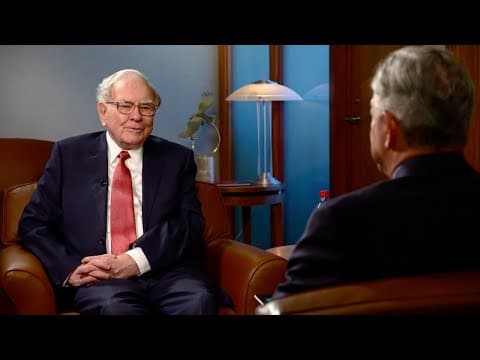
warren first of all thank you for taking the time to talk with us today i'm delighted i thought maybe we could take a little time just to go back with the history of the annual meeting because this is something that now has 40 000 people who are coming here to omaha but it started out as what well at the very first we held the annual meeting in new... Read More
Key Insights
- Berkshire’s annual meeting developed from a sparsely attended formality into a major shareholder gathering because its ownership expanded and participants valued direct access to management. The company repeatedly moved the meeting into larger venues as interest and attendance grew.
- Berkshire’s shareholder culture is rooted in a partnership mentality. Buffett and Charlie Munger viewed investors as people who had personally entrusted them with money, rather than as an anonymous market audience, which helped create the meeting’s unusually familial atmosphere.
- The annual meeting is designed around questions shareholders genuinely want answered. Buffett allows discussion of business, life, religion, and other personal subjects, while withholding only information about securities Berkshire is currently buying or selling.
- Media representatives and analysts were added to the questioning process to introduce more substantive business topics. Shareholders still retained opportunities to participate, preserving the balance between rigorous corporate discussion and the informal questions that make the gathering distinctive.
- Teaching is important to Buffett because he benefited greatly from his own teachers and enjoys helping young people before they make major life decisions. Students often seek guidance about marriage, beliefs, and personal conduct as well as investing.
- Buffett’s student sessions emphasize broad participation and unrestricted questions. He began requiring meaningful representation by women after observing that male students tended to dominate access and participation within the business-school groups seeking invitations.
- Buffett’s early investing operation was a solitary administrative undertaking. He requested annual reports, collected mail, typed correspondence, wrote checks, received physical securities, and placed certificates in bank safe-deposit boxes without employees assisting him.
- Managing several separate partnerships created unnecessary operational work because every stock purchase had to be divided among multiple accounts and documented separately. Buffett explicitly described establishing additional partnerships instead of combining investors into one structure as a mistake.
Install to Summarize YouTube Videos and Get Transcripts
Explore YouTube Video Summarizer or Get YouTube Transcript Extractor
Questions & Answers
Q: How did Warren Buffett begin managing investments?
Warren Buffett began by working alone from a small room beside his bedroom for several years. He had no employees and personally handled the administrative work, including requesting annual reports, collecting the mail, typing, writing checks, receiving physical stock certificates, and storing those securities in bank safe-deposit boxes. His daily routine appeared so informal that neighbors could assume he was doing very little.
Q: Why were Warren Buffett’s early partnerships inefficient?
Buffett created several separate partnerships instead of placing all participating investors into one combined structure. He later called that decision a mistake because each stock purchase had to be allocated across the different partnerships. He personally prepared separate transaction tickets and checks, so the structure multiplied routine paperwork and made a one-person investment operation more cumbersome than necessary.
Q: How did Berkshire’s annual meeting become so large?
Berkshire’s meeting began as a corporate formality with almost nobody attending beyond required officers. After the gathering moved to Omaha, only a small group of relatives and out-of-town shareholders initially appeared. A merger introduced a broader shareholder base, attendance began growing, and Berkshire successively used larger venues. Buffett suggested that webcasting could eventually keep in-person attendance relatively stable.
Q: Why does Berkshire’s shareholder meeting feel different?
Berkshire’s meeting feels different because Buffett and Charlie Munger approach shareholders with the attitude of investment partners. Many early owners came from Buffett’s partnerships and included relatives, friends, neighbors, and other personal contacts. Management therefore felt connected to the people providing capital, welcomed candid questions, and spent hours discussing what owners actually wanted to understand rather than merely reading financial figures.
Q: What questions can shareholders ask Warren Buffett?
Shareholders can ask about business, personal choices, religion, life lessons, and many other subjects because Buffett generally did not declare topics off limits. The important exception concerned investments Berkshire was actively buying or selling, which he would not disclose. This openness made the meeting more engaging than a presentation focused narrowly on figures from a corporate filing and occasionally produced humorous exchanges.
Q: Why were media and analysts added to Berkshire meetings?
Media representatives and analysts were included because an increasing number of shareholder questions had become personal, while Berkshire still wanted the meeting to address substantive corporate and investment matters. Their participation helped introduce more rigorous questions without eliminating direct shareholder access. Buffett continued to value questions from owners and remained willing to spend much of the day answering what was genuinely on their minds.
Q: Why does Warren Buffett want to be remembered as a teacher?
Buffett wants to be remembered as a teacher because he believes he received a great deal from teachers and finds it rewarding to speak with young people. Students are still deciding how to live and may avoid mistakes after hearing useful guidance. Their questions often concern relationships, beliefs, and personal conduct, not merely investing, and some later contact him with specific accounts of what affected them.
Q: How did Warren Buffett organize his student sessions?
Buffett first spoke at universities while traveling for corporate board meetings, arriving early or staying later to meet students. As that schedule became burdensome, he began bringing groups of schools to Omaha. He allowed students to ask anything and required substantial participation by women because male students had previously tended to control access. Schools that ignored the requirement risked losing future invitations.
Summary
In this interview, Warren Buffett discusses the history of the Berkshire Hathaway annual meeting, the types of questions he receives from shareholders, and the reasons behind his passion for teaching. He highlights the family atmosphere at Berkshire Hathaway and his connection to the shareholders. Buffett also talks about the evolution of the annual meeting and the growing number of attendees. He shares his thoughts on why people are attracted to his advice and the style of his shareholder letters. Buffett reflects on the changes in his life as he became more well-known and the challenges of dealing with commercialization of his name.
Questions & Answers
Q: How did the annual meeting of Berkshire Hathaway begin?
The first annual meeting was held in New Bedford, Massachusetts when the company was still a Massachusetts corporation. Initially, only a few required officers would attend, and then the meeting was moved to the lunchroom at National Indemnity in Omaha. At that time, only about a dozen people, including Buffett's relatives and a few out-of-town visitors, would attend.
Q: When did the annual meeting start to grow in size?
The annual meeting started to grow after Berkshire Hathaway merged with Blue Chip in 1982. That meeting had around 100 attendees, and the venues continued to enlarge as the years went by. The meeting is now webcasted, and the attendance has stabilized.
Q: Why are the questions at Berkshire Hathaway's annual meeting different from those at other shareholder meetings?
Buffett believes that there is a more familial atmosphere at Berkshire Hathaway compared to other large corporations. Shareholders have a connection to Berkshire Hathaway, and Buffett and Charlie Munger have a partnership-like relationship with them. This connection encourages shareholders to ask more personal and substantive questions.
Q: Why does Buffett enjoy teaching and being a teacher?
Buffett believes that he has learned a lot from other teachers and enjoys sharing his knowledge and experiences. He finds it rewarding to talk to young people and help them with personal advice, not just about investments. Buffett appreciates the opportunity to talk to bright individuals who are just starting their lives.
Q: How did the teaching of students and schools list start?
Buffett initially started giving talks to business schools while attending directors' meetings at companies like Coca-Cola and Gillette. Instead of traveling to different schools, Buffett started inviting them to Omaha. The requirement of having a third of the students being women was implemented to create diversity and prevent gender imbalance.
Q: What type of questions do students ask Buffett?
Students ask a wide range of questions, including both investment-related inquiries and questions about life advice. Buffett finds that students are more interested in personal topics, and he tries to provide helpful guidance based on his own experiences.
Q: How did the process of writing the annual shareholder letter begin?
Initially, Buffett wrote the annual report in a similar way to how it had been reported before, but it was reviewed by lawyers at Ropes and Gray. After this, Buffett decided to write the letter in his own unvarnished style, as if he were writing to his sisters. He tries to use language and communicate in a manner that he used with his sisters.
Q: What kind of mail and responses does Buffett receive at his office?
Buffett receives numerous letters from shareholders. He reads and responds to many of these letters, sometimes scribbling a quick response directly on the letter itself. He appreciates the personal, handwritten letters and takes the time to respond to as many as he can.
Q: Has becoming well-known and recognized changed Buffett's life significantly?
While Buffett does get recognized more often now, especially outside of Omaha, he states that it hasn't changed his life that much. He enjoys the recognition and finds that it helps more than it hurts. Buffett values the relationship he has with people in Omaha and appreciates their continued support.
Q: Is there a danger of Buffett becoming mythologized or his words being twisted out of his control?
Buffett acknowledges that there is a danger of his name being used to promote things on the internet, especially outside of the United States. People may commercialize his name to entice others and may create unrealistic expectations regarding returns. Buffett emphasizes that his returns have decreased over time due to working with larger amounts of money and increased competition.
Takeaways
Warren Buffett's annual meeting at Berkshire Hathaway has grown from a small gathering to a significant event with thousands of attendees. The questions asked at the meeting often differ from those asked at other shareholder meetings due to the family-like atmosphere and deep connection Berkshire Hathaway has with its shareholders. Buffett's passion for teaching and sharing his experiences is a result of the knowledge he gained from other teachers and his desire to help young individuals navigate both personal and investment decisions. His annual shareholder letters, written in a personal and unvarnished style, have attracted a loyal following. While Buffett has become more recognized, it hasn't significantly changed his life, and he values his relationship with the people of Omaha. However, there is a risk of his name being commercialized and his words being misconstrued by others.
Summary & Key Takeaways
-
Berkshire’s annual meeting began as a nearly unattended corporate formality before moving to Omaha and gradually attracting more shareholders. As attendance increased, the event moved through progressively larger venues. Buffett believes webcasting may stabilize physical attendance, but the meeting’s central purpose remains answering questions from shareholders openly and at length.
-
Buffett attributes Berkshire’s distinctive shareholder culture to its partnership roots. Many early owners were relatives, friends, neighbors, doctors, and former investment partners. He and Charlie Munger treated these shareholders as people who had entrusted them with money, creating a family atmosphere and encouraging questions extending beyond financial statements and corporate performance.
-
Buffett’s early investment operation was highly manual and solitary. Working from a room near his bedroom, he managed several separate partnerships, divided stock purchases among them, wrote checks, collected mail, requested annual reports, and stored physical securities in bank safe-deposit boxes. His later fame did not substantially alter his relationships in Omaha.
Read in Other Languages (beta)
Share This Summary 📚
Summarize YouTube Videos and Get Video Transcripts with 1-Click
Try YouTube Summary with ChatGPT & Claude or YouTube Transcript Generator
Explore More Summaries from Investor Archive 📚

Summarize YouTube Videos and Get Video Transcripts with 1-Click
Try YouTube Summary with ChatGPT & Claude or YouTube Transcript Generator