Demolishing the Myth of the Female Brain
TL;DR
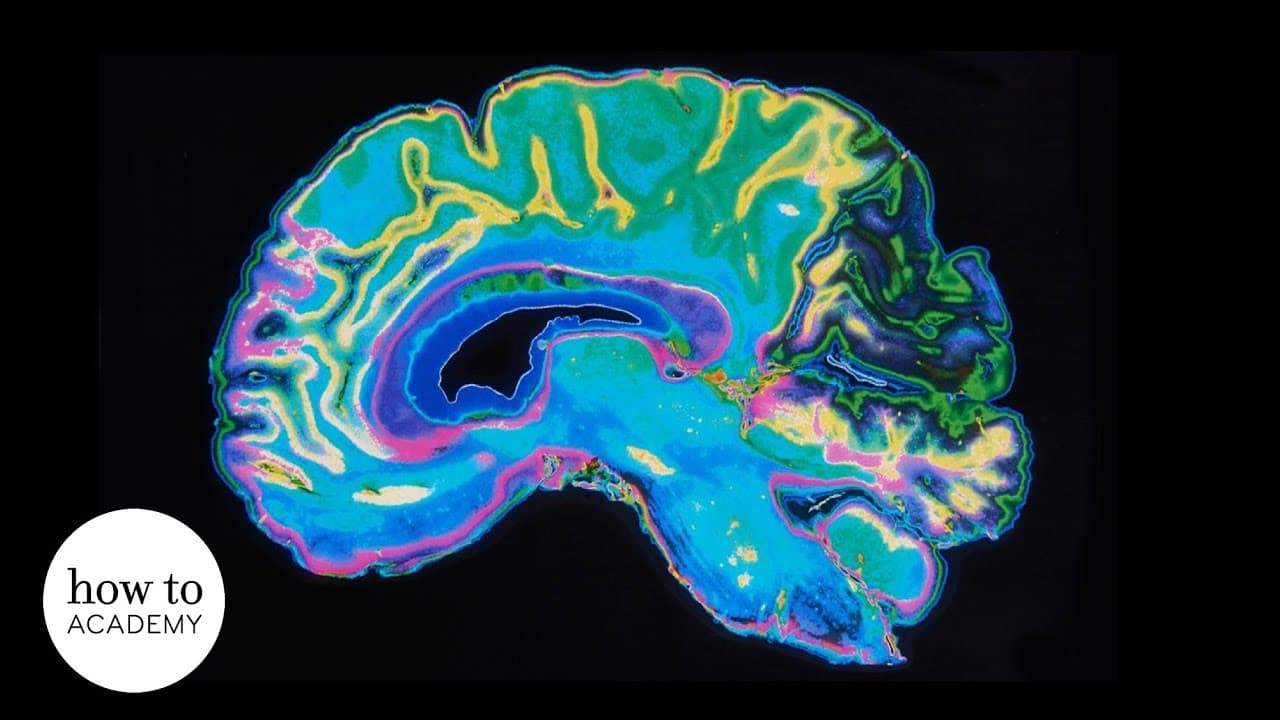
Male and female brains cannot be reliably separated into two fundamentally distinct types based on the evidence presented. Although studies can find differences between some men and women, no single examined feature, including key structures, gray-to-white-matter ratios, or connectivity patterns, reliably identifies a brain as female or male. Different experiences continue shaping each person’s unique brain throughout life; read on to understand why averages and stereotypes can mislead.
Transcript
good evening Prine owners multitaskers and map readers empathizes and systemize errs possibly even Martians and Phoenicians there are few absolute certainties in science but I feel I'm on safe enough grounds to state that everyone here has a brain what I'm going to try to convince you in the next 15 minutes is that your brain is special it is uniqu... Read More
Key Insights
- 🧠 Individual experiences shape brain development more significantly than gender.
- 🕵️♀️ Scientific studies show minimal structural differences between male and female brains.
- 🧠 Stereotypes about gendered brains influence societal perceptions and opportunities.
- 🧠 Brain plasticity and flexibility challenge the idea of fixed gendered brain differences.
- 🖐️ Hormones play a role in brain development but do not always result in significant differences.
- 🖐️ Communication of scientific data plays a crucial role in shaping public perceptions about gendered brains.
- 👨🔬 Gender stereotypes in neuroscience impact research outcomes and treatment approaches.
Install to Summarize YouTube Videos and Get Transcripts
Explore YouTube Video Summarizer or Get YouTube Transcript Extractor
Questions & Answers
Q: Are male and female brains fundamentally different?
The speaker argues that brains do not fall into two reliably distinct types corresponding to male and female bodies. Studies may find differences between some men and some women, but no examined brain feature reliably distinguishes every woman’s brain from every man’s brain.
Q: What is the myth of the female brain?
It is the essentialist belief that two types of bodies necessarily produce two fixed types of brains. This belief is then used to assign different skills, aptitudes, and personalities to men and women.
Q: What makes each person’s brain unique?
Different lives, experiences, and encountered attitudes are reflected in each person’s brain. The speaker says this remains true even for identical twins because they do not live exactly the same life.
Q: Can brain structures reliably identify whether someone is male or female?
No examined feature reliably makes that distinction, according to the speaker. This includes key structures, gray-to-white-matter ratios, and patterns of connectivity.
Q: Are men’s brains larger than women’s brains?
On average, men’s brains are larger. The speaker places this alongside average body-size differences, noting that men also have larger hearts, lungs, livers, and kidneys on average.
Q: Why can studies report sex differences in the brain?
Researchers can divide brain images into male and female groups and find differences between some men and women. Other studies report no such differences, so an observed group difference does not establish two fixed brain types.
Q: How can scientific publishing distort perceptions of brain differences?
The speaker says publishing currently focuses on studies that find differences. Studies finding no differences between the sexes receive less attention, which can make evidence for differences appear more consistent than it is.
Q: Do differences in outcomes prove that male and female brains are hardwired differently?
No. The speaker acknowledges gender gaps in achievement and differences in depression, self-harm, eating disorders, and autism, but questions whether brain differences explain them. The debate concerns where differences come from, what they mean, and whether they are fixed and unchangeable.
Summary & Key Takeaways
-
Brains are unique due to individual experiences, not just gender differences.
-
Scientific studies show minimal structural disparities between male and female brains.
-
Stereotypes about gendered brains impact societal perceptions and opportunities.
Read in Other Languages (beta)
Share This Summary 📚
Summarize YouTube Videos and Get Video Transcripts with 1-Click
Try YouTube Summary with ChatGPT & Claude or YouTube Transcript Generator
Explore More Summaries from How To Academy Mindset 📚





Summarize YouTube Videos and Get Video Transcripts with 1-Click
Try YouTube Summary with ChatGPT & Claude or YouTube Transcript Generator