Why Did Trump and Zelensky Clash Over Ukraine?
TL;DR
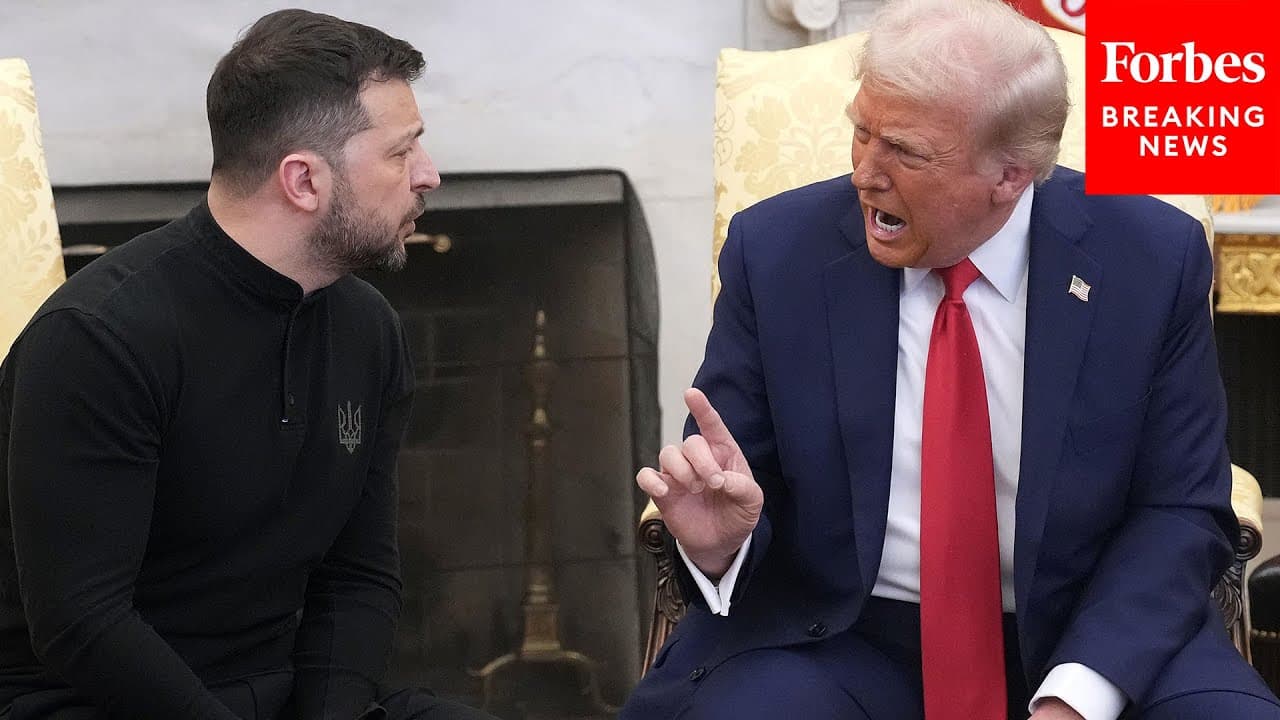
Trump pressed Zelensky to pursue a ceasefire and argued that Ukraine lacked leverage without United States support, while Zelensky insisted that any agreement needed guarantees because Russia had previously broken commitments. JD Vance accused Zelensky of publicly challenging the administration and failing to show enough gratitude, turning the Oval Office discussion into a heated confrontation over diplomacy, military aid, and trust.
Transcript
and now I'm talking with my friends in Poland and they they are worried that you align yourself too much with Putin what's your message for them well if I didn't align myself with both of them you'd never have a deal he want me to say uh really terrible things about Putin and then say hi Vladimir how are we doing on the deal it doesn't work that wa... Read More
Key Insights
- Trump’s stated negotiating position is that publicly condemning Putin would make diplomacy harder. He denied being aligned with Russia, said he was aligned with the United States and the wider world, and presented engagement with both sides as necessary for reaching an agreement.
- Vance’s central argument is that diplomacy offers a path to ending Ukraine’s destruction. He contrasted Trump’s engagement with what he described as the Biden administration’s reliance on tough language, arguing that presidential actions matter more than forceful statements made at press conferences.
- Zelensky’s objection to a ceasefire is rooted in his account of Russia breaking earlier commitments. He cited a ceasefire, a gas contract, and a prisoner exchange, saying Russia subsequently violated the ceasefire, killed Ukrainians, and failed to complete the promised exchange.
- The confrontation intensified when Vance called Zelensky’s public challenge disrespectful. Vance accused Ukraine of manpower problems and bringing visitors on propaganda tours, while Zelensky questioned whether Vance had visited Ukraine and rejected his characterization of conditions inside the country.
- Trump’s leverage argument is that Ukraine cannot sustain its position without United States assistance. He praised Ukrainian bravery but said American military equipment had prevented a rapid defeat, repeatedly told Zelensky that he lacked the cards, and threatened to withdraw from the conflict.
- Zelensky’s stated position is that Ukraine wants the war to stop but requires security guarantees. He disputed the suggestion that he opposed a ceasefire and emphasized that previous agreements had failed, making an unsupported pause in fighting insufficient from his perspective.
- Gratitude became a central dispute during the meeting. Vance asked whether Zelensky had thanked the United States, while Zelensky said Ukraine was thankful and had expressed thanks many times. Trump nevertheless maintained that Zelensky’s conduct did not demonstrate sufficient appreciation.
- Trump’s response to concerns about Russia violating another ceasefire is that Putin respects him more than previous American presidents. He acknowledged uncertainty about whether a deal could be made but claimed Russia had not broken agreements with him and said Putin wanted an agreement.
Install to Summarize YouTube Videos and Get Transcripts
Explore YouTube Video Summarizer or Get YouTube Transcript Extractor
Questions & Answers
Q: Why did Trump and Zelensky argue in the Oval Office?
Trump and Zelensky clashed over how to end the war, whether diplomacy with Putin could produce a reliable agreement, and how much leverage Ukraine possessed. Zelensky emphasized that Russia had broken earlier commitments and therefore demanded guarantees. Trump insisted that Ukraine lacked the cards without United States support, while Vance accused Zelensky of challenging the administration disrespectfully before American media.
Q: What did Trump say about being aligned with Putin?
Trump denied that he was aligned with Putin or any other individual. He said he was aligned with the United States, Europe, and the wider world, and wanted to bring the conflict to an end. His argument was that a mediator must engage both sides and cannot publicly attack Putin before attempting to negotiate directly with him.
Q: Why was Zelensky skeptical of another ceasefire?
Zelensky said earlier diplomatic commitments had not been honored. He referred to a ceasefire agreement signed with Putin, Macron, and Merkel, along with a gas contract and an agreement to exchange prisoners. According to Zelensky, Russia later violated the ceasefire, killed Ukrainian people, and did not complete the prisoner exchange, so any new ceasefire required guarantees.
Q: What was JD Vance’s argument for diplomacy with Russia?
Vance argued that diplomacy was necessary to end the destruction of Ukraine. He contrasted Trump’s approach with what he characterized as years of tough public statements under Biden, claiming that those statements did not prevent Russia’s invasion. Vance said America’s strength came from diplomatic engagement and accused Zelensky of improperly contesting that strategy during a public Oval Office meeting.
Q: What did Trump mean when he said Ukraine lacked the cards?
Trump meant that Ukraine’s negotiating and military position depended heavily on support from the United States. He said Ukrainian soldiers were brave but relied on American military equipment, and he argued that Ukraine would be in a stronger position only after accepting a deal. He warned that, without United States involvement, Ukraine would have to continue fighting under difficult conditions.
Q: Did Zelensky say that Ukraine did not want a ceasefire?
Zelensky did not say that Ukraine wanted the war to continue. He stated that Ukraine wanted to stop the war, but he also insisted that a ceasefire needed guarantees because earlier agreements had been violated. Trump interpreted his resistance as opposition to an immediate ceasefire, while Zelensky tried to distinguish rejecting an unsecured pause from rejecting peace itself.
Q: Why did Trump and Vance criticize Zelensky’s gratitude?
Vance asked whether Zelensky had thanked the United States during the meeting and urged him to express appreciation for Trump’s attempt to end the conflict. Trump also said Zelensky was not acting thankful despite extensive American military support. Zelensky responded that Ukraine was thankful and that he had expressed gratitude many times, but the disagreement remained unresolved.
Q: What did Trump say would happen if Ukraine rejected a deal?
Trump told Zelensky that Ukraine had to make a deal or face the possibility that the United States would withdraw. He said Ukraine could continue fighting without American participation, but predicted that the result would not be pretty. He also accused Zelensky of gambling with millions of lives and risking a wider global conflict by resisting his proposed approach.
Summary & Key Takeaways
-
Trump rejected the suggestion that he was aligned with Putin, saying he was aligned with the United States and wanted to end the war. He argued that openly attacking Putin would undermine negotiations, while acknowledging that Zelensky’s hostility toward Putin reflected the damage and deaths Ukraine had experienced.
-
Zelensky challenged Vance’s confidence in diplomacy by recounting earlier ceasefire, gas, and prisoner-exchange agreements that he said Russia had violated. He maintained that Ukraine wanted the war to stop but needed guarantees, while warning that the conflict’s effects could eventually reach Americans despite their geographic distance.
-
Vance accused Zelensky of disputing the administration before American media and urged him to thank Trump. Trump said Ukraine lacked negotiating leverage without United States military support, accused Zelensky of risking a wider war, and threatened to withdraw support if Ukraine refused a deal, ending the meeting on an openly confrontational note.
Read in Other Languages (beta)
Share This Summary 📚
Summarize YouTube Videos and Get Video Transcripts with 1-Click
Try YouTube Summary with ChatGPT & Claude or YouTube Transcript Generator
Explore More Summaries from Forbes Breaking News 📚
Summarize YouTube Videos and Get Video Transcripts with 1-Click
Try YouTube Summary with ChatGPT & Claude or YouTube Transcript Generator