How Do You Learn Go Programming (Golang) Through a Course with Bonus Projects?
TL;DR
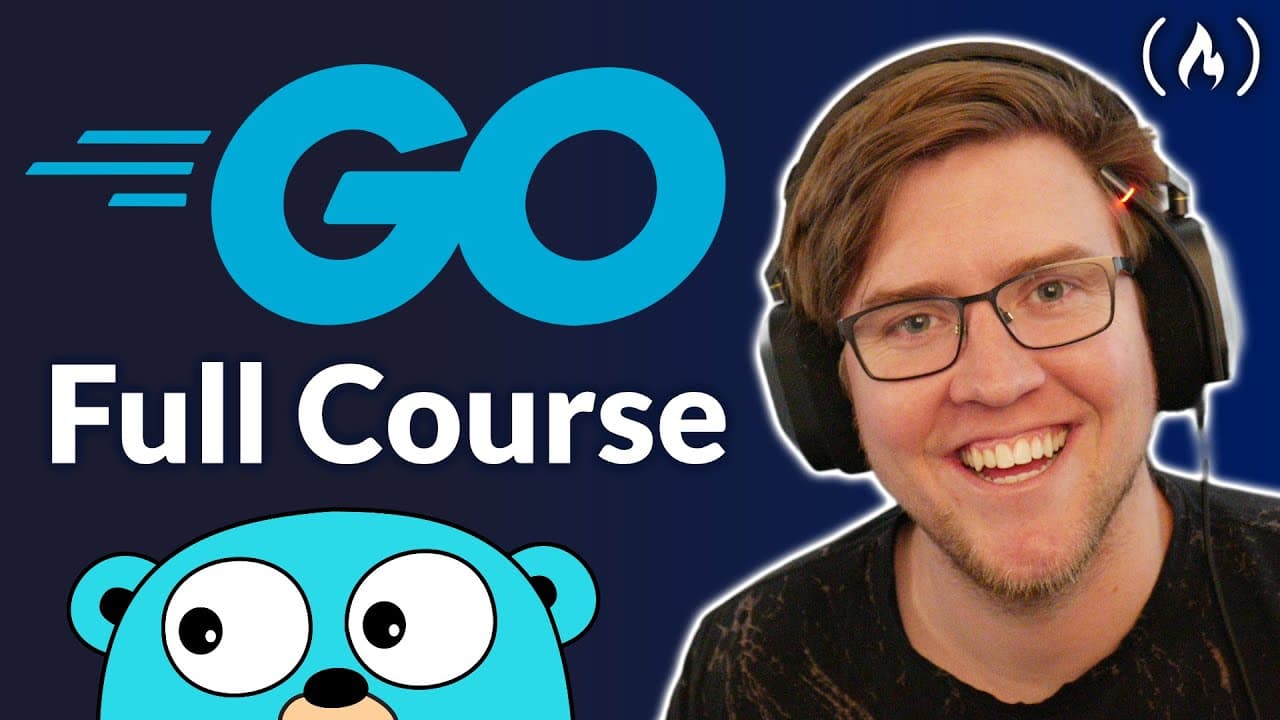
You can learn Go programming by completing over 100 hands-on lessons and exercises, then applying the fundamentals in seven real-world projects. Guided by Lane Wagner and Alan Lers, the course covers variables, functions, loops, idiomatic code, an RSS aggregator, API-key authentication, and a production-ready backend server. Read on to see how the course works, why Go suits backend development, and where to find code samples and support.
Transcript
welcome to this comprehensive go programming course for beginners throughout this course you'll learn key Concepts and techniques to write performant idiomatic go code you will be guided by the expertise of Lane Wagner and Alan lers who combined have over 18 years of coding experience alongside mastering topics such as variables function lo... Read More
Key Insights
- Go is a fast, lightweight, and easy-to-learn programming language ideal for backend infrastructure.
- The course is designed by experienced developers Lane Wagner and Alan Lers, incorporating feedback from thousands of students.
- Hands-on coding lessons and exercises are crucial for mastering Go, encouraging active participation over passive learning.
- Go's compilation speed enhances developer productivity, allowing quicker iteration and deployment.
- The course covers building a production-ready backend server and various real-world projects.
- Go is a compiled language, offering faster execution compared to interpreted languages like Python and JavaScript.
- Go supports static typing, providing early error detection during the compilation process.
- The course includes resources like a GitHub repository and community support on Discord and forums.
Install to Summarize YouTube Videos and Get Transcripts
Explore YouTube Video Summarizer or Get YouTube Transcript Extractor
Questions & Answers
Q: How does this Go programming course teach beginners?
The course begins with over 100 hands-on coding lessons and exercises covering fundamentals such as variables, functions, and loops. Students are encouraged to code ahead and consult the instructor’s solutions only when they get stuck. After learning the fundamentals, they build a production-ready backend server in Go from scratch.
Q: What projects are included in the Go programming course?
The course includes seven real-world projects. The transcript specifically identifies building an RSS aggregator and implementing authentication with API keys, and it says students will also build a production-ready backend server from scratch.
Q: Who teaches this Golang course?
The course is guided by Lane Wagner and Alan Lers, who have over 18 years of combined coding experience. Lane says he has written Go for a little over 7 years, built software for about 10 years, and spent over 2 years designing the course.
Q: Why is Go suitable for backend development?
The course describes Go as fast, lightweight, easy to learn, and useful for scalable backend infrastructure. It also places this course within a broader backend developer career path and has students build a production-ready backend server.
Q: How does Go compare with interpreted languages?
The transcript says Go executes programs much faster than interpreted languages such as JavaScript, Python, Ruby, and PHP. It attributes that performance difference to Go being a compiled language, particularly for computationally heavy work.
Q: How does Go’s compilation speed improve developer productivity?
Fast compilation lets developers iterate, test, compile, and deploy more quickly. The instructor describes this as a major benefit of Go, while clarifying that Go does not necessarily execute faster than every other compiled language.
Q: Where can students find the course’s Go code samples?
The code samples are hosted through a free Boot.dev account. The raw sample code is also available in a GitHub repository linked in the video description, although the instructor says that option is less streamlined.
Q: What support is available if students get stuck?
Students can seek help through the Boot.dev Discord, the freeCodeCamp Discord, and the freeCodeCamp Forum. The instructor says links to all three resources are provided in the video description.
Summary & Key Takeaways
-
Go is a fast and efficient programming language, ideal for backend development. This course, led by experienced developers, offers hands-on lessons and projects to teach key Go concepts. Students will build a production-ready server and explore various real-world applications, enhancing their coding skills.
-
The course emphasizes active coding over passive learning, with over 100 exercises to reinforce concepts. Go's compiled nature offers speed advantages, and its static typing aids in early error detection. Students have access to resources like GitHub code samples and community support.
-
Go's popularity is rising due to its performance and ease of learning. The course covers essential topics like variables, functions, and loops, with a focus on writing idiomatic Go code. Students will gain practical experience through projects, preparing them for backend development roles.
Read in Other Languages (beta)
Share This Summary 📚
Summarize YouTube Videos and Get Video Transcripts with 1-Click
Try YouTube Summary with ChatGPT & Claude or YouTube Transcript Generator
Explore More Summaries from freeCodeCamp.org 📚

Summarize YouTube Videos and Get Video Transcripts with 1-Click
Try YouTube Summary with ChatGPT & Claude or YouTube Transcript Generator