How to heal self hate from unloving parents?
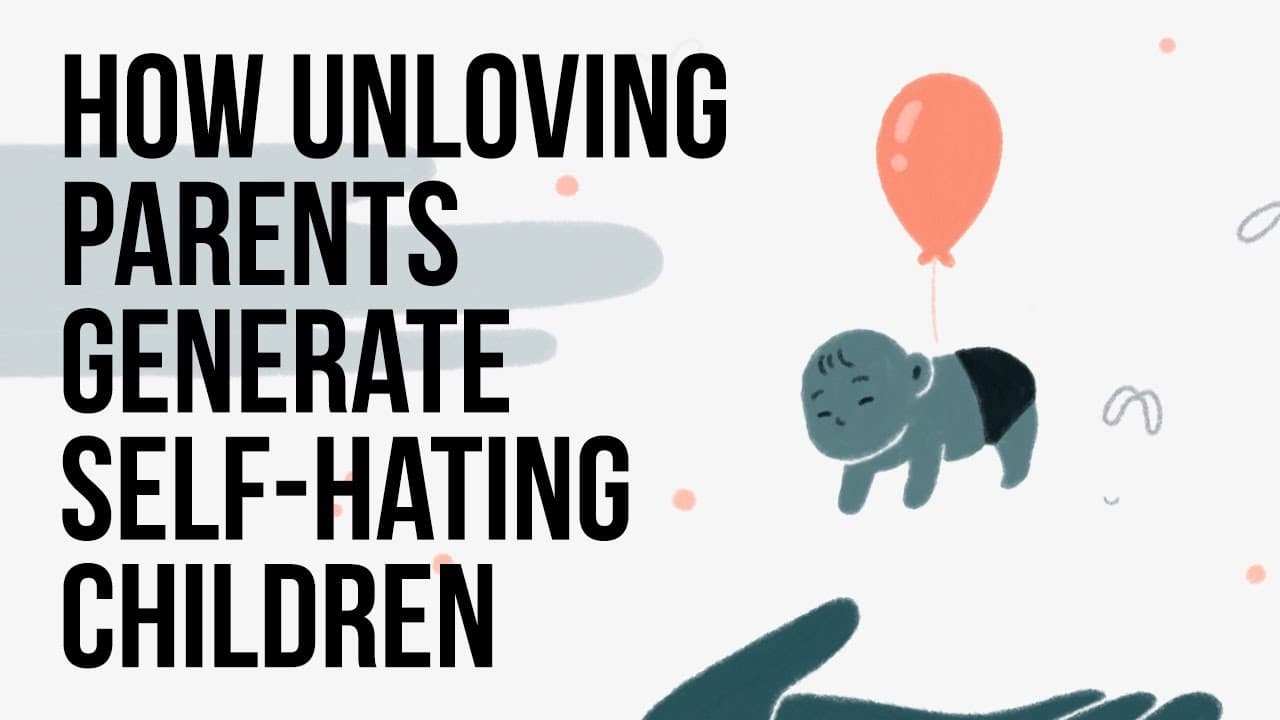
TL;DR
Self hatred often begins when love is scarce in early childhood, prompting the child to blame themselves rather than the adults. Recognizing that this self-criticism is a learned response helps reframe it as something that can be unlearned. The path to healing involves understanding the deprivation, mourning what was missed, and adopting healthier self perceptions.
Transcript
(1) A central fact about early childhood is that babies are born into the world entirely at the mercy of others. They have no native strength, intelligence or utility, they cannot fight or complain, walk away or argue their case, their survival depends solely on their capacity to look up from their cots with vast, innocent, beautiful eyes and c... Read More
Key Insights
- Self worth in childhood depends on securing love and care from caregivers.
- Children instinctively attract nurturing by charming caregivers, and failure to receive it triggers deeper self scrutiny.
- Self hatred emerges as children blame themselves rather than questioning abusive or neglectful adults.
- The mechanism of self blame is a defensive move that preserves safety when adults are unreliable.
- A vicious spiral occurs where lack of love leads to self deprecation and feeling inherently unworthy.
- Adolescence often masks these early wounds, making the origin harder to trace later.
- Understanding that self hatred can be an internalized deprivation opens the door to change.
- Healing requires acknowledging the past without blaming the child for outcomes they could not control.
- More videos from this channel:
- More from this channel: The School of Life
Install to Summarize YouTube Videos and Get Transcripts
Explore YouTube Video Summarizer or Get YouTube Transcript Extractor
Questions & Answers
Q: What causes self hatred to develop according to the video?
Self hatred develops when a child experiences insufficient love from caregivers, leading the child to double down on charming and good behavior to obtain care. This creates a belief that they are the problem rather than the environment. As a result, the child internalizes blame and views themselves as inadequate, slow, or unworthy, which lasts into adulthood.
Q: Why do children blame themselves instead of blaming adults?
Children blame themselves because they lack the power and language to challenge adults, especially when they are dependent for basic needs. The early dynamic makes it safer to question their own worth rather than the reliability of those who should protect them, leading to a long-lasting pattern of self-blame.
Q: What is the spiral described in the video?
The spiral starts with inadequate parental love, prompting the child to work harder to earn it. When love still does not come, the child turns inward, assigning fault to themselves. This self reproach deepens, becoming a core belief of inadequacy that can persist into adulthood unless reexamined.
Q: How does the video describe the impact of deprivation on self concept?
Deprivation creates a learned schema where the child assumes their flaws cause the lack of love. The foraging for approval becomes linked with self worth, so the child believes the absence of love is a direct reflection of their character, not an issue with the caregiver or family system.
Q: What role does mourning play in healing self hatred?
Mourning allows individuals to acknowledge what was not received without blaming themselves for it. It creates space to grieve the lost parental love, which helps decouple self-worth from the absence of care. This process enables healthier internal dialogue and the possibility of rebuilding self-esteem.
Q: Why might the adolescent years obscure the origin of self hatred?
During adolescence, cognitive and emotional changes can obscure memories of early deprivation. The brain reorganizes, and the person may not consciously connect current self-criticism with past parental behavior. This reorganization makes it harder to retrieve the root cause and slows healing.
Q: What is the practical first step toward healing self hatred, according to the video?
The practical first step is recognizing that self hatred is an internalized deprivation rather than an inherent flaw. Acknowledging this shifts blame away from the self and toward understanding the early relational context, enabling the person to begin reFraming their self talk and seek healthier self compassion.
Q: What does the video suggest about loving oneself after neglectful parenting?
The video suggests that loving oneself after neglectful parenting requires reframing the belief that one is inherently bad. It emphasizes that the lack of love was not deserved or deserved, and that it is possible to develop a healthier self image by mourning the past, understanding its impact, and adopting sustained compassionate self-talk and boundaries.
Summary & Key Takeaways
-
Self worth in childhood is tied to the ability to attract care, and when love is lacking that dynamic fractures the patient’s self image.
-
The video argues self hatred is an adaptive response from early deprivation, not a fixed trait, and can be addressed by reframing blame away from the child.
-
Healing involves recognizing the origin of self hatred, mourning past losses, and gradually forming a more compassionate internal dialogue.
Read in Other Languages (beta)
Share This Summary 📚
Summarize YouTube Videos and Get Video Transcripts with 1-Click
Try YouTube Summary with ChatGPT & Claude or YouTube Transcript Generator